

NWMP headquarters, hundreds of miles from the scene of most operations, while Macleod, in de facto control of the majority of the force for more than a year, communicated directly with Ottawa on
.
Martin became de facto the leader of the opposition. By the spring of 1901 the press noted evidence of “extreme friendliness” between him and Dunsmuir. He spoke in favour of the government’s railway
Builder (Toronto), 4 (1891): 88, 90–91. Royal Canadian Academy of Arts; exhibitions and members, 1880–1979, comp. E. de R. McMann (Toronto, 1981). The storied province of Quebec
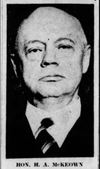
– the Liberals had been in power continuously since 1883 – and desperately in need of new blood and new ideas. McKeown soon became the government’s de facto leader, as Robinson – the third
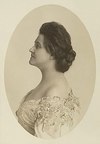
May 1921 in Toronto.
Flora MacDonald Merrill Denison lived two lives, one conventional, the other not. As Flora MacDonald (a frequent nom de
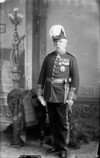
opponents. To reassure his men, Middleton exposed himself recklessly and both his aides-de-camp were wounded. At nightfall, both sides withdrew. The Canadian troops had lost 6 men and counted 49
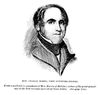
force and the Canadians and Indians under Nicolas-Antoine Coulon* de Villiers at Grand Pré on 31 Jan. 1746
of St John’s, Newfoundland, 1800–1921” (phd thesis, Univ. of Western Ont., London, 1980). A. M. De Beck, The imperial war: personalities and issues

Fulford became the first bishop of the see of Montreal. In the later years of his episcopate no ventures show Mountain in a more courageous light than do his voyages to the Îles-de-la-Madeleine
planning and opening of new penitentiaries: St Vincent de Paul in Quebec (1873), Stony Mountain in Manitoba (1877), British Columbia Penitentiary at New Westminster (1878), and Dorchester in New
De Cosmos*, who were campaigning for it and who were in communication with officials in Canada. Musgrave realized also that to overcome the opposition of prominent officials and members of the
delivered before the Institut d’histoire de l’Amérique française, Montreal, in 1978). r.s.]
ANQ-M, CM 1, 1
1870 he was employed on the Intercolonial Railway near Saint-Germain-de-Rimouski (Rimouski), Que., apparently as a construction foreman. Around 1870 he moved to Toronto, where he established himself as a
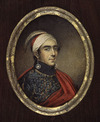
power was at a high point, for the wartime situation had enabled him to shake off much of the Indian Department’s authority. Major-General Francis de
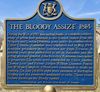
Allan* charged certain people with seditious behaviour during the occupation, Administrator Francis de Rottenburg* instructed the
hundred men sailed from Rio de Janeiro on 26 July 1828.
Curiously, William O’Grady had arrived in Upper Canada by June. He immediately
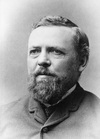
half-breed grant by settlers along the South Saskatchewan and vicinity west of range 26, W. 2nd meridian, being the settlements commonly known as St. Louis de Langevin, St
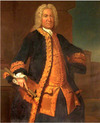
Armstrong’s harsh treatment of Father René-Charles de Breslay* at Annapolis, and his blunt attempts to administer the oath. Philipps’ policy
currents and a device for feathering paddle wheels on steamboats. He became a medical student at the University of Edinburgh in 1815 and continued his studies there until 1817. His dissertation, entitled “De
(Toronto and Buffalo, N.Y., 2003). Mélanie Morin-Pelletier, Briser les ailes de l’ange: les infirmières militaires canadiennes (1914–1918) (Outremont [Montréal], [2006]). G. W. L
him as civil secretary, subsequently naming him aide-de-camp, acting provincial secretary, and a member of the Executive Council. After beginning to work with Ready he revised his opinion. He recorded
Sainte-Anne-de-Bellevue for development, but created instead a 300-acre model farm. He imported Ayrshire cattle, which he exhibited and sold across the continent. Tired of the mounting expenses of the farm
Larocque de Rochbrune]. Ross became the league’s president and several Quebec doctors, including Joseph Emery-Coderre*, whom Ross
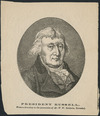
Puisaye*, Comte de Puisaye, arrived and were settled up Yonge Street. Russell obediently followed instructions to assist this scheme, but it was doomed to failure from the outset
.
After the American invaders had been forced back on the peninsula, Prevost removed Sheaffe from his civil and military commands, in which he was succeeded on 19 June 1813 by Major-General Francis de
Palliser not to disturb the French fishery in this area. Although an intruder himself, in 1766 Slade even seized a fishing room at Fleur-de-Lys Harbour built by William Branscombe, a Devon ship’s
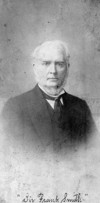
predecessor, the Toronto Savings Bank, had been founded by Bishop Armand-François-Marie de Charbonnel* as a savings and loan
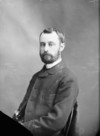
British model was established, Stairs became president and de facto leader of the party. The 1897 election was a disaster for the Conservatives: they returned only three candidates, Stairs finishing fifth
. Stanfield found himself “de facto head,” in Arthur Meighen*’s words, of the provincial Conservative Party. Since a general election
florissante mission indienne de l’ouest (Edmonton, 1962). G. H. Cornish, Cyclopædia of Methodism in Canada … (2v., Toronto and Halifax, 1881–1903). Cree hymn book, rev. R
.
On 3 May 1834 an inquisition de lunatico inquirendo was held at Mount Stewart to ascertain Stewart’s mental state. The investigation was the result of struggle between two
(Winnipeg, 1972). Marcel Giraud, Le Métis canadien, son rôle dans l’histoire des provinces de l’Ouest (Paris, 1945). R. St G. Stubbs, Four recorders of Rupert
for his grandchildren Lucy Florence Beatrice and Pierre Francis de Marigny
William Fraser Tolmie and Jane Work represented the union of two prominent settler families, part of the HBC establishment and what Amor de Cosmos
pastoral visits and accommodate the Presbyterians’ biases. With the Swiss and De Meuron settlers West fared no better. At one point he offended everyone by refusing to baptize an illegitimate child. Except
, ed. C. W. de Kiewiet and F. H. Underhill (Toronto, 1955; repr. New York, 1969), 194. Genealogical and historical records of the Mills and Gage families, 1776–1926
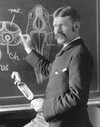
undeniable skills as a classroom teacher, mentor, and public speaker. In the biological building he established a strong esprit de corps among both arts and medical students, and his emphasis on
and that he had attempted a ruse de guerre which, by occupying his opponents’ position, would disarm them, but there was deep suspicion that he could not accept a project initiated by himself
mountain road, published in New York by the firm of Saxony & Major, and reproduced in C. P. De Volpi, The Niagara Peninsula, a pictorial record . . . (Montreal, 1966
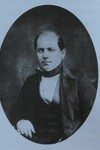
Holton* as a partner, regained it through the intervention of one of the railway company’s directors, Henry de Blaquiere, who was paid $50,000 by Zimmerman for advising the rival contracting firm of
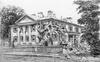
.
As was usual at the time, he soon developed his own agencies in York’s growing hinterland centres. Although Laurent Quetton* de
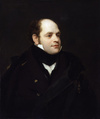
; other rewards included an honorary degree from the University of Oxford and the gold medal of the Société de Géographie de Paris.
Among the most
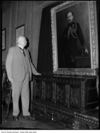
.
The public knew nothing of Pellatt’s shameless manoeuvring a month earlier for grander cachet, nomination as the duke’s aide-de-camp. Though unsuccessful, he would be unrelenting in his pursuit of
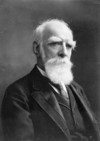
Thibault* and Charles-René-Léonidas d’Irumberry* de Salaberry. Smith arrived at Upper Fort Garry (Winnipeg) on
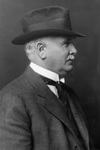
establish the Braemar Lodge, which became an important Calgary hotel. He supported talented artists by, for example, sponsoring the operatic career of Isabelle Burnada and the musical training of Odette de
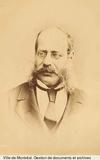
continued to behave as de facto leader of the government and Cartwright protested that the most serious threat to Canada’s future was no longer American encroachment, but the meddling of Downing Street
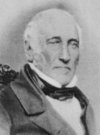
, Peter Boyle de Blaquière, and seven others took unprecedented action by walking out of council. Six
, see the following: J. G. Eayrs, In defence of Canada (5v., Toronto and Buffalo, 1964–83), 1 (From the Great War to the Great Depression, 1964); G. P. de T
of the Canadas. Creighton, Macdonald, young politician. G. P. de T. Glazebrook, Sir Charles Bagot in Canada; a study in British colonial government
results of his inquiries under the nom de plume “A Traveller” in a Halifax newspaper. He lost his job, but gained a career in the labour movement: when he attended a clandestine miners’ meeting in