

with great natural ability. . . .” Whether he accepted Hocquart’s advice to visit the Saint-Maurice ironworks that winter is not clear, but he did inspect them on his way to Montreal the
Dumas* in the defeat of General Edward Braddock’s army in the battle of Monongahela; he was awarded the cross of Saint-Louis. Eight months later he was appointed commander on the Ohio, in
generations, Charles Lefrançois moved to Quebec. He was residing in the faubourg Saint-Jean when on 12 May 1798 he was hired as an apprentice printer by Pierre-Édouard
Juchereau* Duchesnay of Sainte-Marie-de-la-Beauce, was a Reformer like himself; his victory was not therefore one of political opinions but of the lower county (Lauzon) over the upper (Beauce), and
LEMOINE, dit Monière, ALEXIS (Jean-Alexis), merchant; b. 14 April 1680 at Sainte-Anne-de-la-Pérade
. Returning to Canada, he obtained his licence as a physician on 15 November and settled in Saint-Charles-sur-Richelieu, where he went into practice. On 17 June 1851, in the parish of Notre-Dame in
juill. 1901, 28 sept. 1902; Sainte-Brigide (Montréal), 10 mai 1907; Saint-Louis-de-France (Montréal), 12 nov
,
Sedgwick captured the forts at Saint John, Port-Royal (now Annapolis Royal, N.S.), and Penobscot, the last capitulating on 2 Sept. 1654; and designated Leverett as commander of these forts
.
During the Seven Years’ War, Langis and his older brother Alexis were employed scouting, taking prisoners, and gathering information on the enemy’s strategy in the Lake Champlain–Lac Saint-Sacrement (Lake
year book of Nova Scotia, New Brunswick, and Prince Edward Island . . . (Saint John, N.B.), 1876. The Baptist year book of the Maritime provinces of Canada . . . (Saint
militia. He was present at Lake George (Lac Saint-Sacrement) in September 1755 when French forces under Dieskau halted a British army marching toward Fort Saint-Frédéric (Crown Point, N.Y.). By 1757
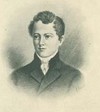
protonotary, and Charlotte-Mélanie Panet; d. 3 Nov. 1859 in Sainte-Mélanie, Lower Canada.
Charles-François Lévesque, a grandson of judge Pierre
stoves and 310,000 pounds of iron from the Saint-Maurice ironworks, which was later liquidated. The administrators of the Séminaire de Québec entered into numerous transactions with him: for example, he
, Charles-Gabriel-Sébastien*, who was to become governor of the Islands of Saint-Pierre and Miquelon and brigadier-general in 1788, does not seem to have had any share in the inheritance either
incidents following the death of Bishop Saint-Vallier [La Croix
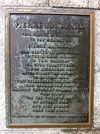
Maillard received his ecclesiastical training at the Séminaire de Saint-Esprit in Paris. He was there in 1734 when the Abbé de L’Isle-Dieu chose some seminarists to lend to the Séminaire des Missions
, prove.
It is not known why Malherbe went to the south shore of the St Lawrence, but in any case he was teaching school at Saint-André, near
MANGEANT (Maugean), dit Saint-Germain, FRANÇOIS (Louis-François), merchant, ship owner, rent gatherer; b. 1686 or 1687
Lawrence valley Father Mareuil lived for some time at the Sault-Saint-Louis mission (Caughnawaga) while waiting to go back among the Onondagas. But since the Iroquois mission could not be re-established, he
created province of New Brunswick. In December 1784 he took up residence in Parrtown (Saint John), where he shared a house with Ward Chipman
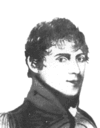
posting Mercer spent time at Quebec and Île Sainte-Hélène, and, using Kingston, Upper Canada, as a base, was a member of a board to survey the ordnance supplies in Upper Canada in 1824. Away from Canada
forests along the Saguenay, Saint-Maurice, Trent, and French rivers. In 1851 Merrill supervised the deepening of the 12-mile Chambly Canal and a decade later surveyed the 124-mile Rideau Canal for potential
M. Souart, superior of the seminary of Saint-Sulpice; she had come to Canada with the contingent that arrived in 1659. In May 1664 she had been granted an arriere fief, later
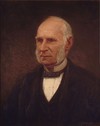
the firm in 1869. Meanwhile, in 1866 it had moved into even larger premises – a four-storey building at 255 Rue Saint-Jacques put up by Harrison
preceding its closing, it put on sale more than 20 of them.
It is not known exactly when Morrice left for Europe, but in 1890 he was in Saint-Malo, France
Saint John River (N.B.) to inform the Acadians living near Sainte-Anne (Fredericton) that they were to move to another part of the province. They also told the New England settlers living at Maugerville
before proceeding to the Collège de Saint-Hyacinthe in Lower Canada, where he took one year of Philosophy; he then entered the Grand Séminaire de Québec to pursue his theological studies. When he was
teacher. In 1866 he entered St Dunstan’s College to prepare for the priesthood. Three years later he went on to the Séminaire de Saint-Sulpice in Montreal for his theological training. He was ordained
Carter
Arch. de la Soc. hist. de Saint-Boniface (Saint-Boniface, Man.), Fonds Picton, dossiers McKay, Rolette. NA, RG 10, B3, 3632
McLaren was sent 90 miles up the Saguenay to Chicoutimi; this post, which was then the terminus for navigation on the river, served three others inland: Pointe-Bleue, on Lac Saint-Jean, Ashuapmouchouan, on

, London, Ont., 1970), 294. R. V. Harris, The Church of Saint Paul in Halifax, Nova Scotia, 1749–1949 (Toronto, 1949), 164–83. R. S. Longley, Acadia
OLABARATZ (Laubaras), JEAN D’, naval officer; b. 20 Oct. 1727 in Saint-Jean-de-Luz, France
Theophilus O’Leary and Ellen Power; m. first Mary Ann Brittain (d. 1873), and they had four sons and a daughter; m. secondly 1875 Mary O’Leary of Saint John, N.B., and they had four sons
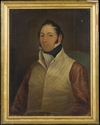
Geneviève Parant.
In 1820 the Emigrant Hospital was opened in the Saint-Jean district. Painchaud was put in charge off the institution, and practised
. He stayed there until 1874, studying with Antoine-François Marmontel at the Conservatoire Royal de Musique et de Déclamation, with Camille Stamaty (whose pupils included Camille Saint-Saëns and Louis
marked for promotion because of his record as militia captain. Moreover, his wife – Marie-Joseph Rivard, dit Lanouette, whom he married at Sainte-Anne-de-la-Pérade on 3 Aug. 1750
in La Rochelle, France, in 1760 and then settled in Martinique, where he once again became prosperous. Jean-Baptiste joined an uncle in running the Saint-Maurice ironworks. Louis-François assisted
. Départementales, Charente-Maritime (La Rochelle, France), “État civil,” La Rochelle, Saint-Barthélémy, 17 janv. 1673; La Rochelle, Saint-Jean-du-Pérot, 1er août 1661, 2 août 1701
de la Colonie; b. c. 1665 in the parish of Saint-Michel, Carcassonne, son of Jean Pinaud and “honorable femme” Françoise Daret (Dazé); d. in August 1722
.), 21 May 1903; 28 Jan., 24 March 1904; 19 Oct. 1911. E. H. Capp, The story of Baw-a-ting, being the annals of Sault Sainte Marie (Saint Ste Marie
position. Early in 1759 he was decorated with the cross of the order of Saint-Louis. That year greatly improved his status. In August, while James Wolfe
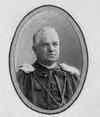
PÂQUET, BENJAMIN, Roman Catholic priest, theologian, educator, and author; b. 27 March 1832 in Saint
to Saint John, N.B., British North America was his permanent home. He retained a great affection for his native island, however, and assisted fellow Manxmen in establishing themselves in his adopted
partnership with his teacher for a time and practised at Saint-Marc and William Henry (Sorel). Around 1801 he settled in Trois-Rivières and, while carrying on his profession, he became interested in public
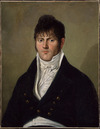
had nine children; d. 5 Oct. 1840 in Coteau-Saint-Louis on Montreal Island.
Philippe-François de Rastel de Rocheblave, sometimes called the
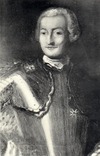
is capable of assisting the adjutant general.”
Des Méloizes distinguished himself again in the battle of Sainte-Foy on 28 April 1760
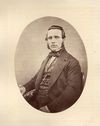
Jean-Baptiste Renaud, a voyageur, and Marie-Reine Garriépy; d. 13 Nov. 1878 at Sainte-Martine (Châteauguay County), Que.
After a
missions of Athabasca. The 1850s were a period of expansion of Oblate missions in the North-West, culminating in the establishment of Saint-Cœur-de-Marie at Fort Good Hope near the Arctic circle on the lower
ROBERTS, GEORGE GOODRIDGE, educator and Church of England clergyman; b. 25 Dec. 1832 in Saint John, N.B., eldest child of
-Vincent d’Abbadie de Saint-Castin, and in June 1690 he obtained the enemy’s capitulation in return for the assurance that their lives would be spared and that they would be well treated. The