

records of the former notaries of the District of Trois-Rivières. In 1795 he was given the responsibility of preparing the land roll for the properties being claimed by the Abenakis of Saint-François. As
.
Baillairgé’s earliest buildings predictably resembled those of his master and mentor, Thomas. His first major commission, undertaken probably in 1847, was the church of Saint-Jean-Baptiste in Quebec City. An
.
Barrett was also responsible for work on the Chambly Canal and the dam and lock at Saint-Ours. The Department of Public Works asked him to prepare special reports on the navigation of the Grand River, Upper
experience as a master tanner. Their partnership lasted six years, after which Barsalou set up on his own account in the faubourg Sainte-Catherine. The location, being well supplied with streams
; then on 1 March 1739 he was promoted port lieutenant. In 1744–45, commanding the storeship Chameau, he led an expedition to Louisiana and Saint-Domingue (Hispaniola). In September 1746 he
March 1801 at Montauban, son of Antoine-Jean-François de Belvèze and Marie-Josèphe-Jeanne Garrigues de Saint-Fauste; d. 8 Feb. 1875 in his mansion at Toulon
of justice. Macdonald, the minister, left him with virtually the entire management of Canada’s penitentiaries (at Kingston, St John, and Halifax) and with the establishment of new ones at Saint
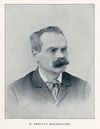
BERTHIAUME, TREFFLÉ (baptized Jean-Baptiste-Trefflé), newspaperman and politician; b. 4 Aug. 1848 in Saint
took his place at the Saint-François de Sales mission at the falls on the Chaudière River. In 1694 he went to Pentagouet in Acadia to found a mission to the Abenaki. He directed this mission for more
1762 when the colleges of the Society of Jesus in France were closed. Some years later, around 1765, he was serving on the islands of Saint-Pierre and Miquelon with Father François-Paul Ardilliers; it is
Borneuf, a merchant, and Marie-Madeleine Degrès; d. 15 Nov. 1819 at the Séminaire de Saint-Sulpice in Montreal, Lower Canada.
After

a contract signed with Marie-Catherine de Saint-Georges, Louis Le Conte Dupré’s widow. But he kept
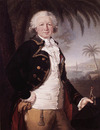
Bigot*’s administration.
Having been promoted colonel and knight of Saint-Louis, Bougainville on 28 March 1759 sailed from Bordeaux on the
Boulduc, master apothecary-herbalist of the Rue Saint-Jacques, in the parish of Saint-Benoît in Paris, and of Gilette Pijart; d. sometime between 1699 and 1701 in France
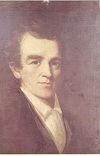
-Aylmer], Lady Aylmer, and Marie-Louise de Saint-Henri [McLoughlin] of the Ursulines. In
(8th ed., 1810), 28–32. The building of Port Lawrence in Chignecto, 1750, ed. and intro. J. C. Webster (Saint John, N. B., 1941), 7, 11. G.B., Board of Trade, JTP
considered it; in the interim Bruce occupied his time inspecting forts Frederick (Saint John, N.B.) and Cumberland (near Sackville, N.B.), surveying on the Saint John River, and assisting his engineer
BÉLANGER, FRANÇOIS-XAVIER, naturalist and museum curator; b. 1833 at Saint-Vallier, Lower Canada; m. Vitaline
Bruit, situated about three miles from Quebec on the Chemin Sainte-Foy, a house on Rue Saint-Jean in Upper Town, and what was called Gorgendieres Farm in the seigneury of Sillery. The new leaseholder
continued to manage Lauzon. At this time he owned Belmont and was the recognized seigneur of Gaspé and Foucault; in 1803 he had bought the seigneury of Saint-Étienne
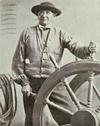
met on 24 June 1884 at Saint-Jean-Baptiste day celebrations, he reportedly said in reference to their age: “When I die, then you can be afraid.” As it happened, Laurier’s death would follow his by
Lévis*. Wounded in the battle of Sainte-Foy, he spent two months in hospital before sailing for France in August 1760
and St Lawrence Railroad, established to link Dorchester (Saint-Jean-sur-Richelieu) with La Prairie, on the St Lawrence, had been incorporated by statute in 1832. The legislation required the company to
operation in the seigneury of Saint-Denis-De La Bouteillerie. A decade later he went into partnership with Amable Dionne*, a
early 1793. Some time after his arrival there the bishop of Quebec, Jean-François Hubert, through the agency of Jean-François de La Marche, the bishop of Saint-Pol-de-Léon then residing in London
the parish of Saint-Rémi in Troyes (province of Champagne). He was born c. 1638, if we are to believe his death certificate, dated 20 Aug. 1708, in which he was said to be about
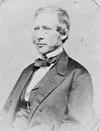
which would connect the east coast of the province with the port of Saint John and the western counties. The proposal had been studied in the late 1840s and in 1850 it received a boost when railway
obituary in the Saint John Morning News reported that the cause of his death was “erysipelas, and gastric fever and prostration of the nervous system,” or what would be known today as typhoid fever
man, alderman of Quebec, police magistrate, churchwarden, syndic; baptized 3 May 1622 in the parish of Saint-Saturnin, Blois, France, son of Baptiste Charon and Claude Beguet; d. 1687 at
commission of the peace for the Quebec district (1826), and was appointed a commissioner to establish a market in the faubourg Saint-Roch (1831). As well, he was a trustee of the fabrique of
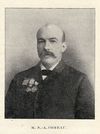
Victoria Labrie in Saint-Patrice-de-la-Rivière-Pentecôte (Rivière-Pentecôte), Que., and they had nine boys and three girls; d. 17 Nov. 1923 in Godbout
Grey Nuns convent at Saint-Boniface (Man.).
William Connolly, born at Lachine, Province of Quebec, in 1787, entered the service of the North
COTTÉ (Côté), GABRIEL, merchant and furtrader; baptized 12 June 1742 at Saint-Louis-de-Kamouraska (Kamouraska, Que.), son of
Saint-Luc. As the owner of a fairly extensive domain, he, like his brother Louis, proved himself to be a wise seigneur who made numerous land grants. He was, moreover, obliged to defend part of his
Saint-Thomas de Montmagny.
He died in the summer of 1678 at the age of 49. His creditors seized his seigneury (his debts by this time had passed through
Groston de Saint-Ange, he took part in an expedition against the Fox (Meskwaki) people, whose members had taken refuge in a fort located on the banks of the St Joseph River
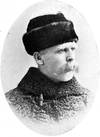
Saint John. His attention turned to railway construction, a burgeoning industry during the 1870s. Crowe found a job with the Intercolonial Railway, but the northwest beckoned and he moved to Manitoba in
between French authorities and some Iroquois chiefs. He became a lieutenant in 1750 and commanded at Sault-Saint-Louis (Caughnawaga, Que.). In June 1754 he replaced Jacques-François Legardeur de
of the rooms of the Château Saint-Louis. Despite the intervention of the members of his family and his friends, Damours was not released until more than two months later, on 20 October. It was
.
At the battle of Saint-Charles-sur-Richelieu Captain David was in command of 20 troopers who acted as dispatch bearers and reconnaissance men. David’s command of both French and English and his
couple in his house once they were wed and to “heat and keep” them for two years. Marchand also gave his daughter a piece of land on Rue Saint-Paul, next to the family home
Villebon), military officer; b. at Îles Bouchard and baptized 12 June 1715 at Saint-Sulpice (Que.), son of François
Saint-Denys and Pierre Le Sueur, who were suspected of illegal fur-trading. Boishébert discovered that these
at Cap-Santé, and they were to have seven children.
At the outset of the 19th century Sainte-Famille at Cap-Santé was a flourishing parish. Covering
a number of his readers on the conduct of John Fletcher*, a judge in the Saint-François district, Dickerson was ordered by Fletcher to
Horton Church. Baptist Missionary Magazine of Nova-Scotia and New-Brunswick (Saint John; Halifax), 1 (1827–29): 120–21, 212–13, 280–81; 2 (1830
(Saint John, N.B., 1880), 28–29. J. M. Bumsted, Henry Alline, 1748–1784 (Toronto, 1971). J. V. Duncanson, Falmouth – a New England township in Nova Scotia
Canada. The Compagnie de la Nouvelle-France granted him, 19 Jan. 1663, the Îles de la Madeleine, de Saint-Jean (today Prince Edward Island), des Oiseaux, and de Brion, so that he could develop

James Cook could finish the survey of Saint-Pierre and Miquelon before the islands were turned over to their new
.
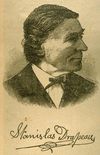
Drapeau first attended simultaneously two private schools run by Antoine Légaré* and by Charles Dion at Saint-Roch. He then was educated in the