

Source: Link
MACKAY, ANGUS (McKay), farmer, office holder, and agriculturalist; b. 3 Jan. 1840 near Pickering, Upper Canada, second child and eldest son of Donald McKay and Margaret Broadfoot; m. 7 Jan. 1874 Elizabeth Arthur Gunn in Whitby, Ont., and they had two sons and two daughters, one of whom predeceased him; d. 10 June 1931 in Indian Head, Sask.
Like many who settled the prairies in the 1880s, Angus Mackay, the son of immigrant Scottish Presbyterians, was raised in Upper Canada. He was educated in local schools at Pickering and Whitby and worked on his family’s farm. Mackay also trained for the militia at the School of Military Instruction in Toronto, where he received a second-class certificate at age 24. He was later awarded the Canada General Service Medal for fighting during the Fenian raids. Mackay’s father died sometime before 1871, and Angus became head of the family farm. He married Elizabeth Arthur Gunn three years later and together they raised their growing family near Pickering.
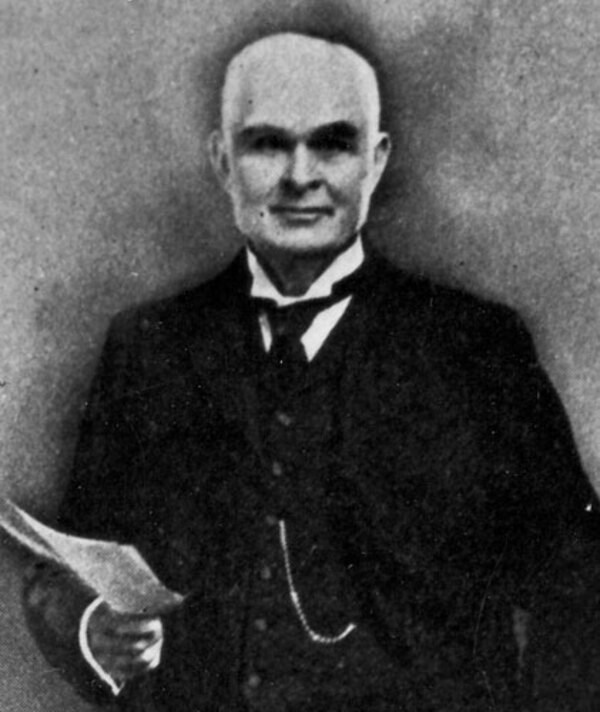
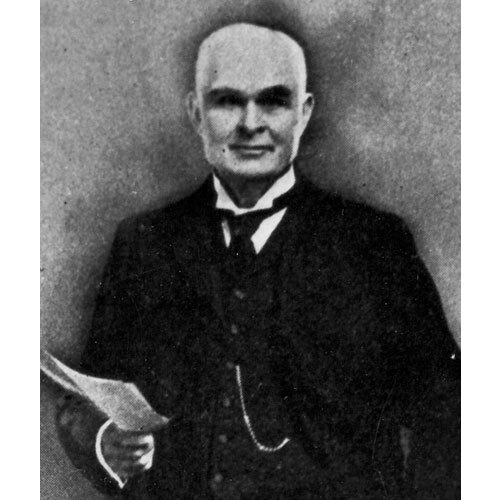
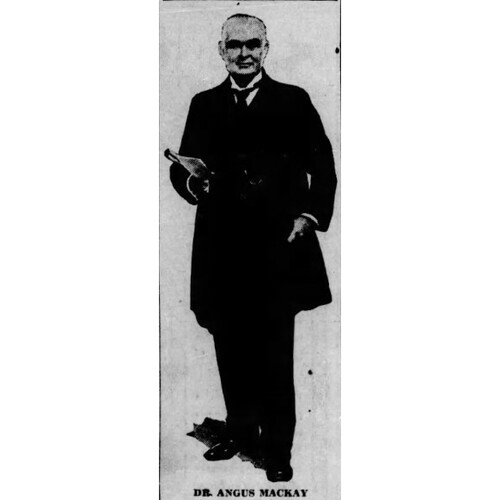
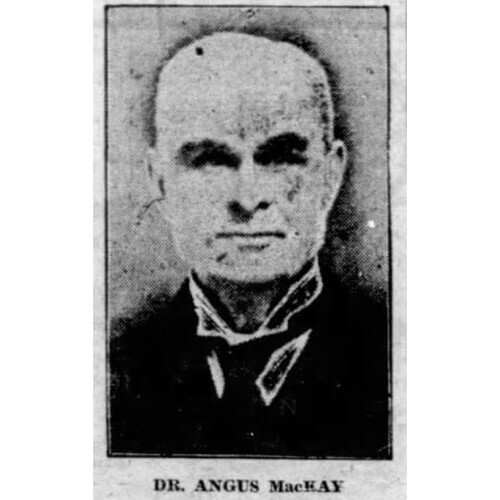
Mackay’s contemporaries were impressed by his stature, which the journalist Norman Platt Lambert* would describe as “massive,” that of a “raw-boned type of Scotchman”; he had blue eyes, a strong chin, and, according to Lambert, the shape of his head suggested “intellectual and physical power.” By 1881, having sold his father’s farm to “fair advantage,” Mackay branched out on his own and was working as a farmer with his wife and children. As he would tell Saskatchewan legislative librarian John Hawkes in 1923, the “great [immigration] boom” that accompanied the expansion of the Canadian Pacific Railway had caught his attention. The North-West Territories seemed to be a “land of great opportunity” and he and his family decided to move west. Mackay and three other men, with whom he would farm collectively, formed the Pickering Company and set out for the prairies in 1882. They travelled to St Paul, Minn., but when they turned north, their journey through Manitoba was thwarted by that year’s massive Red River flood. At one point they visited a friend and, as Mackay recalled, “He came over for us in a canoe.… He was living in the upper part of his house, the lower part being flooded. The door was open so we sailed right [in] … and landed on the stairs.”
Drawn by stories of fertility in the Indian Head region of what would become Saskatchewan in 1905, Mackay and his associates bought four sections of land (640 acres each) from the company of land agents Edmund Boyd Osler*, Herbert Carlyle Hammond, and Augustus Meredith Nanton*. Mackay and his partners later purchased an additional quarter and two cancelled homesteads near the huge farm owned by William Robert Bell*. The land was productive and, three years after his arrival, Mackay had planted over 600 acres of oats and wheat.
Billed by the Globe in 1913 as “Saskatchewan’s grand old man of agriculture,” Mackay is popularly known as the father of summer fallowing: the practice of letting land lie fallow for a year to conserve moisture for the following year’s crop. The short growing season on the prairies, combined with arid conditions, posed unique problems for early farmers. Traditional fallowing conserves nutrients in soil; however, as the Globe would explain in 1902, the foremost goal of summer fallowing is to store moisture “and afterwards coax it up toward the surface, where the crop roots can catch it.” Ideally, a farmer would plough his land early in the spring, “if possible, before the middle of June, so that the early rains may get down into it.… After this ploughing the land is harrowed at intervals during the season, no crop being sown, and the surface is thus kept soft and free from cracks – a blanket really to cover up the moisture gathering beneath.” The technique could not save crops from the onset of early frost (in 1884 Mackay’s entire harvest of wheat was frozen), but it did help farmers counter seasonal drought. In 1940 Lawrence Eldred Kirk, dean of agriculture at the University of Saskatchewan in Saskatoon, would describe Mackay’s “momentous discovery” during the 1886 drought: “like an oasis in a vast desert,” land that had been ploughed and harrowed “flaunted a waving field of golden grain” growing on the moist summer fallow.
The Qu’Appelle Progress reported in 1888 that Mackay, who belonged to the Indian Head and Qu’Appelle valley agricultural societies, was considered “one of the best farmers in the Territories.” In December 1886 William Saunders*, director of the Dominion Experimental Farms system, invited Mackay and Spencer Argyle Bedford to join him in scouting sites for proposed western experimental farms. Mackay and Bedford then travelled to Ottawa in the spring of 1887 to assist in establishing the Central Experimental Farm. Upon Mackay’s return the Manitoba Free Press reported that he and Saunders had conducted a second inspection that ranged over the 180 miles “from Moosomin to Moose Jaw” before they finally selected 675 acres near Indian Head for the new North-West Territories Experimental Farm, which would become the Experimental Farm for Southern Saskatchewan (Indian Head) when the western farms were sub-divided after 1906.
Mackay was appointed superintendent of the farm in 1888, and he dissolved the Pickering Company to focus on his new role. Under his stewardship the farm conducted a variety of experiments with summer fallowing, Marquis wheat (first tested at Indian Head thanks to the work of Saunders’s son, agronomist Charles Edward Saunders), and the use of trees as windbreaks. Mackay and his staff shared their discoveries in voluminous letters, lectures, newspapers, and yearly reports. Mackay held his position until 1913, when he retired, at age 73, to accept an advisory post as inspector of the western experimental farms, a role that he fulfilled until his death 18 years later. Created to test agricultural practices, animal husbandry, and strains of plants, grains, and trees suited to the prairie climate, the experimental farm at Indian Head has had a profound impact on western Canadian agriculture.
Mackay proved a tireless advocate for western farming. He curated and installed the North-West Territories exhibit at the Columbian exposition in Chicago in 1893, which led to his appointment as chairman of the reference committee for the 1895 Canadian North-West Territorial Exhibition in Regina. For this work he was awarded a gold medal by Lieutenant Governor Charles Herbert Mackintosh. Mackay was a director of the Dominion Short-horn Breeders’ Association; he also acted as a justice of the peace for Indian Head and chaired the local hospital’s board.
In return for his years of commitment and service to western agriculture, the University of Saskatchewan [see James Clinkskill] awarded Angus Mackay an honorary lld in May 1922. He had long promoted the creation of an agricultural college at the university, and his support earned him chairmanship of the advisory council of the Saskatchewan Agricultural College in Saskatoon. At the age of 83, after nearly 50 years of marriage, he used his address to the 1923 convention of the Association of Saskatchewan Agricultural Societies to counsel that training for agricultural students should “include hints on how to choose a wife, as a good wife was essential to successful and happy farm life.” In 1973, Angus MacKay was inducted into the Saskatchewan Agricultural Hall of Fame.
As superintendent of the experimental farm at Indian Head, Angus Mackay wrote detailed reports for the director of the experimental farms service. These were later published as appendices in the yearly reports of the minister of agriculture. Records related to Mackay’s work can be found in the experimental farms service series (R194-114-6) of the Dept. of Agriculture fonds at LAC.
The most detailed biographical portrait of Mackay remains John Hawkes’s profile, “Dr. Angus McKay: the man who taught us how to grow wheat,” in his Story of Saskatchewan and its people (3v., Regina, 1924), 2: 1035–44, which includes a lengthy account of Mackay’s reminiscences about his early life in the northwest and his appointment as superintendent of the Indian Head Experimental Farm. The latter half of this profile draws heavily on a Globe piece, “The grand old man of Saskatchewan” (9 Aug. 1913: A2), by Norman Lambert, which marked Mackay’s retirement in 1913.
AO, RG 80-5-0-44, no.006548. LAC, RG 9 IIA5 (Canada General Service Medal, 34th Battalion Whitby, Fenian raids (1866)), Angus Mackay; R233-30-3, vols.49–157, Can. West, dist. Ont. (26), subdist. Pickering (245): 11; and vols.271–462, Can. West, dist. Ont., subdist. Pickering: 73; R233-34-0, Ont., dist. Ont. South (48), subdist. Pickering (A), div. 2: 11; R233-35-2, Ont., dist. Ont. South (132), subdist. Pickering (A), div. 1: 16; R233-36-4, Northwest Territories, dist. Assiniboia East (198), subdist. Qu’Appelle (B), div. 3: 17–18; R233-37-6, Territories, dist. Assiniboia East (203), subdist. Indian Head (B2), div. 1: 4. Globe, 25 April 1902, 13 Aug. 1909, 7 Aug. 1924, 31 Jan. 1931. Manitoba Free Press, 13 Oct. 1887. Qu’Appelle Progress (Qu’Appelle, [Sask.]), 9 Dec. 1886; 1 March, 4 Oct. 1888. Qu’Appelle Vidette (Indian Head, [Sask.]), 27 Aug., 22 Oct. 1885; 19 May 1887. Regina Leader, 14 Feb. 1888, 26 Dec. 1901. Winnipeg Tribune, 11 June 1931. Can., Experimental farms service, Fifty years of progress on Dominion Experimental Farms, 1886–1936 (Ottawa, 1939); Parl., Sessional papers, 1890 (report of the superintendent of experimental farm for the North-West Territories, 1889). Canadian Plains Research Center, Encyclopedia of Saskatchewan: a living legacy (Regina, 2005). Canadian Territorial Exhibition (Ottawa, 1895; official program). H. R. Clark, Historical review of the Saskatchewan Agricultural Societies’ Association and the agricultural societies of Saskatchewan (Saskatoon, 1980). Lyle Dick, Farmers “making good”: the development of Abernethy District, Saskatchewan, 1880–1920 (2nd ed., Calgary, 2008). John Hawkes, The story of Saskatchewan and its people (3v., Regina, 1924), 3. E. A. Heaman, The inglorious arts of peace: exhibitions in Canadian society during the nineteenth century (Toronto and Buffalo, N.Y., 1999). Historica Can., The Canadian encyclopedia. W. E. Johnson and A. E. Smith, Indian Head Experimental Farm, 1886–1986 ([Ottawa], 1986). L. E. Kirk, “Dr. Angus MacKay (1840–1931),” in Canadian portraits: C.B.C. broadcasts, ed. R. G. Riddell (Toronto, 1940), 131–36. Amy McInnis, “The development of better farming practices in Saskatchewan” (research paper, n.p., 2004; copy available at the Western Development Museum, George Shepherd Library, Saskatoon). Ordinances of the North-West Territories passed in the third session of the fifth legislative assembly … (Regina, 1904). Pioneers and prominent people of Saskatchewan (Winnipeg and Toronto, 1924). B. J. Porter, “Angus MacKay (1840–1931),” in Saskatchewan agriculture: lives past and present, ed. Lisa Dale-Burnett (Regina, 2006), 106–7. University of Saskatchewan, Saskatoon: president’s report for the years 1911–12 ([Saskatoon], n.d.).
Image Gallery

Cite This Article
Merle Massie, “MACKAY, ANGUS (McKay),” in Dictionary of Canadian Biography, vol. 16, University of Toronto/Université Laval, 2003–, accessed May 10, 2026, https://www.biographi.ca/en/bio/mackay_angus_16E.html.
The citation above shows the format for footnotes and endnotes according to the Chicago manual of style (16th edition). Information to be used in other citation formats:
| Permalink: | https://www.biographi.ca/en/bio/mackay_angus_16E.html |
| Author of Article: | Merle Massie |
| Title of Article: | MACKAY, ANGUS (McKay) |
| Publication Name: | Dictionary of Canadian Biography, vol. 16 |
| Publisher: | University of Toronto/Université Laval |
| Year of publication: | 2026 |
| Year of revision: | 2026 |
| Access Date: | May 10, 2026 |