

Callière “and who applauds his every action with affected admiration.” This judgement is probably exaggerated, but it is partly confirmed by the numerous requests which he made after 1703, with
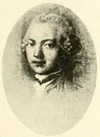
stationed at Montreal, where the garrison troops of the city’s governor, Louis-Hector de Callière, were
Callière, sent him to France to inform the king of Frontenac’s death, and to request that Callière be promoted governor of New France in his place. Because he was successful in pleading Callière’s
[La Croix], bishop of Quebec, and Louis-Hector de Callière, governor of Montreal, to
list in 1692, midshipman in 1694, lieutenant in 1700, captain in command of a company in 1710. In 1701 Callière makes mention of him as “a good officer
Callière and Bochart de Champigny wrote to the Comte de Pontchartrain on 18 Oct. 1700
Callière*, was marred by the unpleasantness of the “prayer-stool incident,” as a result of which the bishop laid first the church and later the religious themselves under interdict. Father Hyacinthe
Callière* sent Tareha to Quebec, where Frontenac [see Buade] consented to the exchange. As proof of his sincerity the Indian had presented to the governor a letter from the Jesuit Father
Callière sought to effect a general peace among the First Nations; the eloquence of the Huron chief Kondiaronk
Callière sent him to Michilimackinac to report on the activities of Charles Juchereau de
Callière despatched him with Augustin Le Gardeur de Courtemanche to the Greak
, Callière, sent him “to the foot of the Long Sault on the great river to take up position on the north side in the place that in his judgement is the most suitable for defending both shores” in
Flours [chevalier de Saint-Flour] ‘ who died in the Hôtel-Dieu at Quebec.” In 1701 Governor Louis-Hector de Callière summarized his early career differently: “Sieur Lorrimier, native of Paris, 46 years old
[Buade*], Callière, Champigny
France.
On 20 Oct. 1699 Governor Callière
[Laumet] and had difficulties with Governor Callière, “who, on the pretext of war, is
(Montréal, 1917), 116–20. P.-G. Roy, “Ce que le gouverneur de Callières pensait de nos officiers militaires en 1701,” BRH, XXVI (1920), 329; “La famine Margane de Lavaltrie,” BRH
. NYCD (O’Callaghan and Fernow), IX, 676, 847–48, 855. Recensement du Canada, 1666 (APQ Rapport), 108. A. Roy, Inv. greffes not., VII, 46. P.-G Roy, “Ce que Callières pensait de
promoted to the rank of captain and given a company of colonial troops. Louis-Hector de Callière, then the