

military policy, as were Louis-Hector de Callière, the governor of Montreal, who was responsible for the
Maricourt to the Onondaga to negotiate peace terms. Bruyas was well received as an official envoy of Governor Callière
Callière repeatedly made use of him as their emissary to the Onondagas during the long negotiations leading to the peace of 1701. First, he worked closely with Callière from 1698 to 1700 to
Callière (whom he had supported against Vaudreuil [Rigaud] in 1698) he was considered for
Ireland). Then, in 1840, he sold out and emigrated to Montreal.
Anderson set up as a china merchant at Pointe-à-Callière, near the Montreal waterfront
inside the limits of the old town and at Pointe-à-Callière. He had 61 tenants, who rented commercial as well as residential buildings. He owned one, for example, that was occupied by 43
Callière’s speech into Huron. This peace treaty permitted the reopening of the Iroquois missions, and in 1702 Garnier, accompanied by Father François
Callière and it was only at Champigny’s insistence that the case be heard by the Conseil Souverain that he avoided trial by court martial. Impressed by his defence and by the Iroquois’ plea that
without claimants, dragged on until 1743.
Lajoüe’s career benefitted from the energetic administration of Governors Frontenac, Callière, and Vaudreuil
Breton Island). In 1701 Callière dispatched him with orders to Brouillan
. In 1702 Courtemanche obtained from Governor Callière* and Intendant François de
OUTOUTAGAN (Outoutaga, Otoutagon, Ottoutagan) (Jean Le Blanc, Jean Le Bland) – Volume II (1701-1740)
Callière that, in compliance with the governor’s request, he would move with his people to Detroit. The promise was fulfilled after 1702 by the majority of the Ottawas, despite some apprehension
. Roy, “Ce que Callières pensait de nos officiers,” 321–33. Wis. State Hist. Soc. Coll., V, 94; XVI, 293–98, 311–12, 382–83, 395–400; XVII, 108–9. Gagnon, “Noms propres au Canada français,” 177
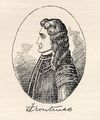
second in command, Louis-Hector de Callière*, the governor of Montreal, to Versailles to report on the state of affairs in the colony
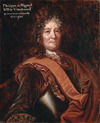
appoint either Vaudreuil or Louis-Hector de Callière, the governor of Montreal, to command in the colony
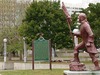
he prudently decided to refer the whole matter to Louis-Hector de Callière and Jean
Closse*. Eminent personages, such as Louis-Hector de Callière, the city’s governor, were present at
de Callière of Montreal, a bitter enemy of the bishop. When Chauchetière boldly objected to the
Callière. In April 1702 Le Sueur returned to France with Iberville.
Le Sueur gave an account of his expedition to the minister
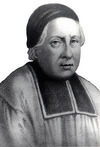
Callière. The Sulpician’s writings were always based on a precise plan, but he used rather antiquated language.
In 1701 Vachon de Belmont