

Lahontan left Montreal by canoe in the advance party led by Captain Dutast, and arrived at Fort Frontenac (Cataracoui) in mid-July. He witnessed the ill-fated negotiations at Arise de La Famine (Mexico
Juchereau* de La Ferté, was supporting him. In 1674, the governor, Buade* de Frontenac, persuaded him to give up
.
In 1682, after the western Iroquois had attacked the French allies, the Illinois and Miamis, Teganissorens came to Montreal and persuaded the governor general, Frontenac

Buade* de Frontenac intervened little in the affairs of the upper colony and spent most of his time in Quebec where he devoted his attention to the war’s strategical aspect. In 1694, partly no doubt
Ramezay* of Trois-Rivières set Beaucours to work on the town’s defences. In 1691 Frontenac [Buade*] visited the town
Perrot*’s illegal fur-trading activities and issued such a scathing indictment of them that Governor Frontenac [Buade
good work then and subsequently led the Comte Louis de Frontenac [Buade*], governor general of New
his own father as Conservative mp for Frontenac, the largely rural riding surrounding Kingston, which he would represent for the next 22 years. During that period he sat
Contrecoeur. Two years later, Duplessis was appointed commandant at Michilimackinac, and on 17 March 1756 he was appointed town major of Montreal. In August 1758, from Fort Frontenac (Kingston
had been captured in the Bay of Fundy, was sent to Quebec by the governor of Acadia, Joseph Robinau* de Villebon. Frontenac
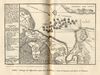
Frontenac and its surroundings. Meanwhile the Intendant de Meulles* instructed him to draw up the plans for a powder-magazine which was to be
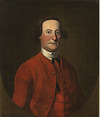
abandoned the campaign altogether. He decided that an attack on Fort Frontenac (Kingston, Ont.), which he described as “the Key” to Lake Ontario, must be the first campaign of 1756, and he assigned the task

themselves as middlemen. The then governor, Louis de Buade*, Comte de Frontenac, had attempted to curb this policy by
Quebec by Governor Buade de Frontenac on 26 Oct. 1678 to express their opinion on
latter places it on 14 June (N.S.). The heroic defence put up by Montorgueuil on that occasion earned him the praise of Buade de Frontenac in a dispatch addressed to the minister in November of the
battle of the Monongahela in July, the French knew of British plans for an attack on Fort Frontenac (Kingston, Ont.) and Fort Niagara (near Youngstown, N.Y.) as well as on Fort Saint-Frédéric (Crown Point
himself in the great expedition led by Buade de Frontenac against the Iroquois
might expect from a country where our Fathers were eagerly awaited.” The bishop entrusted them with four missions: Île Percé, the Saint John River, Fort Frontenac, and Trois-Rivières
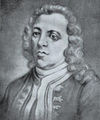
Comte de Frontenac [see Buade]. The period was a tragic one, for the Iroquois
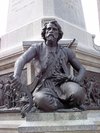
Buade de Frontenac went to Lake Ontario to lay the foundations for the settlement of Cataracoui.
In the autumn of 1682 he took part in the