

. M. Marjoribanks Hamilton-Gordon, Marchioness of] Aberdeen [and Temair], The Canadian journal of Lady Aberdeen, 1893–1898, ed. and intro. J. T. Saywell
, Illinois country. Giraud, Histoire de la Louisiane française. P. J. Hamilton, Colonial Mobile (Boston, 1897; rev. ed., 1910). N. W. Caldwell, “Charles Juchereau de
addition to his council and military duties Philipps was assigned other responsibilities which were to make him a frequent visitor to New England. An appointment, with William Skene and Otho Hamilton, as a
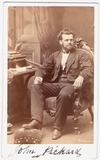
-confederates of New Brunswick but to their colleagues throughout British North America. Smith’s government was forced out of office by Lieutenant Governor Arthur Hamilton
Charles Hamilton* in July. Pickmore was given a “grand funeral,” and his body rested in the Anglican church before being conveyed to England in
AO, MU 2366. MTRL, James Hamilton papers. Arthur papers (Sanderson), vol.1. Authentic letters from Upper Canada . . . , ed. Thomas Radcliff, intro. J. J. Talman
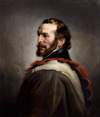
British House of Commons to inquire into the company’s activities [see Sir George Simpson]. Thereafter he went to Upper Canada and from 1857 to 1859 made his home in Hamilton, where his
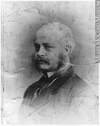
testified in his favour. Although he was acquitted by the jury, Lieutenant Governor Henry Hamilton and Dejean drummed
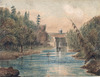
Fanshawe, where Hamilton Hartley Killaly, a Dublin friend of his father, lived. The Shanly family’s 600-acre estate, “Thorndale,” was only just established when the rebellion of 1837 broke out. Charles
Shortt’s Irish background and his strongly Protestant, conservative churchmanship. The newspaper was not popular with all Canadian Anglicans. In 1853 an acidulous pen commented in the Hamilton Gazette
1877. He moved to Hamilton and then to Toronto, where he continued building ships for a while before retiring. His best-known ship, and the only one still afloat (now on the Muskoka lakes), is the
be more than decorative. Members of the executive were additionally out of touch because they met only three or four times a year; those from outside the Toronto-Hamilton region often could not attend
than shoppers in Toronto or Hamilton. Consequently, dry goods, a dying trade in other places, remained in a relatively healthy state in London; there were almost as many dry goods stores there in 1905 as
town of Cobourg, and then in Peterborough. In 1853 he was elected a municipal councillor for both Cobourg and the township of Hamilton, and was the warden for Northumberland and Durham
in 1863 he took over St Mary’s parish and its missions in Owen Sound. He was consulted by the bishop of Hamilton, John

.
Late in 1821 Spencer informed the society that he was in Bermuda and would not be returning to Newfoundland. The governor of Bermuda, Sir William Lumley, nominated him rector of Smiths and Hamilton
was while he was living in this town that Stevenson married. He subsequently moved to the branches in Hamilton (1850–53) and Toronto (1853–56), before taking charge of the one at Quebec
General’s Office, Bishop John Strachan*, William Hamilton Merritt
. According to oral tradition, his true name was Arthur McDonald and by the early 1870s, after graduating from some college in the United States or Canada, he was living near Hamilton, Ont. Around this time he
school in Oakville. In 1839 Tassie went to the Gore District Grammar School at Hamilton as assistant master under John Rae*. In 1853 he moved
he was commissioned by Arthur Hamilton Gordon, New Brunswick’s last colonial lieutenant governor, to
killed.
Isabel T. Kelsay
Hamilton College
.
W. D. Hamilton
The principal facts contained in this sketch are reported and documented in the author’s book The Julian
Willcocks* and was taken prisoner. William Hamilton Merritt*, a Grantham neighbour held in captivity with Thompson in
served as counsel for the tenantry before the P.E.I. Land Commission which included John Hamilton Gray* for the crown, John
in particular, since the Inuit, whether or not they had been baptized, were being strongly attracted south by traders at Baie des Esquimaux (Hamilton Inlet), Sandwich Bay, and other places; this
Canadian Baptist Arch., McMaster Divinity College (Hamilton, Ont.), Canadian Literary Institute, Board of Trustees, minute-book, 1857–87; Women’s Baptist Foreign Mission Board, Ontario West, minute-books
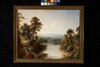
western Ontario painting portraits and landscapes in Brantford, Hamilton, St Catharines, and at the Niagara Falls; he also made at least one trip to the White Mountains in New Hampshire. He completed
. Hamilton Spectator, 13 Nov. 1911. Toronto Daily Mail, 1880–86, 1890–94. C. R. W. Biggar, Sir Oliver Mowat . . . a biographical
firm in Toronto; he subsequently expanded to Montreal, Hamilton, and western Canada. He was sending travellers to Manitoba and British Columbia by 1872. He diversified his business interests as he grew
mid-nineteenth century town” (phd thesis, McMaster Univ., Hamilton, Ont., 1983). Merrill Denison, Harvest triumphant: the
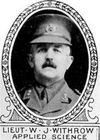
WITHROW, WILLIAM JAMES, engineer, civil servant, militiaman, and officer; b. 28 Oct. 1868 in Hamilton, Ont., one of the two
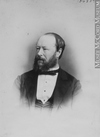
involved as a director, along with Mathew Hamilton Gault, in the commencement of operations in 1871 by the
Belcher*, a prominent Halifax merchant.
William B. Hamilton
Lieutenant Otho Hamilton*. Wroth returned to England that year, and apparently transferred later to Lucas’ regiment in the West Indies. He had
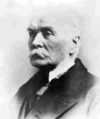
proposal to William Hamilton Merritt*, an mla and the canal’s primary promoter, to rebuild the
Hamilton. The following year Hamilton and Cartwright with the help of their principal suppliers, James McGill
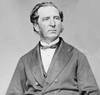
the law, he forced its resignation, and in the ensuing election had the pleasure of seeing his unconstitutional methods justified. The John Hamilton
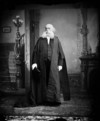
Montreal merchant and founder of Queenston, John Hamilton*, and another sister, Helen, had become the wife of Kingston merchant and tory

Cleland Hamilton interviewed him for an article published in that city’s Telegraph on 15 Dec. 1869. In it Baker recalls details of his life, including his birth in Quebec, his family genealogy
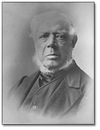
Gallery of Hamilton (Hamilton, Ont.); the Agnes Etherington Art Centre, Queen’s Univ. (Kingston, Ont.); the London Regional Art Gallery (London, Ont.); and, in Ottawa, the National Gallery of Canada and the
. S. Reid (2v., [Toronto] and Hamilton, Ont., 1975–80), 1: 95–110. J. S. Moir, Enduring witness: a history of the Presbyterian Church in Canada ([Hamilton, 1974?]). S. D. Self, “A
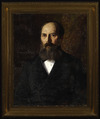
, and The twa mongrels: a modern eclogue (Toronto, 1876), issued under the pseudonym Tummas Treddles. An article, “The battle of Stoney Creek,” appears in the Hamilton Assoc
–90, and Leader, 1854–78; Ottawa Citizen, 1871–98; Manitoba Free Press, July–August 1877; London Free Press, 2 Jan. 1888; and Hamilton Herald
–4, 57699–700, 63038–39. Wentworth Land Registry Office (Hamilton, Ont.), Beverly Township, abstract index to deeds, concession 7, lot 6 (mfm. at AO). U. C., House of Assembly, Journal
. It established a branch in Hamilton (which lasted until 1854), in addition to the one already set up in Quebec City, and also agencies in a variety of places including Liverpool, Glasgow, and Sault Ste
Americans launched a major amphibious attack against Fort George. After a stout resistance, the defenders retreated towards Burlington Heights (Hamilton). Claus was said to have been the last officer to
schools near Dundas and in Hamilton, Adam entered Upper Canada College in Toronto at the age of 11 and was a pupil until 1846. His brilliance as a scholar was immediately evident; he stood first in his
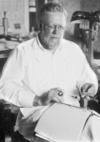
*; m. 21 Sept. 1890 Helen May Trott (d. 1941) in New York City, and they had one son; d. 22 July 1932 in Hamilton, Bermuda