

.”
In his first lecture to the Royal Society of Canada, Harvey had called for the establishment of a world-class laboratory for marine research in Newfoundland. As a consequence, the society in 1893
. 1766.
François Havy, a Huguenot, first came to Canada in 1730 as supercargo aboard the Louis Dauphin, a ship owned by the newly formed Robert
and of the entire Wabash system in 1889.
A reorganization of the Grand Trunk Railway of Canada in 1895 resulted in Hays’s appointment as general
secure the repeal of Canada’s tariff on American wheat in 1846, the removal of the Canadian preference on British manufactures in 1847, and the establishment of free navigation on the St Lawrence in
the Australian gold-fields. He then came to the Canadas, where he was engaged in late 1858 by the Hudson’s Bay Company as clerk at Fort William (Que.) on the Ottawa River. In 1864 he was promoted to the
.
Horné came to Canada as a soldier in the colonial regular troops. On 24 Jan. 1702, at Saint-Laurent on the Île d’Orléans, he married Marie Sivadier. From 1704 until his death, Horné practised as
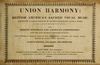
published in Canada. In October 1796 he advertised the opening of a singing school in a large upper room on King Street. There he taught singing techniques and the rudiments of music theory, working primarily
in Brussels; son of Luc Jacquiés and Barbe Segris (Seygris); d. after 1724.
He arrived in Canada about 1712, and on 24 Nov. 1715 married
engineer, for employing officers of the Royal Engineers. He was himself later to resist similar tendencies in Canada since he thought they would inhibit growth of its engineering profession. Nonetheless

Canada to ensure the continuing influence of Christianity in a rapidly changing dominion, especially in the cities and in the west. Kilpatrick’s enthusiastic support for church union rested on his belief
Upper Canada College in Toronto from 1861 to 1865. He then entered the University of Toronto, where he subsequently received scholarships in the classics and modern languages. A member of the university
(Thwaites), passim. Le Clercq, First establishment of the faith (Shea), I, 234, 236, 241, 246, 261, 263–72. Sagard, Histoire du Canada (Tross), II, III, IV, passim

, colonizer, preacher, and author; b. 9 March 1845 in Saint-Jacques-de-l’Achigan (Saint-Jacques), Lower Canada, son of Joseph Cassé, a farmer, and Marguerite Mirault; d. 28 Feb. 1921 in
(1638–45), superior of the Jesuits in Canada (1645–50 and 1659–65); b. 27 April 1593 in Paris; d. 26 January 1673 at Quebec; brother of
; XI, 71. Archange Godbout, Origine des familles canadiennes-françaises, extrait de l’état civil français (Lille, 1925). “Les notaires au Canada,” 22. Tanguay, Dictionnaire, I
Levasseur’s work during his stay in Canada have been identified.
John Langdon
(1840–1904) in Wilmot Township, Upper Canada, and they had four sons and eight daughters, of whom two sons and five daughters predeceased him; d. 15 April 1920 in Baden, Ont., and was buried
Ronald Macdonald’s childhood except that he came from a family of modest means. He was brought to Lower Canada as a result of Bishop Joseph-Octave
Macdonell’s ability as a chemist apparently came to the attention of the lieutenant governor of Upper Canada, John Graves

Bennet*; William Caven*]. His later concept of the United Church of Canada, according to which “all things work together for good to them that
MARKLAND, GEORGE HERCHMER (Herkimer), public servant; b. about 1790 at Kingston, Upper Canada, the only child of Thomas
La Ribourde in the offices of provincial commissioner of the Recollets in Canada and guardian of the convent of Notre-Dame-des-Anges at Quebec. He went to Canada during the summer of
Doukhobors in western Canada. The previous year, at the request of his friend Prince Kropotkin, Mavor had persuaded Sifton to allow the Doukhobors to immigrate, and he would remain their staunch supporter
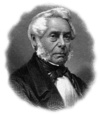
., the son of Thomas Merritt and Mary Hamilton; d. 5 July 1862 at Cornwall, Canada West.
William Hamilton Merritt’s father had served
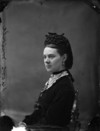
MICKLE, SARA (Sarah), local historian and heritage preservationist; b. 13 June 1853 in Guelph Township, Upper Canada
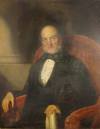
.
Morrin returned to Canada in 1814 and shortly after was appointed temporary assistant naval surgeon on the Great Lakes. He gave up this post a few months later and became assistant to his former employer
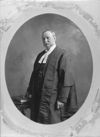
, Upper Canada, son of John Moss, a brewer, and Ann Quigley; m. 26 Sept. 1871 Emily Sullivan (d. 1941) in Toronto, and they had six daughters and three sons; d. there 11 Oct
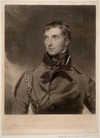
a study of the defences of the Canadian colonies. On 4 April Drummond appointed him commander of the forces and provisional lieutenant governor of Upper Canada. Murray assumed office on 25
) MacDonell, a Scottish artillery lieutenant, and Marie-Anne Picoté de Bélestre; d. 1866 at Saint-Anicet, Canada East.
In 1812, the year his
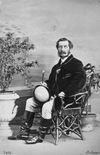
Lorn MacDougall immigrated to Lower Canada in 1840. He settled in Montreal where, in partnership with John Glass, he opened a stockbroker’s office, reputedly the first in the city. With still relatively
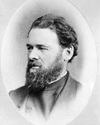
Barrie, Upper Canada. Though his elementary education was slight, he early learned the many pioneer skills needed in his future mission in the far west. On 10 Jan. 1842 he married Elizabeth Chantler
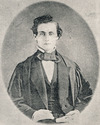
of Niagara Falls), Upper Canada, eldest son of William McMicking and Mary McClellan; m. 12 July 1853 Laura Chubbock, and they had two girls and two boys; d. 25 Aug. 1866 near
NOUCHET, JOSEPH, controller and later director of the Domaine d’Occident in Canada, merchant; b. 1690 in the parish of
and Nevers. After two years as minister of the Collège in Bourges (1622–24), he came to Canada in 1626. He spent the winter in the Huron country with Father de
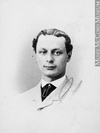
; b. 17 April 1842 in L’Assomption, Lower Canada, son of Thomas-Edmond d’Odet* d’Orsonnens, a physician, and Marie
his arrival in Canada in 1869 or 1870 to become a stenographer with this company, first in Montreal and later in Toronto. He would continue his interest in swordsmanship, helping to found the Toronto
.
It is extremely difficult to prove, from the evidence available, whether or not Jean Parmentier actually came to Canada. According to Lanctot (Histoire du Canada, I, 112), Jean and his brother
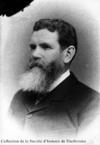
. Paton, who worked all his life in the manufacture of woollens, left Scotland in 1855 for Upper Canada and settled in Sherbrooke in 1866, where his career began to flourish. After joining a small group of
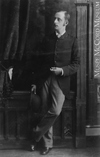
LOY, banker; b. 2 Sept. 1856 in Coteau-Landing, Lower Canada, son of Orton Pease and Mary Hare; m. 24 April 1883 Diana Ann Rea in Montreal, and they had two
Society of Edinburgh, Perrault returned to his native land. Soon after, in July 1818, he received his licence to practise medicine in Lower Canada. With Iffland, who had also come back, Perrault put
Women of Canada [see Ishbel Maria Marjoribanks*]. It was read by Mrs Arthurs, who also seconded the resolution that the
[In his work L’esclavage au Canada français Professor Marcel Trudel has studied exhaustively the cases of Pierre the Comanche and many other slaves in Canada. The writer has used his work
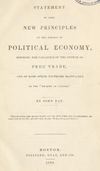
wife emigrated to Canada. He later wrote: “I exchanged the literary leisure of Europe for the solitude and labors of the Canadian backwoods.” Rae went first to Montreal where his older sister
guardians in the office responsible for the “safeguarding of the king’s dues” in Canada. He had the task of supervising the loading and unloading of merchandise at the port, and of making certain that the
teachers. With her and two other companions she went to Paris. While there she obtained her father’s permission to go to Canada. The travellers left La Rochelle on 2 July 1659, and after a rough
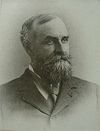
Canada, and the next year they established a sawmill on the Bay of Quinte at Mill Point (named Deseronto in 1881). Following the dissolution of the partnership, young Edward came to Mill Point in 1862 and
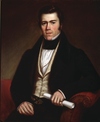
McKay*. The canal was one of the most important public works of the early 19th century in Lower Canada and in building its locks Redpath gained a sound reputation. In 1827 and 1828 McKay and Redpath
Buade] seems to have held him in high esteem, since he considered him “one of the best and wisest officers” in Canada.
On 13 May 1687
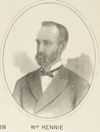
Scarborough Township, Upper Canada, son of Robert Rennie and Elizabeth Fife; m. 13 March 1862 Sarah Glendinning of Scarborough, and they had four sons; d. 24 July 1910 in Swansea (Toronto
granted him the little Bécancour fief “on the road to the great Cap Rouge.” The company also bestowed upon him, in 1657, the office of chief road officer for Canada. He became the first to occupy this post