

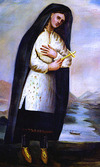
of Quebec, called her “the Geneviève of Canada,” a theme that Chateaubriand was to develop in Les Natchez. In 1744 Father
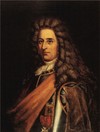
TESTARD DE MONTIGNY, JACQUES, officer in the colonial regular troops in Canada, famous for his campaigns in Newfoundland, son of Jacques
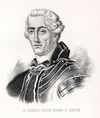
as a scout in the borderlands between Canada and New York. The young soldier gained a thorough knowledge of the woods, and acquired skill in leading bands of soldiers and Indians on scouting parties
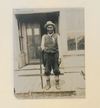
prospector; b. 1840 or 1841 in the vicinity of Lake Temagami, Upper Canada, eldest son of Kabimigwune (François) and Marian; d. 15 March 1916 in the Lac Abitibi region, Que
.
He was a soldier in the Carignan regiment (Naurois’ company) when he landed at Quebec in September 1665. When the troops were disbanded in 1668 he settled in Canada, and he and a regimental
catholiques, 1643–1967, IX. A. Roy, Inv. greffes not., XIII, 5. P.-G. Roy, Inv. ord. int., II, 21. “Les notaires au Canada,” 37. Tanguay
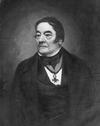
dictionnaire des mots créés en Canada.” In 1812 he brought out Relation de la mort de Louis XVI, roi de France by Henry Essex Edgeworth de Firmont, which subsequently appeared in an English version
lieutenant-colonel in January 1800.
In 1802 Vincent’s regiment embarked for Lower Canada. The following year it moved to Upper Canada, where it spent
WALLACE, FRANCIS HUSTON, Methodist minister, theologian, educator, and author; b. 5 Sept. 1851 in Ingersoll, Upper Canada

O’Beirne*], who fastened himself to the party, provided comic relief. With its analysis of the prospects of the prairies and British Columbia, the book helped prepare opinion in both Britain and Canada
.
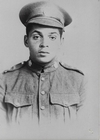
As patriotic fervour to enlist swept the nation on Canada’s entry into the war, minority groups also offered their services [see Cameron Dee
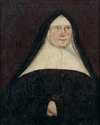
April 1714, thus ensuring that she would remain in Canada. Contact between Esther and her family was maintained through occasional visits by nephews from New England. Both her father and mother left her
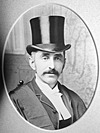
Borden] to regulate the price of newsprint. The Supreme Court of Canada reversed White’s judgement in Hetherington v. Security Export Company Limited; his greatest legal
emigrated to the Canadas in 1863 and accepted a job as a brakeman on the Grand Trunk Railway. Rising through the ranks, he served as freight and station agent at various locations, culminating his career with
in Newfane, Vt, and they had two daughters; m. secondly in 1802 Elizabeth Patterson, and they had seven children; d. 28 Oct. 1833 in Stukely, Lower Canada, and was buried there
injuring his head while diving into Lake George, he received the Indian name Onwarenhiiaki. But he was usually called Eleazer Williams. He grew up at Caughnawaga, Lower Canada. In 1800, when he had reached
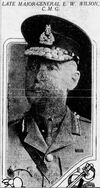
WILSON, ERASTUS WILLIAM, businessman and officer; b. 1 July 1860 in Belleville, Upper Canada, son of James Wilson, an iron
*, and Matthew, had left Ireland before the rest of the family set sail for Canada in 1829. Soon after his arrival in Montreal, William was employed by a newspaper, the Canadian Courant and Montreal
Canada, but he soon resigned his ministry there because of alcoholism. He then moved to Stamford (Niagara Falls), where until about 1804 he preached on Sundays and taught during the week. About 1813
.
Around 1857 David Yuile’s family emigrated from Scotland to Ingersoll, Upper Canada, where David attended a local school. In 1869 the family moved to Montreal and David’s elder brother, William, became a
Coulonges and Dorothée de Manthet; buried 20 Nov. 1700 at Montreal.
D’Ailleboust Des Muceaux came to Canada with his uncle

, after which they set out for Newfoundland, the River of Canada (St. Lawrence), and New Scotland. Alexander’s route thereafter is uncertain and can be deduced only indirectly from his father’s
.
Pierre-Urgel Archambault was one of the descendants in the imposing line of Archambaults that sprang from Jacques Archambault and Françoise Toureault (Thoureault), who came to Canada from Dompierre-sur-Mer
largest steam sawmills in Canada. Yet by the mid-1850s he was in severe financial difficulties, and claimed to have lost £40,000 and to have been “all but ruined.” However, he continued in the lumber trade
achieved recognition in his occupation, for Hilton was, even in the 1830s, becoming the acknowledged head of the cabinet trade in Montreal and one of the most prominent cabinet-makers in the Canadas. Baird
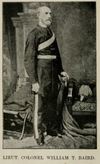
Canada. As a counter, he proposed the establishment of a small, highly trained permanent force for Canada, staffed by Canadian officers and backed by a well-equipped volunteer militia raised from among the
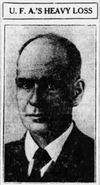
BAKER, PERCIVAL, preacher, farmer, and agrarian leader; b. 11 Jan. 1867 in York County, Upper Canada, son of Jacob Baker and
James Baldwin, mp, and Mary O’Connell; m. in 1830 Mary Sprague of Albany, N.Y., by whom he had one son and six daughters; d. 14 Dec. 1861 at Toronto, Canada
into a teachers’ institute, aimed primarily at improving teaching methods and promoting professionalism. In Bancroft’s view, such institutes, which flourished in England and Canada at the time, were
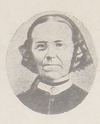
; b. 25 Sept. 1803 in Saint-Armand, Lower Canada, daughter of Asahel Barber and Polly Armes; d. 23 Feb. 1898 in Scottsmore, Que
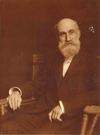
Canada, that he became famous. The citation which accompanied the lld he received from McGill University in 1909 referred to “his attainments in arts and letters, his active

McDonald, in St Andrews (Saint-André-Est), Lower Canada, and they had one child; d. 20 May 1858 in Montreal.
Named after
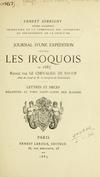
.
Louis-Henri de Baugy sailed for Canada from La Rochelle on the night of 12–13 July 1682 on the Saint-François-Xavier. He arrived at Quebec in October together with
.
The first Canadian Copyright Act of 1872 had been disallowed, but the act of 1875 made it legal to reprint in Canada any American book not coming under the imperial copyright act of 1842, which
. Margaret Christie, daughter of William Christie of Stirling, Scotland; d. probably 5 July 1814 in Chambly, Lower Canada.
By his marriage James
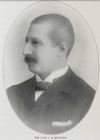
to England, the United States, and other parts of Canada. He served as well as vice-president of the Hebrew Benevolent Society and the men’s charity society of Holy Blossom, and as treasurer of the
give working people a voice in society. He received his early trade union education in the Knights of Labor, an organization that spread from the United States to Canada late in the 19th century. It
, and to be banished. He appealed this sentence to the Conseil Supérieur, which not only confirmed it but also banished him from the whole of Canada. Such severity towards an amiable scamp, who had just
was made aide-de-camp to Dieskau* when the latter was sent to Canada in 1755 as commander of the French regular troops dispatched to the
, a loyalist who came to Canada in 1782. She was probably in his service in both New York and British North America. Bestian died in 1792, possibly in
) and Maria Detweiler; m. before 1798 Elizabeth Brech, and they had a son and a daughter; d. 10 Aug. 1856 near Flamborough (West Flamborough), Upper Canada
.
Vincent Bigot had entered the Jesuit noviciate in Paris on 2 Sept. 1664. Arriving in Canada in 1680, he was attached first, in 1681–82, to the Algonquin mission at Sillery, then in 1682–83, to the
passengers, goods, and mail between ports on the east coast of Canada and to Newfoundland and the British West Indies. The firm also did business as a shipping agent, a marine-insurance underwriter, and a
.
The contracts and lucrative offices which George and Henry managed to get in Lower Canada seem to confirm that George had a family connection with the governor, whose use of patronage was well known. In
conduct of the United States respecting their north eastern boundary . . . (1826). In An essay on the re-construction of her majesty’s government in Canada (1839), he pointed out the
infancy; d. 9 March 1842 in the parish of Saint-Thomas (at Montmagny), Lower Canada.
Nicolas-Gaspard Boisseau
, Bougainville* had recommended the erudite Jesuit to her attention. On 25 March 1758 Bonnécamps again wrote to Delisle, this time to describe the desperate situation in Canada. After the capture of
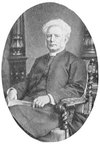
(Northern Ireland), eldest son of George Boomer, a linen manufacturer, and Mary Knox; m. first 18 May 1842 Helen Blair, née Adams, at Galt, Canada West, and they had four children; m
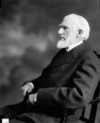
BOOTH, JOHN RUDOLPHUS, industrialist; b. 5 April 1827 near Waterloo, Lower Canada, son of John Booth and Eleanor Rooney
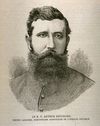
Jan. 1845 in Rivière-Ouelle, Lower Canada, son of Mathieu Bouchard, a blacksmith, and Félicité Lebel; d. 12 Sept. 1896 in Port of Spain (Republic of Trinidad and Tobago