

Edward Owen was headmaster and rector of the parish, he entered Trinity College, Cambridge, on 23 Oct. 1772. He obtained his ba in 1777, achieving distinction as
, O’Connor joined the Nova Scotia Barristers’ Society. The next year he was awarded a bcl by King’s College
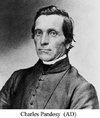
Dallest; d. c. 6 Feb. 1891 in Penticton, B.C.
Charles Pandosy attended the Bourbon college at Arles, France, and then the
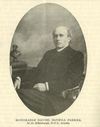
, Daniel McNeill Parker spent six years in public school in Petite before studying at King’s College School and Horton Academy. He began his medical training as an apprentice to William Bruce
Morin*. As a member of the assembly, Patrick advocated increased government aid to the Methodist Victoria College at Cobourg.
In 1856 Patrick
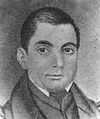
Collège Saint-Raphaël from 1802 to 1806, and at the Petit Séminaire de Montréal from 1806 to 1811. He then began his legal training under a brother of Pierre-Stanislas
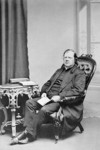
College in Cobourg was faced with bankruptcy by the withdrawal of the government grant in 1868, he campaigned for a new endowment from pulpit and lectern and made a large personal contribution. His generous
suggests that his early education at Portora School, Enniskillen (Northern Ireland), and Queen’s College, Belfast, had served him well. In 1859, after beginning to study law, he became rector of Lachute
.
Like his closest siblings, Richard Andrews and John, who became prominent physicians and medical educators, William Albert attended Victoria College, Cobourg. He studied there from 1856 to 1858
Curry began to develop the company into a construction firm. One of their first contracts was for the new main building and the ladies’ seminary building at Acadia College in 1878. They probably won
’ Institute, which was incorporated in March 1873. Five years later he joined the directors of the Wesleyan Female College (later the Wesleyan Ladies’ College), serving as vice-president (1881–88) and president
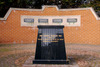
Scriven and Jane Medlicott; d. unmarried 10 Aug. 1886 near Bewdley on Rice Lake, Ont.
Joseph Scriven attended Addiscombe Military College near
.
John Smith was the sixth of ten children, and, like his father before him, was educated at King’s College (University of Aberdeen), from 1814 to 1819. A shy man, quiet and pious, he tutored while
brilliant student at the Collège de Sainte-Anne-de-la-Pocatière, and during these years he formed a strong friendship with François-Magloire
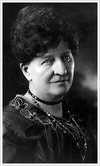
principal of the co-educational Mount Royal College in Calgary, a private school financed by the Methodists’ Alberta Conference and General Council. In a later tribute to Emily, who continued to run a men’s
, Robert John Staines was educated at the Oundle Grammar School before entering St John’s College, University of Cambridge, in 1840. Two years later he transferred to Trinity College where he progressed
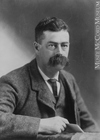
Canadian writer to be given an honorary degree for service to Canadian letters. His dcl from King’s College, Windsor, N.S., was followed by honorary degrees from the Université
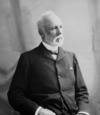
his time on this bench. He received an honorary lld from the Université Laval in 1890 and another from the College of Ottawa in 1893. A chair in law was created for him at
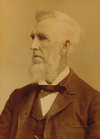
, Ohio, a liberal-arts college founded by the Methodist Episcopal Church. He subsequently taught school for three months in the Dobbie settlement in Bayham Township, Ohio. This endeavour, he later recalled
and spent most of her brief life at Windsor, the rural retreat of a number of distinguished Nova Scotian families and the site of King’s College, the first provincial university. After Halifax, Windsor