

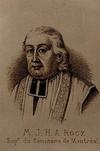
Society of Saint-Sulpice, he taught moral theology at the Séminaire de Saint-Sulpice in Paris and gave several lectures that attracted notice. Early in 1791 he went to continue his teaching career at the
, he also signed Francis D., Frank D., and most often F. D.), merchant and newspaperman; b. 3 Aug. 1853 in the parish of Saint
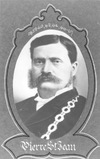
returned to Ottawa, working with Dr Jacques-Télesphore-Cléophas Beaubien, before returning to Lower Canada to practise in Saint-Denis, on the Richelieu. In 1856 he married Rose Larue, daughter of the
ADHÉMAR DE SAINT-MARTIN, ANTOINE (baptized Anthony), royal notary, clerk of court, process-server, and prison keeper
-Pierre, Sieur de Saint-Vilmé, had been introduced to the sea by their redoubtable uncle, Simon-Pierre Denys* de Bonaventure
his study of the Baie-Saint-Paul malady that his name still figures in the annals of Canadian medicine. In 1776, three years after the appearance of the disease, the origin of which was apparently
BAILE (Bayle), JOSEPH-ALEXANDRE, Sulpician priest; b. 19 April 1801 at Saint-Genest de Bauzon, dept of Ardèche, France; d
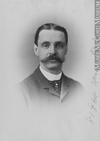
.
Henry took commercial studies at the High School of Montreal, which he completed in 1856. He then spent a winter in Saint-Antoine-de-la-Rivière-du-Loup (Louiseville) with notary Jean-Baptiste-Arthur
year; it was then, it seems, that he chartered a schooner to sail to Saint-Domingue (Hispaniola) with some other Acadians. The climate overcame many of them, and Brossard is believed to have taken the
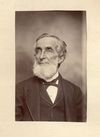
live with his uncle Thomas Storrow, who found him work with the ironmonger J. T. Barrett, on Rue Saint-Paul. In 1825 Brown is believed to have opened a hardware store on the same street
bought two houses on Rue Sainte-Famille and one on Rue Saint-François, which he then rented at £40 to £50. In 1806 one of the houses on Rue Sainte-Famille was converted by the tenant into a hospital for
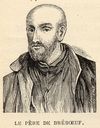
1593 at Condé-sur-Vire in Lower Normandy; martyred 16 March 1649 at the village of Saint-Ignace in the Huron country (in the region of Midland, Ontario), canonized 29 June 1930 by
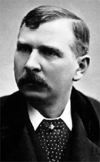
attending school in his home town, Kennedy Francis Burns emigrated to British North America; he studied at St Mary’s College in Halifax and then in Saint John, N.B. In 1857 he became a clerk at
, surveyor of the highways, streets, and lanes for the town, ordered 700 to 800 square toises of paving stones for Rue Saint-Pierre. Cannon was to receive “the sum of five shillings and ten pence in
Nord du Fleuve. Formed that year, the new company included merchants, seamen, and farmers from Rivière-du-Loup, Trois-Rivières, Saint-Léon, and Yamachiche
Casgrain* and Monsignor Henri Têtu, and he spent his childhood years at the manor in L’Islet. He did the classical program at the Collège de Sainte-Anne-de-la-Pocatière from 1857 to 1864 and studied
, Joseph Chabert is believed to have studied for three years at the École Impériale des Beaux-Arts in Paris before pursuing a vocation in the church. In 1861 he entered the Congrégation de Sainte-Croix at Le
Saint-Louis; b. at Messina (Sicily), son of Mathieu de Crisafy and Françoise de Grimaldi; buried 6 May 1709 at Trois-Rivières.
Antoine de
newspaper business as a correspondent for the Saint John Daily News. Two years later he moved to Saint John to work on the staff of the paper. He joined A. W. Patterson as co
.
During the 1730s de Muy commanded the tiny post of Saint-Joseph (probably Niles, Mich.), where he was responsible for the regulation of trade and the maintenance of good relations with the local
Monro* and Mathew Bell*, Davison obtained the lease of the Saint-Maurice ironworks from his brother in 1793. These crown-owned ironworks proved
of Saint-Étienne, Toulouse, France, son of Philippe Dejean, a legal officer, and Jeanne de Rocques de Carbouere; m. first 12 Jan. 1761 Josette (Marie-Joseph) Larchevêque in Montreal, Que.; m
.
Dibblee drew a lot in Parrtown (Saint John) in what was shortly to become the province of New Brunswick, but he settled in Kingston, where he became lay reader to the Anglican congregation. In 1787 he was
DIONNE, CHARLES-EUSÈBE, taxidermist, museum curator, ornithologist, naturalist, and author; b. 20 July 1846 in Saint-Denis
, which had been housed at the École des Glacis since 1843 and which, in addition, taught classes in the Saint-Roch and Saint-Jean (Saint-Jean-Baptiste) schools. He quickly established himself in the Quebec
acres in the seigneury of Sainte-Marguerite. He also bought land in the fief of Saint-Maurice and lots in Trois-Rivières. The sale of these lots between 1859 and 1870 brought him nearly $5,000. Most of
), Lower Canada.
Louis Dunière’s father, a native of Saint-Saturnin (Saint-Cernin), France, arrived in the colony shortly before 1714; at Quebec he was
countryside. From early October onward, Sir John Colborne relied on Forbes for confidential information about the activities of the Patriotes at Saint-Benoît. On 22 October, after Colborne had decided
Newfoundland. He landed at Baie des Esquimaux, which he renamed Baie Saint-Louis, on 11 July, taking possession of it, as he wrote, “in the name of the king, and the French nation.” In fact, Intendant
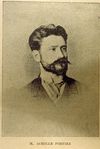
servant; b. 23 Oct. 1864 in Saint-Clet, Lower Canada, son of Léonard-Agapit Fortier, a physician, and Émérante Bonin; m. first 2 Dec. 1893 Marie-Louise Lefebvre (d. 24 May 1909
GAGNON, ANTOINE, Roman Catholic priest and vicar general; b. 12 Feb. 1785 in Petite-Rivière-Saint
Brisay de Denonville’s 1687 expedition missionary work in the Iroquois country did become impossible, and Garnier then exercised his ministry at Sault-Saint-Louis (Kahnawake, Que.) until he was
recently arrived at Port-Toulouse (St Peters, N.S.).
In 1749 Gautier and other Acadian collaborators determined to settle on Île Saint-Jean (Prince
the Hôtel-Dieu in Montreal, and founder and director of the Hôtel-Dieu in Campbellton, N.B.; b. 17 July 1840 in Sainte-Rosalie, Lower Canada, daughter of Pierre Gendron, a farmer, and Hermine
.
In return for his services Giffard first received two other seigneuries: that of Saint-Gabriel, to the northwest of Quebec, on 11 April 1647, and that of Mille-Vaches, below Tadoussac, on 15
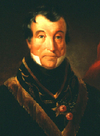
.
Along with all these activities Gugy was involved in politics. From 23 Nov. 1809 to 1 March 1810 he represented Saint-Maurice in the House of Assembly. Associated in many people’s minds with the
condition that he marry their niece Marguerite, daughter of Jean-Paul Legardeur* de Saint-Pierre. The wedding took place on 24
1866 at Fredericton, N.B.
James Hogg arrived in Saint John, N.B., in 1819 after receiving some education in Ireland. By the mid 1820s he was employed
, family had a strong craft tradition. The progenitor of this clan was Pierre Janson, dit Lapalme, a Parisian stonemason who was brought to Canada in 1688 by Bishop Saint-Vallier
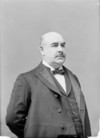
KING, GEORGE EDWIN, lawyer, politician, and judge; b. 8 Oct. 1839 in Saint John, N.B., son of George
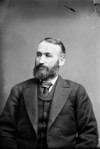
Conservative George Frederick Baird, a Saint John lawyer, and received 61 votes more than Baird. To the amazement of many, however, the returning officer, John R. Dunn, ruled King’s election
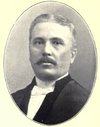
Sainte-Rosalie, Lower Canada, son of Louis-Sébastien Langelier, a farmer, and Julie-Esther Casault; m. 2 Aug. 1882 Marie-Louise-Georgiana-Lucille La Rue at Quebec, and they had one daughter
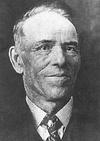
Malbaie, Lower Canada, son of François Lapointe, a farmer, and Adelphine Tremblay, dit Picoté; d. unmarried 12 Jan. 1924 in Saint-Joseph-d’Alma (Alma), Que., and was buried 16 January in
Saint-Louis rapids, in order to meet the Hurons there and to try to follow them into their own country. Sure of carrying out his plan, he went down to Quebec again to equip himself with the objects
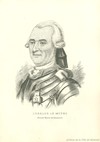
XV made him a knight of the order of Saint-Louis as a reward for his 31 years of “good and loyal services.”
In June 1739 the town major of
Henri Tonty, commandant at Fort Saint-Louis and Chicago, captain in the colonial regular troops; fl. 1687-1721.
The
faubourg Saint-Roch at Quebec and became a schoolteacher. In the autumn of 1806 Bishop Joseph-Octave Plessis* made him bursar of the
*. Unsuccessful in his attempt at government employment, he bought the firm of Gibson’s Land Surveying in Saint John. This business and a variety of odd jobs occupied him for a year, after which he returned to
[La Rochefoucauld*]. During his exile in France Morin married Marie-Charlotte Boschet de Saint-Martin, the daughter of a Louisbourg merchant
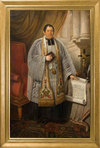
College, Carlow, and around 1817 immigrated to Lower Canada with a large family group. By October of that year he had begun teaching English at the Collège de Saint-Hyacinthe, where he also studied for the