

Source: Link
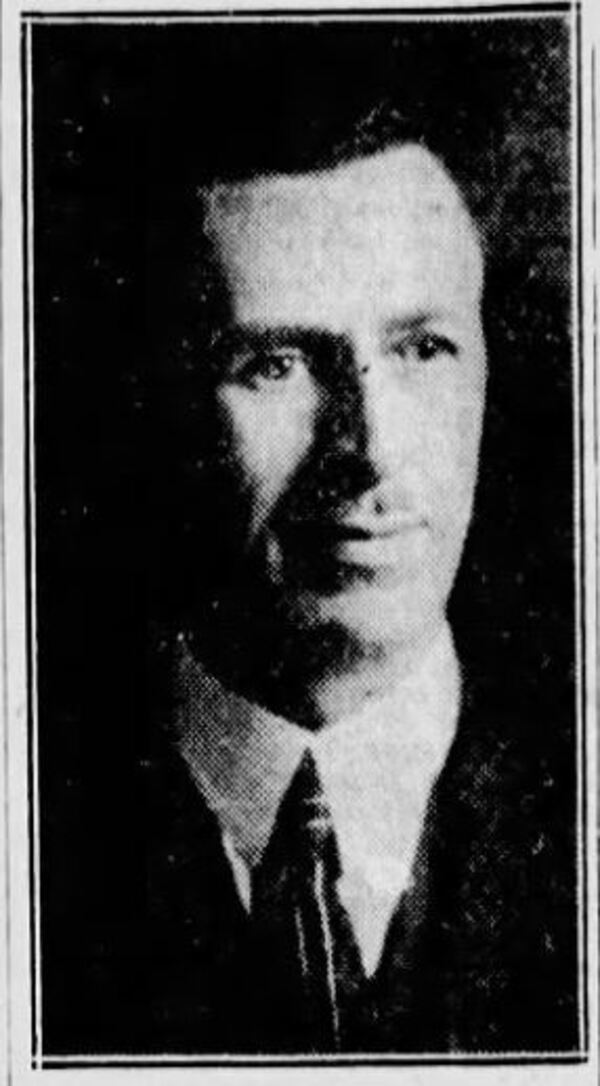
SNELL, HERBERT, salesman, merchant, politician, and militia and army officer; b. 20 Aug. 1880 in Stocksbridge (Sheffield), England, son of David Snell and Ellen Green; m. first 10 Jan. 1906 Agnes Graham (1882–1911) in Winnipeg; m. secondly 28 May 1914 Jessie Margaret Irene McNeill (McNeil) in Moose Jaw, Sask., and they had two daughters and three sons; d. 12 Nov. 1932 in Montreal.
When Herbert Snell was about 10 years old, his father, at one time a coachman and servant, moved his family from Yorkshire to Port Hope, Ont., where Herbert continued his education. While in his late teens, he left home for Winnipeg and found employment with Robinson and Company, a dry-goods wholesaler. By 1901 Snell was working for the Gordon Drysdale department store in Vancouver. His time there was followed by a period during which he was a travelling salesman for the Vancouver branch of the Montreal-based textile firm Gault Brothers’ Company and for the Crescent Manufacturing Company, both linked to Andrew Frederick Gault*, the “Cotton King of Canada.” It was perhaps through his peripatetic employment that Snell became familiar with Moose Jaw, which was incorporated as a city in 1903. By 1904 he had bought into the menswear store Clarke Brothers. When the partnership ended about a year later, Snell operated his own womenswear shop called Correct Dress for Women, which was soon considered to be the city’s most fashionable emporium.
The province of Saskatchewan was created in 1905 and its first premier, Thomas Walter Scott, was confident about its future greatness. Having settled into business, early the following year Snell married Agnes Graham, a native of Ireland whose family lived in Winnipeg. A freemason, Snell became involved in community affairs, first as founding president of the Moose Jaw branch of the Young Men’s Christian Association (YMCA), established in 1905. In addition to being on the organization’s committee for western Canada, he would be a representative on its National Council from 1912 to 1916. He was also head of the local Liberal association for three years, starting in 1907. Thanks to an economic boom in the west, in 1909 he was able to expand at a new location as the Herbert Snell Company.
Following the death of his wife in 1911, a month after their fifth anniversary, Snell focused on civic duties and professional responsibilities. In December 1910 he had been elected a city alderman, a position he would hold until 1914. With his business continuing to grow, in 1912 he announced his intention to construct a three-storey department store. The dream was short-lived: an economic downturn ravaged western Canada in 1912–13, and as Moose Jaw’s unemployment rate reached 15 per cent, he abandoned the building project. In the spring of the following year, Snell, now 33, married Jessie McNeill, 22, of Moose Jaw.
In the meantime, Snell had joined the Canadian militia and was responsible for organizing a company of the 95th Regiment (Saskatchewan Rifles) in 1910–11. He was promoted major in 1912, and when the 60th Regiment (Rifles) was formed in his city in January 1913, he was named lieutenant-colonel. He and other local businessmen persuaded the federal government that Moose Jaw needed an armoury, which was officially opened in the north end on 3 July.
When the British empire, including Canada, went to war in August 1914, the minister of militia and defence, Samuel Hughes*, scrapped Canada’s mobilization plan for existing militia units. The 60th Rifles was therefore not called to arms and Snell was instead ordered to raise volunteers for the Canadian Expeditionary Force. On 1 Feb. 1915 he was given command of the new 46th Infantry Battalion (South Saskatchewan). The battalion landed in England in late October and was sent to train near Aldershot. By April 1916 it had been placed in the 10th Infantry Brigade, which was a part of the 4th Canadian Division commanded by Brigadier-General David Watson*, but two months later it was broken up when hundreds of men were sent to reinforce the 1st Canadian Division. While preparing to go to France, Snell was seriously wounded in an explosion on 5 July when a trainee mishandled a grenade. Initially, Snell was not expected to live – several fragments had struck near his heart. He was still in hospital when the reconstituted 46th Battalion left for France in August; it was no doubt a great disappointment for their former colonel not to go with them. Early in 1917 Snell’s damaged right eye was surgically removed. Despite everything, his health would be rated as excellent by the summer.
For the rest of his military career, Snell was assigned to support positions. After leaving hospital, he was given responsibility for the 9th Training Brigade in England. He later served at the headquarters of the Ministry of the Overseas Military Forces [see Sir George Halsey Perley]. At the Canadian Corps Reinforcement Camp in France, where he was named commander of its 4th Divisional Wing in October 1917, he had at one time upwards of 2,400 soldiers under him and proved to be an extremely capable organizer. Although his hopes of regaining command of the 46th had been dashed, in the spring of 1917 he did briefly lead the battalion while his successor, Herbert John Dawson, was on leave. It would become known as the Suicide Battalion because of the relentlessly heavy losses it suffered. One of the men killed was Hugh Cairns*, awarded (posthumously) the last Victoria Cross given to a Canadian for the First World War. By the end of 1918, the 46th had won 16 battle honours.
Snell returned to Canada in October 1919 after assisting with demobilization, and his name was removed from the battalion’s rolls on 11 November. He had been mentioned twice in dispatches and brought to the attention of the secretary of state for war for valuable services. His ties to the military continued in the post-war period. He was placed in the corps reserve of the South Saskatchewan Regiment, which had formed in March 1920 through the amalgamation of the 95th and 60th regiments, and he would transfer to the militia’s reserve of officers in 1924. He was also honorary president of the 46th Battalion Association. In a letter published in its 1926 yearbook, Snell expressed his hope for the future: “May it be our part to play some useful role in the daily life of this great nation during the days of peace as all so faithfully played during the days of conflict, and so, in some way, because of what has come to us of good from our past experiences, the Canada which we shall pass on to those who come after us may reflect those guiding principles which alone exalteth a nation.”
After the war Snell had returned briefly to Moose Jaw, although his business had closed in his absence. By 1920 he was once more an employee of the Gordon Drysdale store in Vancouver, but in 1922 he moved his family across the country to Toronto, where he joined the Robert Simpson Company. After the death in 1898 of its founder, Robert Simpson*, the department store had been purchased by Torontonians Alfred Ernest Ames, Joseph Wesley Flavelle, and Harris Henry Fudger, who were expanding aggressively to compete with the retail empire founded by Timothy Eaton*. Thanks to Snell’s organizational abilities and experience, he was promoted from department manager to store superintendent in 1923.
The following year Snell relocated to Montreal as general manager of the John Murphy Company, which had been acquired by the Robert Simpson Company in 1904. The successful businessman’s participation in local affairs included membership in the Montreal Board of Trade and chairmanship of the YMCA. A man “of deep conviction, impatient of sham and non-essentials,” as he would later be described, he “combined fine strength of purpose with gentleness of manner.” For a time he was involved in the Canadian wing of the multinational Institute of Pacific Relations. A respected Baptist, he was a trustee of the church in his upper-class Westmount neighbourhood, and from 1930 to 1932 he sat on the board of governors of McMaster University [see William McMaster*] in Hamilton, Ont., which was chaired by Toronto businessman Albert Edward Matthews*.
After a corporate reorganization of the Robert Simpson Company in 1929, Snell was appointed vice-president as well as the general manager of its Montreal store, located on the former John Murphy site. His training-camp injuries continued to plague him, however, and after an eight-month illness in the Royal Victoria Hospital, he died on 12 Nov. 1932, at age 52, of an infection of the inner lining of the heart; his medical record notes that “death was due to service.” His funeral was held at Westmount Baptist Church and his body was later returned to Ontario for burial in Port Hope, the place where his dreams of travel and success had begun in his youth.
Ancestry.com, “Quebec, Canada, vital and church records (Drouin Coll.), 1621–1968,” Westmount Baptist Church (Que.), 12 Nov. 1932: www.ancestry.ca/search/collections/1091 (consulted 7 July 2025). eHealth Sask., “Genealogy index searches,” Agnes Snell, death reg. no.102: genealogy.ehealthsask.ca/vsgs_srch.aspx (consulted 10 Oct. 2017). LAC, RG9-III-D-3 (War diaries – 46th Canadian Infantry Battalion), vol.4939; RG 150, Acc. 1992–93/166, box 9133-45. Man., Dept. of Justice, Vital Statistics Agency (Winnipeg), no.1906-003473. Gazette (Montreal), 14 Nov. 1932. Moose Jaw Evening Times (Moose Jaw, Sask.), 14 Oct. 1907, 28 May 1914, 14 Nov. 1932. Moose Jaw Times, 17 April 2009. 46th Battalion Association C.E.F. of Canada, Keep in touch: 1926 year book (Moose Jaw, 1926). J. L. McWilliams and R. J. Steel, The suicide battalion (Edmonton, 1978). David Monod, Store wars: shopkeepers and the culture of mass marketing, 1890–1939 (Toronto, 1996). Northern who’s who: a biographical dictionary of men and women …, ed. C. W. Parker (Portland, N.Y., and Toronto, 1916). Standard dict. of Canadian biog. (Roberts and Tunnell), vol.1. Thumbnail sketches: published in 1927, the year of the diamond jubilee celebration of Canada’s confederation (Toronto, 1927). [W. A.] Waiser, Saskatchewan: a new history (Calgary, 2005).
Image Gallery


Cite This Article
Galen Roger Perras, “SNELL, HERBERT,” in Dictionary of Canadian Biography, vol. 16, University of Toronto/Université Laval, 2003–, accessed May 31, 2026, https://www.biographi.ca/en/bio/snell_herbert_16E.html.
The citation above shows the format for footnotes and endnotes according to the Chicago manual of style (16th edition). Information to be used in other citation formats:
| Permalink: | https://www.biographi.ca/en/bio/snell_herbert_16E.html |
| Author of Article: | Galen Roger Perras |
| Title of Article: | SNELL, HERBERT |
| Publication Name: | Dictionary of Canadian Biography, vol. 16 |
| Publisher: | University of Toronto/Université Laval |
| Year of publication: | 2025 |
| Year of revision: | 2025 |
| Access Date: | May 31, 2026 |