

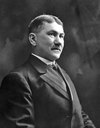
annually (1912). Also, for the entire period of his terms of office as mayor, he carried out complex and difficult negotiations with the federal government concerning the sale of the Champlain market, the
.
Vergor continued his service, at Lake Champlain, in 1757 and 1758. In 1759 he was back at Quebec, besieged from June by James Wolfe* and Charles
resigned 3 Nov. 1693. He had come to New France in 1688 and first served the parishes of Champlain and Batiscan until October 1694, when Bishop Saint-Vallier
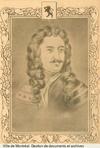
DUQUESNE (Du Quesne, Duqaine, Duquêne) DE MENNEVILLE, ANGE, Marquis DUQUESNE – Volume IV (1771-1800)
direction of Acadia and New York. In so doing he was complying with the instructions he had received to do nothing in Acadia and around Lake Champlain. Moreover, he knew that his successor would arrive with
granted 6,690 acres in Clifton Township, Lower Canada. The same year he sold the seigneury of Champlain, purchased from Joseph
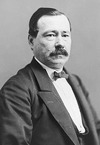
-Jacques*, the rector of the Université Laval. The leaders of the Rouge party attributed the defeat of all their candidates east of Champlain riding to the absence of a forceful newspaper. They urged
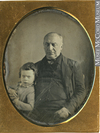
shares in the Champlain and St Lawrence Railroad, at a time when investment in railways was just beginning. He was also a shareholder in the Île Saint-Paul (Île Des Soeurs) toll-bridge and owned
.
A number of the Hyatts’ compatriots had taken refuge in the region around Lake Champlain and, relying on what the king was offering, hoped to obtain there both assistance and lands. Petitions were
.
In 1760 Antoine Juchereau Duchesnay, who was an ensign in the colonial regular troops, was given a difficult reconnaissance mission on the Lake Champlain frontier by Louis-Antoine de
anyone in France for 50 years, until the coming of Champlain
Kirke brothers. In 1629, Champlain had written to him from Dover to inform him of what had taken
(Shea); New relation of Gaspesia with the customs and religion of the Gaspesian Indians, tr. and ed. W. F. Ganong (Champlain Soc., V, 1910); Premier établissement de la Foy
Lake Champlain and all its forts. After apparently having taken part in the defence of Carillon in 1758 [see Montcalm], he spent the rest of that summer in reconnaissance or skirmishing
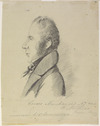
joined 74 other shareholders to found the Champlain and St Lawrence Railroad. He continued to engage in trade, enjoying success until 1837.
On
.
Marchesseault was set free on 26 Oct. 1838 and went to the United States. Upon his arrival on 9 November he made his way towards the Canadian border, and stayed in turn at Swanton, Vt, Champlain
Doreil* called it a “most daring expedition.” At the beginning of August 1758 Marin encountered a detachment commanded by Robert Rogers in the woods near Lake Champlain. Marin gradually withdrew from
the subject of debate and has been examined in the following: works: [L.-] O. Brunet, Voyage d’André Michaux en Canada depuis le lac Champlain jusqu’à la baie d
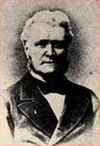
Montreal and Champlain Railroad, founded in the early 1850s, of which he was president from 1859 to 1865, in the Montreal and New York Railroad, established in 1857, and in the Carillon and Grenville Railway
* de Monts and Samuel de Champlain* in 1604 determined which of three rivers known as the St Croix was the St Croix intended in
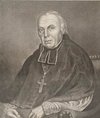
autumn of 1780 Panet was chosen to minister to the parishes of Batiscan and Champlain. The following year he became parish priest of Notre-Dame-de-Liesse, at Rivière-Ouelle, a progressive parish that was