

.
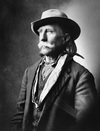
As the CPR made western Canada more accessible to outsiders, Brown began to guide parties in the Kootenay Lakes area. The growing number of visitors, however, alarmed him and neighbouring ranchers, and
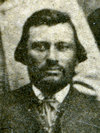
existence of such divisions, but hinted at his own opposition to the settlement’s becoming part of Canada rather than of the United States. He remained on the governing council, serving as commissioner of
difficulties of others of the first generation of English-speaking Catholic priests in Canada.
Raymond J. Lahey
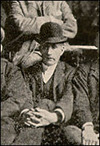
of “The Harbour Grace excursion”) are excellent modern versions of his songs. In 1983 a music award was inaugurated in Burke’s name by Esso Petroleum Canada and the Newfoundland and Labrador Arts
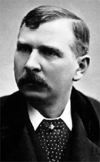
steam and electric railways of Canada, 1836–1937 . . . , comp. Robert Dorman (Ottawa, 1938), 146. Raymond Léger, “L’industrie du bois dans la Péninsule acadienne (N.-B.), 1875
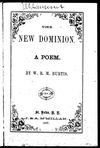
greatness of Canada under the British constitution, in sharp contradistinction to the United States, torn by civil war. Following confederation, Burtis withdrew from literary ventures to his law practice, but
architecture in the Maritimes, part iv,” Royal Architectural Institute of Canada, Journal (Toronto), 10 (1933): 97–100.
one biographical account in 1912, he was a member of the “Canadian Architect’s Association” (most likely the Royal Architectural Institute of Canada). In his private life, he had switched to the
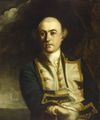
. H. Little, The battle of the Restigouche: the last naval engagement between France and Britain for the possession of Canada (Halifax, 1962). A. T. Mahan, The influence
, son of Louis Cadieux and Madeleine Serre; d. 13 June 1838 in Rivière-Ouelle, Lower Canada, and was buried there two days later.
Louis
Shepherd (Angers); b. 23 Feb. 1848 in Sainte-Rosalie, Lower Canada, daughter of Alexis Cadotte, a farmer, and Apolline Blanchard; d. 10 Feb. 1909 in Halifax
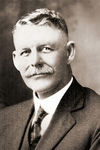
, Front benches & back rooms: a story of corruption, muckraking, raw partisanship and intrigue in New Brunswick (Toronto, 1976). W. L. Morton, The Progressive Party in Canada (Toronto
, and they had 11 children; d. 28 July 1814 at Quebec, Lower Canada, and was buried two days later in the Cimetière des Picotés.
Little
office holder; b. 10 Aug. 1864 in the parish of Notre-Dame-de-l’Assomption-de-Bellechasse in Berthier-en-Bas (Berthier-sur-Mer), Lower Canada, son of Édouard Carbonneau, a carpenter, and
; b. 22 April 1830 in Rivière-du-Loup (Louiseville), Lower Canada, second son of François Caron, a farmer, and Marie-Henriette Coulombe; m. there 11 Jan. 1860 Marie-Louise Lemaître
; d. 15 Jan. 1859 in Baie-du-Febvre (Baieville), Lower Canada.
The son of a tanner of the faubourg Saint-Roch at Quebec
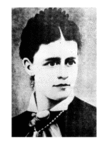
in Canada’s Yukon territory [see Shaaw Tláa*]. She could not resist the call of the Klondike. As she told the Arizona Daily Citizen
, 388, 390; 217/3, ff.31, 49–54, 60–61, 69, 84–85, 103. Coll. doc. inédits, Canada et Amérique (CF), I (1888), 110–13,155–71. N.S. Archives, II
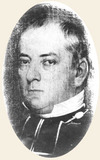
the six children of Louis-Joseph Chaboillez, a merchant-voyageur, and Angélique Baby-Chenneville; d. 28 Aug. 1834 in Longueuil, Lower Canada
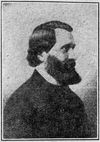
Catholic Archdiocese of Vancouver Arch., Early bishops’ corr. Gaston Carrière, Dictionnaire biographique des oblats de Marie-Immaculée au Canada (4v., Ottawa, 1976–89), 1: 201. E. McC. Lemert
, West of the mountains: James Sinclair and the Hudson’s Bay Company (Seattle, Wash., 1963). Stanley, Birth of western Canada. George Woodcock, Gabriel Dumont
.
In 1746 Clinton and the other colonial governors received instructions from England to raise volunteers for an expedition against Canada. About 1,400 men were raised in New York, and in 1746–47 the
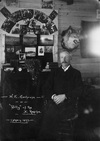
founding families in nineteenth century Canada (Toronto, 1986). Nanton and District Hist. Soc., Mosquito Creek roundup: Nanton-Parkland (Nanton, Alta, 1975).
lodge Select Surveyors No.9. The following year Coffin and his father were founding members of an association dedicated to upholding the government in Lower Canada
, 388. Kelley, “Jacob Mountain,” ANQ Rapport, 1942–43: 215–16. “Papiers d’État,” PAC Rapport, 1890: 273–74. “Papiers d’Etat – Bas-Canada,” PAC Rapport, 1891: 28–29, 67–68
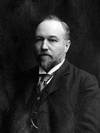
COLDWELL, GEORGE ROBSON, lawyer and politician; b. 4 July 1858 in Darlington Township, Upper Canada, son of William Edward
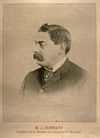
, professor, and school administrator; b. 1 Oct. 1848 in Stukely-Nord (Bonsecours), Lower Canada, son of Jean-Baptiste Comptant, a farmer, and Pélagie Beaudoin; m. 10 Aug. 1869 Sophie Jetté
.
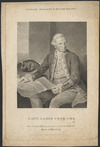
On 26 April 1778 Cook’s vessels left Nootka and headed north. Bad weather forced them out to sea, and they did not sight land again until they were well beyond the boundary of modern Canada and
western Canada. His descendants included not only countless Cooks but also Garriochs, Budds, Settees, Calders, Wrens, and Erasmuses. Recording Cook’s death, Peter Garrioch, a grandson and a trader and
merchandise that had remained in France during the war come into Canada and to use his influence with the court of France to quickly resolve the question of Canadian paper money
Methodism in Canada . . . (2v., Toronto and Halifax, 1881-1903), 1: 382, 777; 2: 50, 71. Encyclopedia of Nfld (Smallwood et al.), 1: 553. D. G. Pitt
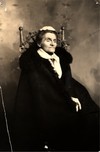
and the world of western Canada, 1820–1970, ed. Barry Ferguson (Regina, 1991), 113–25; “The drum and the cross: an ethnohistorical study of mission work among the Dene, 1858–1902
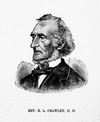
Seminary, General catalogue, 1808–1908 (Boston, Mass., 1909). I. E. Bill, Fifty years with the Baptist ministers and churches of the Maritime provinces of Canada (Saint John, N.B
supported HBC rule, which he characterized as “patriarchal”; he also favoured further settlement and improved communication with Canada.
Promoted colonel in
. H. Jelf, Life of Joseph James Curling, soldier and priest (Oxford, 1910; 2nd ed., 1910). T. R. Millman and A. R. Kelley, Atlantic Canada to 1900
.
At a time when persons of mixed race were easy targets in a racially charged Canada, Lasqueti’s isolation gave a refuge. Family recollections speak to a strong sense of community. A long-time islander
June 1847; 11 Feb. 1851. Canada’s smallest prov. (Bolger), 95–114. D. C. Harvey, “Glebe and school lands in Prince Edward Island,” CCHS, Journal, 10 (1968): 120
.
According to the Cavelier family, La Forest had not been born a nobleman, and it was simply as a clerk that La Salle is believed to have brought him to Canada in 1675 to manage Fort Frontenac or

Canada’s first labour economist, and Burton Seely Keirstead has suggested that the “Davidson approach” anticipated the partnership of theory and history which has characterized economic study in this country
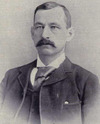
. 1852 in Thamesford, Upper Canada, son of Isaac Davidson and Chrystann (Christie Anne) Cameron; m. 20 March 1878 Sophia Ellen Hamilton in Palestine (Gladstone), Man., and they had two sons and

generally too much forgotten. During his lifetime he was one of Canada’s few well-known writers, but today he is perhaps best known for a poem, “Sweet maiden of Passamaquoddy,” that first appeared in a
. . . (London, 1819); R. H. Bonnycastle, Newfoundland in 1842: a sequel to “The Canadas in 1841” (2v., London, 1842); Charles Pedley, The history of Newfoundland from the
, and politician; b. 8 March 1857 in Saint-Norbert, Lower Canada, son of Dieudonné Denys, a farmer, and Odile Masse; m. first there 21 Jan. 1879 Georgiana Laporte (d. 21 Feb
, pt.iii, 281–356. Fauteux, Les chevaliers de Saint-Louis, 213. Le Jeune, Dictionnaire, I, 504–5. Clark, Acadia. Frégault, Canada: the war of the conquest. McLennan
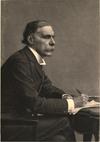
the colonies. Having already formed the view that all religions were “more or less mistaken,” Des Vœux emigrated to Canada in 1856. He took a ba degree at the
Jan. 1847 in Rivière-du-Loup-en-Haut (Louiseville) Lower Canada, son of David Desrosiers, a tanner, and Marguerite Godin; m. first around 1872, in the United States, Agnès Méthot of Saint-Antoine
Samson, in re Dinning (1878), 4 Q.L.R. 365. Canada Gazette, 23 Aug. 1856. Morning Chronicle (Quebec), 4 Aug., 31 Oct. 1863; 2 May, 15 Aug
Douglas Earle of Halifax, from a family Bible in his possession. w.r.mack.]
Anglican Church of Canada
Lucan, in Biddulph Township, Ont.
James Donnelly emigrated from Ireland in 1844 and settled with his family in Biddulph Township, Canada West, in
, 1849, 1853. R. H. Bonnycastle, Newfoundland in 1842: a sequel to “The Canadas in 1841” (2v., London, 1842), 2. Gunn, Political hist. of Nfld. C. E. Hillier