

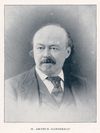
July 1844 in Contrecœur, Lower Canada, son of Clément Dansereau and Louise Fiset; m. first 4 Sept. 1866 in Longueuil, Lower Canada, Cordélie Hurteau, youngest daughter of Isidore
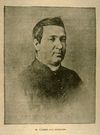
part of Bécancour), Lower Canada, eldest son of François Désilets, a farmer, and Marguerite Hébert; d. 30 Aug. 1888 at Trois-Rivières, Que
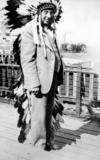
had to overcome their concerns. After much deliberation he was given $13,295.25 in 1916, to be divided among 902 Indigenous sealers, out of a total of $200,000 received by Canada in compensation
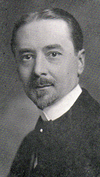
Bridge. He sat on the boards of directors of the Banque Nationale, the Banque Provinciale du Canada, Perfection Robert, the Montreal Tramways and Power Company Limited, and the Canadian Military Stores and

Canada, son of Gabriel Déziel, dit Labrèche, and Marie Champoux; d. 25 June 1882 at Lévis, Que.
After studying at the Petit Séminaire
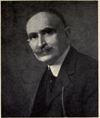
Eaton was elected a fellow of the Royal Society of Canada (RSC), but he resigned the following year because the society declined to publish in its Transactions the paper he had presented at the
city and the surrounding missions, and to open a minor seminary for young aspirants to the priesthood. Although not yet a priest, Flannery was well equipped for missionary work in Upper Canada. He was an
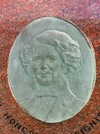
principal of the projected provincial normal school. He began by inspecting the educational systems of New England, New York, and Canada in the spring of 1855, and by holding close to 50 public meetings

.
This chapel, the oldest in Canada, still stands; it is the chapel of the Hôpital-Général. Brother Luc made the plans for it and sketched out the retable as it is today; he even painted the “Assumption
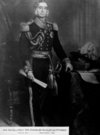
Duke of Richmond to Lower Canada in 1818. Born into one ducal house, FitzRoy, by marrying Richmond’s daughter Lady Mary Lennox in March 1820, connected himself to two more. The following month he

personal friendship with Joseph Howe*, the leading Nova Scotian Reformer. With the arrival in Canada in 1838 of Lord Durham
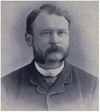
HARRISON, DAVID HOWARD, physician, businessman, rancher, and politician; b. 1 June 1843 in London Township, Upper Canada
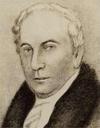
Adolphus Mordecai* Hart would have a strong influence on the 1831–32 legislation that gave Jews in Lower Canada full recognition of their rights as citizens
). The result was an elaborate and valuable proposal for the colonization of what are now Canada and northern New England, which has remained unpublished. “A discourse concerning a voyage intended for the
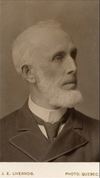
Hibernian Benevolent Society of Canada (1875) [see Michael Murphy*] and he was a public supporter in 1871 of the Irish League, a group
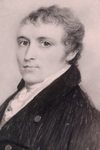
American manpower. He was particularly successful in Lower Canada, which provided more men than the Maritime provinces did. Substantial numbers were also obtained in Scotland. In October 1805 the regiment
, A stage in our past, English-language theatre in eastern Canada from the 1790s to 1914 ([Toronto], 1968). Hernewood; the personal diary of Col. John Hunter
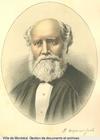
and presentation of the first public lectures on astronomy in Canada, and the development of methods for standardizing surveyors’ chains and checking magnetic compasses. His pioneering scientific work
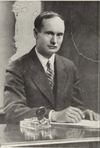
County, Upper Canada, after the Napoleonic Wars. His father was a prominent farmer in Essex and Kent counties, growing corn and soybeans and importing Clydesdale horses from Scotland; his mother was a
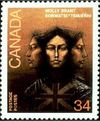
her daughters, save one who remained single, married white men of distinction in Upper Canada. Her son George Johnson, known among the Indians as Big George, farmed and taught a day school not far from
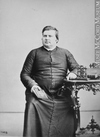
, author, and civil servant; b. 24 Nov. 1833 in Sainte-Rose (Laval), Lower Canada, son of Antoine Labelle, a shoemaker, and Angélique Maher; d. 4 Jan. 1891 at Quebec and was buried four
[La Rochefoucauld*].
When the War of the Austrian Succession ended in 1748, Laborde went to Canada with Bigot and helped to clear up the
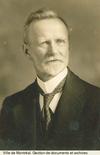
. 1857 at Saint-Édouard, Lower Canada, son of Laurent-David Lafontaine, a physician, and Hedwige Singer; m. 14 Jan. 1880 Elmire Moll (d. 15 Feb. 1919) in Montreal, and they had a
May 1820 at Quebec, Lower Canada.
Jean-Baptiste Le Comte Dupré belonged to the third generation of a family of merchants which had been in the
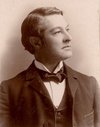
(baptized François-Xavier-Ferdinand), lawyer, politician, and judge; b. 9 April 1851 in Saint-Joseph-de-la-Pointe-Lévy (Lévis), Lower Canada, son of Antoine Lemieux, a farmer, and
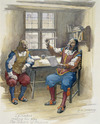
, Cartier, and Roberval [see Jean-François La Rocque] to Canada. This
), 63–64, 133–36, 158, 192–93, 196. [D.-H.-M. Liénard de] Beaujeu, “Journal de la campagne du détachement de Canada à l’Acadie et aux Mines, en 1746–47,” Coll. doc. inédits
servantes de Dieu en Canada: quarante biographies (Québec, 1904), 253–58. W. C. Gaynor, “A great Indian chief,” New Brunswick Magazine (Saint John), 4 (1904): 129–40, 273–79. B. G
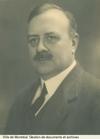
U.S. and Great Britain (for Canada) for the protection of migratory birds. In 1917, in Le Naturaliste canadien, he pointed out that his department was one of the first to have promoted, in
related to the Munn shipbuilding family of Irvine; he was one of four members who immigrated to Lower Canada and became master shipbuilders. The three others
combined to form district assembly 203 of the Knights of Labor, one of eight in Canada.
The entry of the Knights of Labor into British Columbia came during
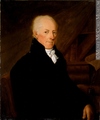
children, of whom only two, John Samuel and William King*, survived; both became judges of the Superior Court of Lower Canada
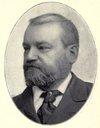
, newspaper owner, and politician; b. 4 Nov. 1852 in Saint-Jérôme, Lower Canada, son of Guillaume Nantel and Adélaïde Desjardins; d. 3 June 1909 in Montreal
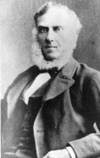
that he was a private man, they do not tell us much about his activities or thinking. Owen was one of those opposed to confederation whose change of mind made possible the coming to terms with Canada in
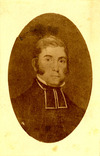
. 1782 on Île aux Grues, Que., eldest son of François Painchaud, a seaman, and Angélique Drouin; d. 9 Feb. 1838 in Sainte-Anne-de-la-Pocatière (La Pocatière), Lower Canada
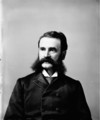
, publisher, office holder, and judge; b. 22 Jan. 1837 in Rivière-Ouelle, Lower Canada, son of Jean-Marie Pelletier, a farmer, and Julie Painchaud, the sister of Abbé Charles-François
protected him against confiscation during his period of service in Canada, since he was now unable to defend his interests in person in the law courts in France. This action was, however, normal procedure for
and self-determination in both North America and West Africa. He represents a valuable tradition for Canada’s racial mosaic
(Philadelphia, [1970]). Repent and believe: the Baptist experience in Maritime Canada, ed. B. M. Moody (Hantsport, N.S., 1980). R. W. Winks, The blacks in Canada: a history
at the same time a diversion to secure Canada from their ventures. . . .” During his stay in Paris Joseph Robinau had perhaps contributed to the decision by Versailles to maintain Acadia
hoped for. He had come to Canada only to make his fortune and had soon revealed himself in his true light: grasping, arrogant, having no respect for the seigneurs, and taking improper advantage of his
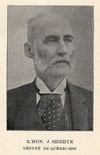
south of the Grande Allée. In this impressive dwelling he would be able to entertain prominent politicians and businessmen from Canada and abroad throughout his career
on the famous winter march from Fredericton to Upper Canada in 1813; leaving on 21 February, they covered the 700-mile journey to Kingston in 52 days

French Canada. He reportedly took notes during his brief stay at the Collège de Sainte-Anne-de-la-Pocatière, when he was ten years old, that could be used some 20 years later to compile a list of its first
they had two daughters; m. secondly 4 Nov. 1852 in Douro Township, Upper Canada, Maria Elizabeth Strickland (d. 1883), daughter of Samuel
the turn of the 20th century the economic centre of gravity had shifted from Victoria to the mainland. Businesses based in central Canada gradually eclipsed the tightly knit group of Victoria merchants
advocated unions of the Maritime colonies and of the Canadas, beginning in 1806 when he presented a memoir on British North America at the Colonial Office. By 1821, however, he had concluded that only a
of the Canada Fire Insurance Company, who hired him. The great fires that ravaged the city of Quebec in 1845 struck the company hard and it went bankrupt, leaving its employees out of work. But
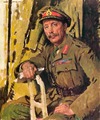
Canada and give the troops the benefit of his experiences in the field. He refused point blank, saying that he “would desire nothing better in all the world than a return to Canada but my duty is here with
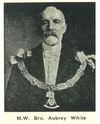
educated at schools in Raphoe, Dungannon, and Dublin. He entered the Royal Navy as a cadet, but, failing an examination, he enlisted in the 8th Foot. Plans to send it to Canada were cancelled, so a