

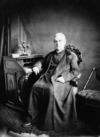
Canada ([Montréal], 1929), 146–88. Pouliot, Mgr Bourget et son temps, vol.4. Robert Rumilly, Histoire de Montréal (5v., Montréal, 1970–74), 2. Gerald Berry, “A critical period in St
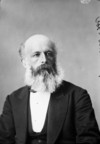
methods of the abolition movement.
In October 1869 Dymond and his family immigrated to Canada and settled in Toronto. According to his obituary in the
agriculture in Prince Edward Island, Canada (Toronto, 1959). Robertson, “Religion, politics and education in P.E.I.” A. W. H. Eaton, “Old Boston families; the Deblois family,” New
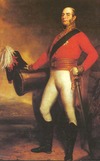
Simcoe at Newark (Niagara-on-the-Lake), Upper Canada.
On the outbreak of war with France in 1793 Edward (who was promoted major-general on 2
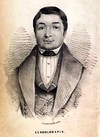
North of Scotland, 1839–40. Alan Cooke and Clive Holland, The exploration of northern Canada, 500 to 1920: a chronology (Toronto, 1978). C. F. Hall, Life with the Esquimaux
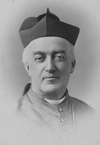
condemned the radical Liberal newspaper the Canada-Revue (Montreal) and its Liberal confrère the Écho des Deux-Montagnes (Sainte-Scholastique), and instructed Catholics not to print, stock
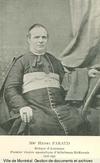
his missions; in 1879–80 he undertook a visitation of his vicariate; and in 1889 he was summoned to St Boniface by Taché for the first council held in western Canada. Taché found him so aged by 40
loyal to Great Britain. Sir George Prevost*, governor of the Canadas and commander in chief of the British forces, placed the defence of the
precarious coalition of Protestants and Roman Catholics united in their opposition to confederation with Canada, espoused by Frederic Bowker Terrington
of the year. Finlay was able to extend the postal service through Upper Canada to Detroit (Mich.), and in 1792 he negotiated a landmark postal convention with the United States, reestablishing postal
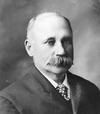
retirement he made a final trip to eastern Canada and then settled in Vancouver, where he died in 1914. He was remembered as a man of fixed views but friendly disposition who had a wonderful singing voice and
white man, but also for the Christian civilization of its aboriginal inhabitants.”
In 1844 Finlayson and his wife moved to Lachine, Canada East, where
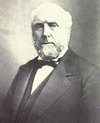
1837 emigrated to New York City. Through the influence of a relative there, he received an appointment as apprentice clerk with the Hudson’s Bay Company at its head office in Lachine, Lower Canada. (Two
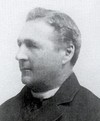
FISET, PIERRE, Roman Catholic priest, businessman, and farmer; b. 27 May 1840 in L’Ancienne-Lorette, Lower Canada, son of
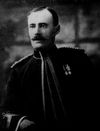
Herchmer. Once again his good service was brought to the attention of Commissioner Aylesworth Bowen Perry in Regina, and he was raised to sergeant after his return to Canada. He went to England in
of Donald Fraser and Janet McIntosh; d. 14 June 1815 at Quebec, Lower Canada, and was buried five days later in St Matthew’s cemetery
to manufacture and use chloroform at a childbirth in what was to become Canada. Immediately rumblings were heard from fellow Presbyterians who did not, as yet, accept the use of any pain-killing drugs
députés de Montréal, 357–59; “Les législateurs du Bas-Canada.” Desjardins, Guide parl., 133. Quebec almanac, 1805: 15; 1810: 34, 53; 1815: 60, 104; 1820: 106. Wallace, Macmillan
, but was also unenthusiastic about a rail link to Canada. He recognized, however, that such a railway would tie into a proposed link to Portland, Maine. North shore merchants were usually interested in
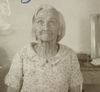
), housekeeper and asylum inmate labourer; b. 1854 in Murray Township, Upper Canada; d. unmarried 24 May 1938 in Toronto.
Alice G
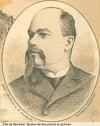
-Ouelle, Lower Canada, son of Antoine Gagnon, a merchant, and Julie-Adèle Pelletier, sister of Charles-Alphonse-Pantaléon
then and later for having selflessly given up his parishes and for having facilitated the establishment of the Eudists in Canada, it is less well known that over the years he aided the college with
the Hôtel-Dieu in Montreal, and founder and director of the Hôtel-Dieu in Campbellton, N.B.; b. 17 July 1840 in Sainte-Rosalie, Lower Canada, daughter of Pierre Gendron, a farmer, and Hermine
, Scotland, to a farm near Dundas, Upper Canada. Gerrie joined the United States cavalry in 1861 as a veterinarian and purchasing agent and was posted to Chicago. Four years later he settled in Montreal
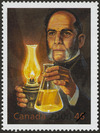
that museum had been established independently by the society in 1870. Gesner’s museum was one of the first two established in Canada, the other being the museum of the Geological Survey of Canada, begun
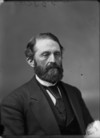
Ganong* of St Stephen (St Stephen-Milltown), he would wait four years before receiving a call to the Senate, on 2 April 1900. In the same month he represented Canada to great effect at
, 122, 122a; P, 26; R, 8, 90; S, 7a; Polygraphie, V, 40; VII, 5, 109, 114; IX, 29; XI, 2, 3, 4; Séminaire, 14/6, no.3. Coll. doc. inédits Canada et Amérique
-Pierre-les-Becquets; Yamaska. Le Courrier du Canada, 3 janv. 1870. Le Journal de Québec, 4 mai 1854, 13 sept. 1856, 4 août 1859. La Minerve, 21
. 18 Feb. 1818 in Amherstburg, Upper Canada.
Simon Girty was born at the beginning of the last great period of Indian-white warfare east of the
Nova Scotia. On occasion he lectured to the Halifax Mechanics’ Institute and in 1883 he presented a paper before the Royal Society of Canada. His work was scholarly and he possessed a clear and
. H. Bonnycastle, Newfoundland in 1842: a sequel to “The Canadas in 1841” (2v., London, 1842), 1: 132–35. James Dugan, The great mutiny (London, 1966), 155–65, 175, 193
and other matters on which the official records are usually reticent. His two seasons as acting chief at York coincided with an increase in pressure on the HBC’s trade by rival pedlars from Canada. To
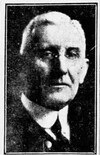
League of Nations Society in Canada. R. H. Grant died in 1930 and was buried in Maple Grove cemetery at Hazeldean
, et passim; III, 17, “Les Muses de la Nouvelle-France.” Sagard, Histoire du Canada (Tross), I, 67, 243; IV, 859–61, 891
(Que.), and they had eight children; m. secondly 28 Jan. 1793 Marie Martin, a widow, at Saint-Jacques-de-la-Nouvelle-Acadie (Saint-Jacques), Lower Canada; d
, Report of trials in the courts of Canada, relative to the destruction of the Earl of Selkirk’s settlement on the Red River; with observations (London, 1820). Cox, Adventures on the Columbia
Dec. 1854 in the parish of Saint-Joseph (at Lauzon), Lower Canada.
Nothing is known of William Hall’s life until 1791, when he opened a hat shop
. (Sackville, N.B.), Parks Canada Webster Chignecto coll., 7001-70 (William Milne papers), William Hanington, account of men belonging to the brigantine St. Nicholas of Aberdeen, 18
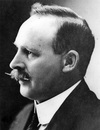
Criminology, Report (Halifax), no.14 (1989). Greg Marquis, Policing Canada’s century: a history of the Canadian Association of Chiefs of Police (Toronto, 1993); “Working men in uniform: the
. G. A. Rawlyk, “From Newlight to Baptist: Harris Harding and the second great awakening in Nova Scotia,” Repent and believe: the Baptist experience in Maritime Canada, ed. B. M
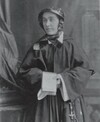
femmes au Canada de 1639 à nos jours (Montréal, 1977). [M. A. McCarthy, named] Sister Francis d’Assisi, A valiant mother, Mother M. Francis Maguire, 1832–1905
in Canada. Indeed, the history of the Harris works is coincident with the railway construction boom in New Brunswick which had begun in the 1850s. During the 1860s and 1870s the company did a large
. Cowan and Son it was printed in Montreal at the office of the Canada Gazette. Both directories were similar in format to the Montreal directories being compiled by Robert Walter Stuart
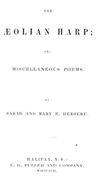
selected periodicals from Maritime Canada, 1789–1872” (phd thesis, York Univ., Toronto, 1980). J. S. Thompson, “Introductory memoir,” John McPherson, Poems

Canada.
Like many of his forebears Jean-Baptiste-René Hertel de Rouville took up a military career early in life. He was only 18 when he obtained a
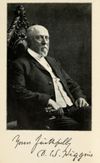
George Anthony Walkem, plaintiff, and David Williams Higgins, defendant . . . (Victoria, 1887). In the Supreme Court of Canada, on appeal from the Supreme Court of British Columbia
Bank of Nova Scotia Arch. (Toronto), Directors’ minute book, 1832–75. Can., Parks Canada (Ottawa), Canadian Inventory of Historic Building, Group D, H. G. Hill. Halifax County Registry of Deeds
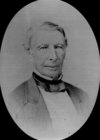
the government of Canada, Hodgson demanded resumption of the pension granted in 1851 and withdrawn in 1852. Despite considerable criticism from members of both houses of the local legislature, he was
.).
William Holmes apparently came to Canada some time after 1763, and by 1774 he was actively engaged in the fur trade into the Saskatchewan country. In October 1774 Holmes, Charles Paterson, and François