

, Saint-Antoine-sur-Richelieu (Saint-Hyacinthe, 1938), 28, 38. Guy Frégault, François Bigot, administrateur français (2v., [Montréal], 1948), 1: 381. Maurault, Le collège de Montréal
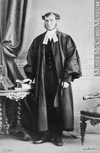
become Wesleyan Methodist ministers. They went to Victoria College, Cobourg, and within a year a revival broke out among the students there. Among those affected were Albert
member in the House of Assembly and took part, though an Anglican, in the “Central Committee” formed at York to coordinate the campaign against King’s College (University of Toronto), which reformers
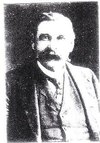
to Canada in 1858 at his father’s behest to pursue a medical degree at Queen’s College in Kingston. He graduated in 1862 and hung his shingle in Morrisburg, on the St Lawrence River. Although he
Hadley, Mass., Chamberlain became foreman in his uncle’s tannery. Within a few years he entered Yale College, graduating ba in 1765. After studying theology under the
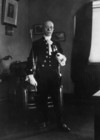
Royal College of Music.
Chambers left Montreal for Ottawa as a result of his prestigious appointment on 1 March 1904 as gentleman usher of the
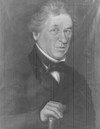
.), 6 (1975): 16–24. “The story of Stanstead College since 1817,” Stanstead County Hist. Soc., Journal, 3 (1969): 49–56.
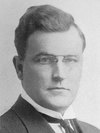
, the UFM recruited John Bracken*, principal of the Manitoba Agricultural College. Bracken and his followers subsequently adopted the Progressive
Indians, campaigned for a standard provincial common-school system, cautiously supported the temperance movement, and pressed for reorganization of King’s College, Fredericton, as the non-denominational
.
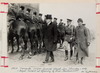
François Ciquard, who came from a humble background, entered the well-known college run by the Jesuits at Billom in 1771; after six years of study there he took his theology at Clermont-Ferrand. To support
.
The son of an Irish-born physician turned magistrate and businessman, Lionel H. Clarke was educated at Trinity College School in Port Hope. Around 1878 he moved to Palmerston, northwest of Guelph, to
.
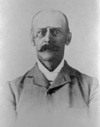
Clinkskill said that he had attended Madras College in St Andrews, Scotland, and then began an apprenticeship in the cotton and yarn business, an industry his father had been involved with for many years
introduced at the practice school attached to the normal school. His Recueil de leçons de choses: à l’usage des écoles primaires, modèles et académiques, des collèges, couvents, etc. came out in 1885
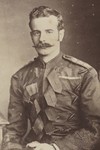
Walton-on-Thames, England, and at Eton College. In 1870 his family purchased him a commission as a cavalry officer in the 2nd Life Guards. In 1884–85 he commanded the detachment of the unit that
.
Richard Cockrell came from a family with connections in the army and navy and in the East India Company. He attended school and college in England, graduating at 21, and then proceeded to the study of
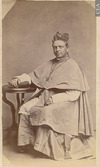
*). Another equally large and important collection was found among the papers of Abbot Bernard Smith, a Benedictine and member of the faculty of the American College in Rome. Smith was Connolly’s contact in
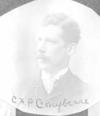
dcls from Bishop’s College in Lennoxville, Que., in 1907 and the University of Alberta in 1908 (ad eundem). A stalwart of the Church of England, he had
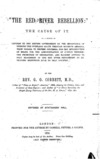
. He assumed a rural parish and studied medicine at King’s College, London. In 1857 he appeared before the select committee of the House of Commons on the Hudson’s Bay Company [see Alexander
(Arthabaska, Qué., 1924). J.-A.-I. Douville, Histoire du collège séminaire de Nicolet, 1803–1903, avec les listes complètes des directeurs, professeurs et élèves de l’institution (2v
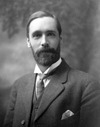
.
Well regarded by his contemporaries for his contributions to economic entomology and natural history, Criddle was awarded an honorary diploma in agriculture by the Manitoba Agricultural College in March