

. William Snodgrass, principal of Queen’s College in Kingston, Ont., asserted that the church was indebted to Croil “perhaps more than to any single individual” for the successful completion of negotiations
supported St James’ Cathedral and in 1850 gave $500 towards founding Trinity College. During the last decade of his long life his health failed badly and he played little part in the city of which he was
Séminaire de Montréal, and then to teach at St Charles College in Baltimore, where he stayed in 1860 along with Étienne-Michel Faillon
, along with their brother Ross*, to study French civil law and language at the English Catholic college of Douai in France, and they had returned
for granted. He was educated at Upper Canada College, Toronto, and was called to the Ontario bar in 1876. From 1877 to 1881 he practised law in Stratford, where he gained his initial political
Rive. On 1 October he went to stay at the Jesuit college, where the last member of this order in Lower Canada, Jean-Joseph Casot*, lived
. 1856. Nathanael Burwash, The history of Victoria College (Toronto, 1927), 491. Janet Carnochan, History of Niagara . . . (Toronto, 1914; repr. Belleville, Ont., 1973). W
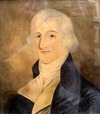
-speaking milieu, he added the particle “de,” whence the name de Bartzch or Debartzch.
Pierre-Dominique, an only son, studied at Harvard College in Boston

been smooth. Since 1863, however, Demers had been applying to the American College at Louvain, Belgium, for English-speaking priests, and it was fortunate that this institution was now able to fill the
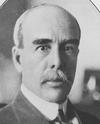
settlement of western Canada, and John would follow in his footsteps. Educated at Trinity College School in Weston, and for a time at the gunnery school in Kingston (A Battery, Garrison Artillery), he
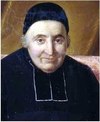
ministered as curates or parish priests in 50 parishes, founded or taught in three classical colleges, and served as chaplains in the women’s communities as well as in the missions in the east and west of
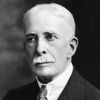
md (1880) in Kingston at Queen’s College. His family was closely connected with the institution: his father was a co-founder of its medical faculty, and his sister Anne was one of that faculty’s
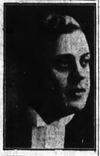
Society, St Patrick’s College, and the Ottawa Federated Charities. Despite the anti-Semitism then prevalent in Canada, he earned the high regard of the city’s Gentile establishment. The Journal
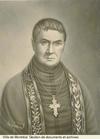
College, just outside the town of Kilkenny, possibly as early as 1804. By 1812 he was listed as a student of theology.
Between 1812 and 1815, Joseph
.
Arch. du Séminaire de Saint-Sulpice (Montréal), Fonds du collège de Montréal, boîte 12: 35. Arch. Générales du Royaume et Arch. de l’État dans les Prov. (Bruxelles), État civil, Gand, 21 janv. 1870
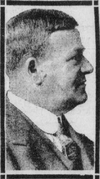
Joseph-Narcisse Dupuis began his education at the Collège Masson at Terrebonne in Lower Canada. Following the death of his father in 1864, he settled with his family in Montreal. It was probably at that
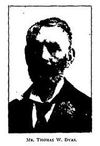
. Seegmiller, “The Colonial and Continental Church Society in eastern Canada” (dd thesis, prepared Windsor, N.S., 1966, for ACC, General Synod, Huron College, London, 1968), 503–4
1822 he proposed to the Church Missionary Society, an Anglican body, the establishment of an Indian college in Lower Canada. He also pursued his application for a land grant, but without success
advancement of agricultural education through farmers’ clubs, libraries, model farms, classes in agriculture in the common schools, and a chair of agriculture at King’s College (University of Toronto). It also
the House of Assembly; a sister was the mother of David Allison, second president of Mount Allison Wesleyan College; a nephew, another William, became professor of natural sciences at Acadia University