

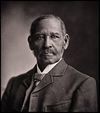
settled his financial affairs, Mifflin Gibbs rejoined his family later in 1869 and in 1870 entered the law department of a business college at Oberlin, Ohio. In 1871 he moved to Little Rock, Ark.; he was
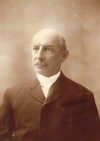
School, where his father, the school’s headmaster, tutored him for entrance to King’s College in Windsor. He received his ba from King’s in 1871 and then took a special
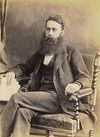
. E. Goad and fire insurance cartography,” Assoc. of Canadian Map Libraries, Proceedings of the eighth annual conference (Toronto, 1974), 51–72. The roll of pupils of Upper Canada College
presse montréalaise de la première moitié du XIXe siècle” (thèse de ma, univ. Laval, Québec, 1982). Maurault, Le collège de Montréal (Dansereau; 1967
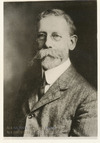
De Witt*] were American families that had settled in Montreal in the early 19th century. Charles Gould attended the High School of Montreal and McGill College; he obtained a
Ladies’ College in Dundas (founded 1857) and the Dundas Wesleyan Boys’ Institute (1873).
Though not a “pushing” man in political terms, Grafton
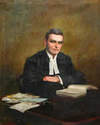
.
The son of a successful sea-captain, farmer, and shipbuilder, Wallace Graham saw five of his six brothers follow the paternal pattern. He alone went to university, graduating from Acadia College in
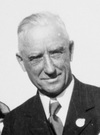
.
During his youth, William often visited reserves in the company of his father and, upon completing his education at Winnipeg’s Manitoba College in 1885, he decided that he too would pursue a career with

Leamington College in England. His military career began in Canada when he was not yet 19: in June 1866 he served in the Fenian campaign with the 2nd Battalion of Rifles (Queen’s Own Rifles of
1762 Boiret was elected, and Gravé served as assistant to the superior. When the Petit Séminaire reopened in 1765, it had to assume the responsibilities formerly discharged by the Jesuit college, which
John’s. Grimes continued his education through private reading. He was active in the Cochrane Street Methodist congregation, as well as the Methodist College Literary Institute, a mainstay of the
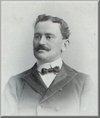
footsteps of his godfather Dominique Racine*, a future bishop of Chicoutimi, and teaching at the college. His academic results were apparently
.
Jean-Pierre Guéguen, who was a pupil at the Collège de Lesneven in France from 1852 to 1858, finished his classical studies there in brilliant fashion, winning seven first prizes. In September 1858

. College (Waterloo, Ont.), as is the annual Conference Journal of the Ontario Conference of the Mennonite Brethren in Christ (n.p.). Digitized issues of the Alliance Weekly can be examined
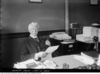
postgraduate training in Dublin, where he became a licentiate of the King and Queen’s College of Physicians in Ireland. After further studies in Edinburgh and London he returned to Toronto and began practice as
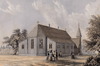
Providence, 1855–58; the original parts of St Basil’s Church and St Michael’s College, 1856; the school addition to Holy Trinity Church, 1858; and the Yorkville Town Hall, 1859–60. He also worked for
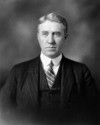
College in Kingston, where he won first-class honours in English, history, and political science, and was deeply influenced by professors Adam
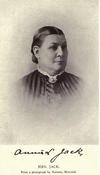
Dawson*, principal of McGill College, to find mentors for her sons and to seek access to museums and scientific lectures for herself. (Her son John George became a noted American dendrologist.) She
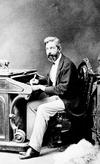
in the autumn and successfully took the examinations for membership in the Royal College of Surgeons of England in 1848. Eager to see the world, he spent about 18 months on a passenger vessel that
student. By the autumn of 1851 Hemming was in the legal firm of Bethune and Dunkin and was registered in law at McGill College. He received a bcl in 1855, finishing first in