

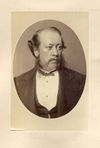
further education, and in 1855 he was able to enrol in the Methodist-run Victoria College in Cobourg. He proved to be an excellent and industrious student, winning the Prince of Wales gold medal and serving
.
Francis Wayland Campbell received his early education at Dutton’s Academy and at the Canada Baptist College, both in Montreal. For six years, apparently from the age of 14, he worked for his father
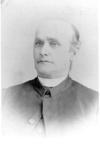
1859, when Lafrance realized that financial difficulties would soon force the seminary to close, he sent Cormier and two more of the best pupils, at his own expense, to study at the Collège de Sainte
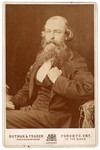
attending London schools, became a clerk in the Ordnance Office (his father was deputy paymaster general of ordnance) and attended University College, London, as an occasional student. There he developed an
continuing his studies at the college of Montreal, Jean-Baptiste Dupuy taught there from 1829 to 1832. He was ordained priest on 2 Sept. 1832, and was first a curate in different parishes for about
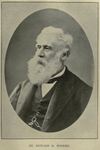
Paris and Edinburgh. He became a member of the Royal College of Surgeons in 1834, and practised at London and later at Saint-Servan. In 1834 he married Frances Tench by whom he had several children
Roman Catholics in England, entered St Cuthbert’s College at Ushaw. The college had been started that year by teachers from the English college at Douai, France, who had been driven out by the French
$500. This sum may have helped to finance her education at the Woman’s Medical College of Chicago, where she began training in 1887–88. Access to medical training for women in Canada was still limited
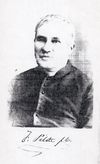
the Collège de Sainte-Anne-de-la-Pocatière (in what is now La Pocatière), where he was to spend 34 years, holding a series of offices: assistant director (1836–38 ), director (1838–47, 1851–57
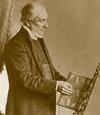
College, and at 15 entered Trinity College in Dublin where he received his ba in 1822, ma in 1825, and, later, dd
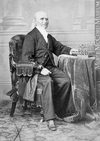
offer of the presidency of the Canada Baptist College in Montreal, operated by the Canada Baptist Missionary Society. In spite of Cramp’s efforts to establish the struggling college on a sound financial
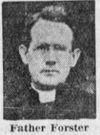
transferring in 1890 to the Basilian-run Assumption College in Sandwich (Windsor). “A boy who seemed always enjoying life to the full,” he completed his classical studies there in brilliant fashion, winning
philosophy from McGill College in Montreal in 1877; he would obtain an ma from McGill in 1880 and a bd from the Presbyterian College of Montreal in 1884
priest of Notre-Dame in Montreal, and vicar general of the bishop of Quebec. Unlike his predecessor, Brassier showed great interest in the Collège Saint-Raphaël, where teaching had begun in 1773 [see
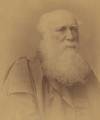
West. He served as moderator of the Hamilton presbytery for the year 1851–52. In 1853 he resigned his pastoral charge and was appointed to the faculty of Knox College, Toronto
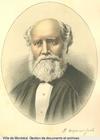
and the principal of United College at St Andrews, who became his mentor. On Brewster’s recommendation, Jack in September 1840 accepted the post of professor of mathematics and natural
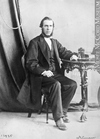
Mowat*, William Caven*, principal of Knox College, and George Brown* of the
professor of music at Albert College, Belleville, and at Ontario College, Picton. In 1870 he began to style himself “Doctor” Crozier and was thenceforth always identified as “Mus.Doc.,” but where he obtained
Bell.
In 1883 Good was a founding member of the Manitoba Medical College in Winnipeg and that same year he became professor of clinical
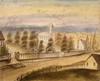
destruction some specimens of the China brought to the country by the Loyalists, and to place them in the first College in British North America established by Royal Charter since their landing” (King’s College