

show-piece of the Baptist community.
Subsequently Castle played a crucial role in the founding of the Toronto Baptist College, the immediate forerunner
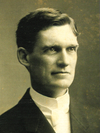
education in a rural school and in 1884 enrolled in Charlottetown’s Prince of Wales College, a secular, co-educational institution offering high school and what seems to have been the equivalent of first-year
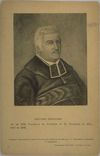
was born, was a good student, first at the Collège Saint-Raphaël in Montreal from 1773 to 1780, and then in theological studies at the Grand Séminaire de Québec. He was ordained priest by the bishop of
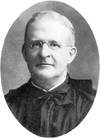
Collège Sainte-Marie in Montreal, which he attended from 1857 to 1865, he completed the classical course with outstanding success in debating and dramatics, interests which would continue for the rest of
Collège Saint-Raphaël in Montreal (Que.); b. 17 March 1737 in Meung, France, son of Guillaume Chicoisneau and Hélène Gaulthier; d. 28 Feb. 1818 in Montreal, Lower Canada
appointment as master of the English school of the College of New Brunswick in Fredericton. The college council had approached him on the strong recommendation of William
Scotland synod in sympathy with the Free Church. While in Canada he taught on a temporary basis at the newly founded Knox College in Toronto. Two years later, upon the unanimous recommendation of the
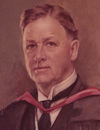
time he was nine, however, the family had moved to a fruit farm in nearby Grey County. Educated at Collingwood’s collegiate institute, from 1885 to 1888 George attended the Ontario Agricultural College
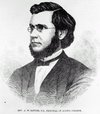
educated first at New London Academy and Dartmouth College (ba 1847) in New Hampshire. He then taught school for three years in Windsor, Vt, before attending Newton
.
After preparatory schooling at Horton Academy in Wolfville, N.S., Daniel Welton entered Acadia College in 1851 and graduated ba four years later. He remained for an
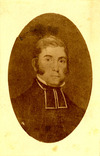
; he was thus able to overcome the archbishop’s opposition to the plan of founding a classical college that he had cherished since at least 1820
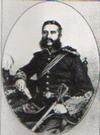
HEWETT, EDWARD OSBORNE, army officer, military engineer, and college commandant; b. 25 Sept. 1835 in Llantrisant parish, near

the Collège de Sainte-Anne-de-la-Pocatière from 1831 to 1842, Nazaire Leclerc was ordained priest on 28 Sept. 1845 at Quebec City. He served as curate in the parish of Saint-François (at
was born within the walls of King’s College, Windsor, Nova Scotia, where his father Dr William Cochran was vice-president. Following a brief period in business he decided on the ministry as a
noviciate he studied moral theology for a year at Amiens (1626–27), then for one year was assistant bursar at the Collège in Caen. He was ordained priest in 1628, was named to the office of bursar at the same
.”
The Jesuits began to accept college students as boarders in 1659; their policy was to finance “each only for the period of a year, so that they might be able to extend the charity to several.” (Gosselin
entered the noviciate of the Society of Jesus on 16 Oct. 1628 in Paris. He had then taught at the Collège in Vannes (1630–32) and in Caen (1632–34). He had done his theology at the Collège in La
interested himself particularly in popular education. He was a man of genial personality who made many warm friends.
In 1859 two trustees of Queen’s College
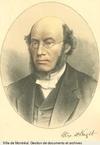
attended the University of Glasgow from 1841 to 1845, winning class prizes in logic, mathematics, and natural philosophy. From 1845 to 1849 he studied theology at New College, Edinburgh, which had been
admitted to the Jesuit noviciate of the province of Paris on 3 Nov. 1727. He studied philosophy at the Jesuit college in La Flèche (1729–32), taught grammar classes at Caen (1732–36) and the