

Francis O’Beirne was educated at St Patrick’s College, Maynooth, County Kildare, about 1826–30, but was expelled before graduation and ordination to the priesthood. In 1834 he enrolled in Trinity

role of educator which he had long wanted to play. In the course of his college years he had in fact told a fellow-student: “I have but one desire: that is, to find a place where I may give myself to the
managed a reduction in the debt by coupling rigid economy with successful appeals for larger grants. In 1856 an amendment to the act of incorporation created a close association between Queen’s College and
entered theological studies at Knox College. There his academic abilities again earned him the Prince of Wales Medal.
Campbell became a sergeant in the

enlarged.
Déziel had further plans: by January 1851 his wish was to build a college close to the proposed church. In June 1851 three parishioners
College on 15 Nov. 1884 and lost by one point. As secretary of the new Dalhousie Athletic Club, Mackenzie penned a wry appreciation of Acadia’s victory: “You did nobly[,] Acadians…. And, although, it
was a member of the first undergraduate class at Victoria College in Cobourg, and he graduated from Wesleyan University, Middletown, Conn., in 1846. After a year as principal of the Newburgh Academy in
.
Further evidences of Wells’s standing were forthcoming. After Strachan secured a charter, in 1827, for King’s College (University of Toronto), Wells was appointed bursar, at an annual salary of £150
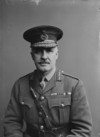
Montreal before going to the Royal Military College of Canada (RMC) in Kingston, Ont., in 1889. As cadet No.293, he graduated company sergeant-major in 1893. Three of his brothers would also study at the
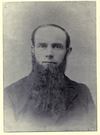
.
After a public-school education in Brighton and several years of teaching and lay preaching, Benjamin Fish Austin attended Albert College in Belleville, earning a ba in 1877

the parish school and of a college which had opened the year before through the combined efforts of parish priest Antoine Manseau* and
was the youngest son of an Aberdeenshire farmer. He studied for the ministry of the Church of Scotland at Marischal College, Aberdeen, entering in 1807, winning prizes for academic excellence, and

Toronto Grammar School. He so excelled that at age 12 he won a scholarship to Upper Canada College; thereafter, until leaving university, he supported himself through a combination of awards and
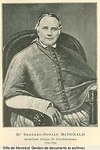
John’s (Prince Edward) Island, one of ten children of Angus MacDonald and Penelope MacDonald; d. 30 Dec. 1859 at St Dunstan’s College, near Charlottetown
McLEARN, RICHARD, Baptist minister, college administrator, and merchant; b
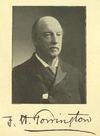
established himself outside Toronto as musical director of the Ontario Ladies’ College in Whitby from 1874 to 1881, and as conductor of the Hamilton Choral Society from 1883 to 1887. He applied his

, where he had embraced Darwinism, and then proceeded to New College, the Free Church theological hall in the city. Among his contemporaries in Edinburgh were the incipient intelligentsia of Canadian
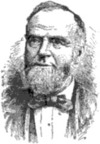
that prompted him in 1874 to send his 14-year-old son, George William, to Dalhousie College in Halifax. A non-sectarian, but basically Presbyterian postsecondary institution, Dalhousie had

ten years old, he was enrolled in the recently founded Collège de Sainte-Anne-de-la-Pocatière to begin his secondary education, but he stayed there only three months. He then entered the Petit Séminaire
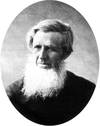
of Scotland in 1843, Black decided to attend the Free Church’s college (later Knox College) in Toronto; he was one of its first students when it opened in 1844. At the college he was active in the