

Source: Link
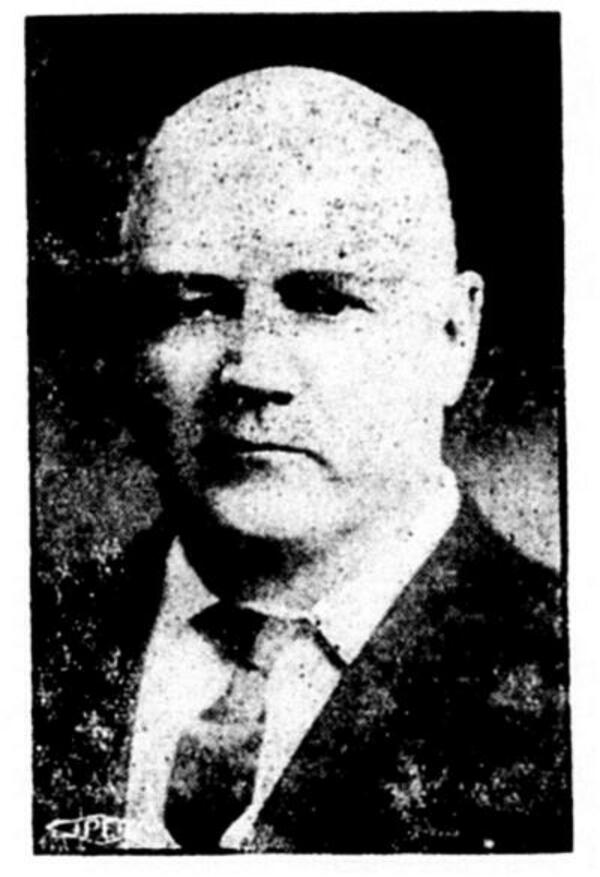
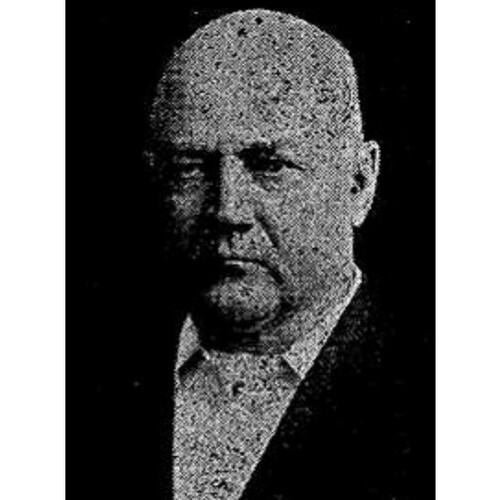
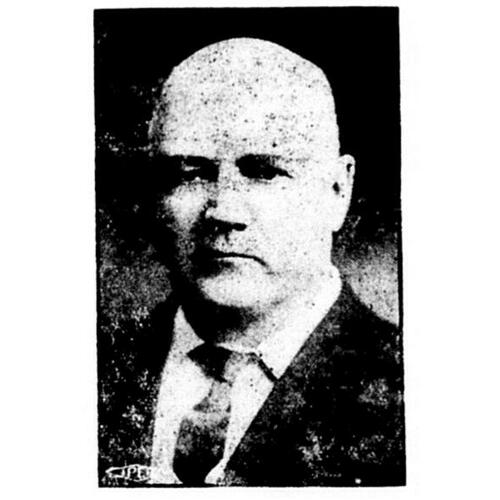
KINGSLEY, EUGENE THORNTON, farmer, railway worker, socialist, political agitator and organizer, fishmonger, editor, printer, and author; b. c. 1856, probably in Pomfret, N.Y., son of Hophni Phineas Kingsley and Olive Wheeler Foster; m. 13 Oct. 1878 Almyra (Myra) E. Doane in Hudson, Wis., and they had two sons; d. 9 Dec. 1929 in Vancouver.
Early life and disablement
Eugene T. Kingsley was born into a farming family who moved frequently, living in upstate New York, Illinois, and Minnesota during his youth. In 1878 he married Myra Doane in Hudson, Wis., and they resided for a time with her parents in Ohio, where Eugene worked as a farmer. They had two sons, Percy Scott, born around 1880, and Robert Eugene, born in 1884. That year, as economic conditions deteriorated for farmers, Kingsley and his family moved to St Paul, Minn., where he found employment as a fireman for the Chicago, St Paul, Minneapolis and Omaha Railway Company. In March 1889 he became a brakeman for the Northern Pacific Railroad. While he was on the job, an event occurred that would affect the rest of his life. On 15 Oct. 1890, when he was setting a brake on a train in Spring Gulch, Mont., two railway cars separated because of a defective drawbar. Kingsley fell between them and was run over by the train, which crushed his legs. They had to be amputated and he subsequently acquired artificial limbs, which he learned to use for walking. While recuperating at a railway hospital in Missoula, he read the works of Karl Marx. During his long convalescence, Kingsley became a convinced socialist, adopting the world view that would structure his political beliefs and activism.
Joining the socialist movement
In 1891 Kingsley sued the Northern Pacific Railroad in tort for $85,000. The outcome of the case remains unclear. If Kingsley did receive damages, the amount would likely have been closer to a few thousand dollars. The following year he worked briefly at a law firm in St Paul. Around this time he became estranged from his family. By 1893 he had left them and moved to California; the next year his wife filed for divorce. In San Francisco, Kingsley became a soapbox speaker and a leading member of Daniel De Leon’s Socialist Labor Party (SLP). Kingsley and his SLP comrades were known as impossibilist socialists: believing that capitalism could not be reformed, they focused on actions that would hasten its demise. They opposed reformist socialism, which concentrated on achieving gradual changes within the current system. Kingsley became singularly devoted to the socialist movement, and it appears that he never again engaged in romantic or personal relationships. He lived frugally and often donated his earnings to the cause. A renowned political agitator, Kingsley participated in an early free-speech fight after being arrested in October 1895 for obstructing a sidewalk and disturbing the peace. A jury acquitted him and other socialist comrades who had been detained on similar charges. From his earliest days as a political activist, he faced repression by the state.
Kingsley ran for municipal office in San Francisco in 1894, and in San Jose on a Socialist ticket in 1900; as well, he contested a seat in the United States House of Representatives as an SLP member in 1896 and 1898. He was never elected. He was also the SLP’s secretary as early as 1895 and the California state organizer for the 1896 and 1898 elections for the House of Representatives. Consistent with Kingsley’s impossibilist beliefs, the SLP’s election campaigns were primarily intended to educate workers about the evils of the capitalist system rather than to win state power. If the SLP ever did win power, then its goal would be to abolish capitalism. While not a pacifist, Kingsley did not see revolutionary violence as the main way to achieve social change. His political trajectory may have been influenced by Wheaton M. Fuller, husband of his sister Clara and a state senator in Minnesota. Following a split in the California SLP, Kingsley eventually broke with the notoriously orthodox De Leon and left the SLP around 1901. He moved to Seattle, where on 17 March 1901 he and some 60 other former SLP members formed the Revolutionary Socialist League of Seattle; he was chosen as its leader. The group was short-lived, however, and the following year he moved to British Columbia in answer to an appeal for help.
Working for socialism in British Columbia
In March 1902 Kingsley settled in Nanaimo, where he had been summoned by a group of socialist coalminers. He made a living as a fishmonger while assisting them with their propaganda and organizational work. One month after his arrival in British Columbia, he went to Kamloops to attend a convention of unions, local labour councils, and socialist and labour parties, which had been organized by the Western Federation of Miners. Representing the Nanaimo group, he was the most radical delegate at the meeting. He did not support a plank in favour of women’s suffrage, however, insisting that the focus should be on class struggle. He was also highly critical of trade unions, seeing them as reformist institutions that impeded workers from agitating for socialism. The meeting concluded with the decision to form the Provincial Progressive Party [see Christopher Foley*], which, owing to rivalries, would collapse within a year. Despite his avowed antipathy toward unions, Kingsley attracted a following in labour’s ranks.
The group of Nanaimo socialists was part of the Socialist Party of British Columbia (SPBC), which had been formed in October 1901. Dissatisfied with the party’s moderate course, Kingsley led the Nanaimo group in breaking with the SPBC in May 1902 and taking a new name: the Revolutionary Socialist Party of Canada (RSPC). By October he had brokered the integration of the RSPC with the reconstituted SPBC, the latter having agreed to adopt a more radical platform with an impossibilist foundation. Kingsley quickly developed a reputation as the province’s pre-eminent speaker and organizer for socialism in British Columbia. In 1902 and 1903 he gave at least 42 speeches in various locations on Vancouver Island and Texada Island, as well as in Kamloops, Fernie, Greenwood, and Phoenix in the province’s interior. Humour, irony, hyperbole, and sarcasm were integral to his style, which made him an engaging speaker. He delivered hundreds of addresses and wrote much propaganda and theory, which was published in pamphlets and newspaper articles. Some of these texts were reprinted in newspapers in countries as far away as Australia. Kingsley worked as an SPBC organizer during the provincial election of 1903, in which two of the party’s candidates were elected: James Hurst Hawthornthwaite and Parker Williams.
By the end of 1903 Kingsley had relocated to Vancouver, where he was appointed managing editor of the Western Clarion, a position he would hold until 1908 and again in 1912. The newspaper was the leading publication of the left in British Columbia and throughout Canada in the decade before the First World War: its circulation ranged between 2,500 and 5,000 per week during Kingsley’s editorship. He consistently used it as a platform to articulate his radical brand of socialism and convey his sardonic wit. Many of his reports of workplace accidents included sarcastic remarks such as “fortunately none of the cars or engines were injured” (4 Aug. 1906). He also opened a print shop, which published the newspaper from 1905 to 1912, and donated a significant portion of the revenue from the business to subsidize the socialist cause.
Kingsley, Hawthornthwaite, and 35 others formed the Socialist Party of Canada (SPC) in Vancouver on 31 Dec. 1904, inaugurating what some have referred to as the British Columbia school of socialism. Nicknamed the “Old Man,” Kingsley was the SPC’s dominant force. He spoke out against the race riot that shook Vancouver in September 1907 [see Chang Toy] and in support of Sikh passengers who were not allowed to disembark the Komagata Maru upon its arrival in 1914 [see William Bruce Almon Ritchie*; Mewa Singh*]. Although Kingsley was principled in opposing racially motivated violence, neither he nor the SPC had an unblemished record on race issues. He uttered xenophobic remarks about “the Mongolians” in 1902, and he reportedly supported Asiatic exclusion during the 1908 federal election campaign. Despite the presence of many Indigenous people in Vancouver’s working class, there is little evidence that Kingsley actively supported First Nations in their struggles for land rights and relief from the oppressions of the Indian Act and the residential school system [see Allen Patrick Willie*]. Socialist interventions in defence of Indigenous rights were few and far between at the time.
Kingsley served as the SPC’s national organizer until 1908 and on its dominion executive committee until 1912. Most members were located in British Columbia, but Kingsley went on a speaking tour with stops in Alberta (Lethbridge, Calgary), Manitoba (Winnipeg), Ontario (Port Arthur (Thunder Bay), Toronto, Hamilton, Guelph, Berlin (Kitchener), and Cobalt), and Quebec (Montreal), delivering dozens of lectures. When he was not coping with a hectic travel schedule, Kingsley made his life as manageable as possible by choosing to live downtown near his workplaces. Although his disability was known to many of his comrades and sections of the press and public, he appears to have been silent on issues related to workplace safety, injury, disablement, or compensation, aside from reporting on industrial accidents in his capacity as editor.
Political candidacies, controversy, and final years
Kingsley made several more runs for office in British Columbia. He contested a provincial seat in Vancouver ridings twice in 1907 (one general election and one by-election) and once in 1909, and he also tried to enter parliament in 1908 and 1911. The SPC maintained continuous representation in the British Columbia legislature throughout the period that Kingsley served as its driving force, electing between one and three members with approximately ten per cent of the popular vote in each election. Kingsley’s greatest success as a political candidate occurred during these years with the SPC, when he received 18 per cent of the popular vote in the 1907 provincial by-election (a two-way race against a Conservative cabinet minister) and 11 per cent of the popular vote in the 1908 federal election. Although he was never elected, Kingsley attained a high public profile in British Columbia and even appeared in newspaper editorial cartoons. He left the SPC’s dominion executive committee and the Western Clarion in 1912 but continued to make significant contributions to the cause. He supported striking Vancouver Island coalminers in 1912 and 1913 [see Joseph Mairs*], joining a coalition of activists known as the B.C. Miners’ Liberation League. The SPC fell on hard times, however, after some activists, who perceived its vision of socialism as too rigid, left to form other organizations such as the Social Democratic Party of Canada [see James Lindala*; Katherine Ross*].
One controversy that dramatically affected Kingsley’s reputation was his position on the First World War. Although he was no longer editor of the Western Clarion, he penned an editorial (24 Oct. 1914) that condemned Germany’s culture as aggressive and militaristic, citing its occupation of Belgium. The piece provoked a sharp reaction from SPC members and its dominion executive committee, who saw it as a betrayal of the party’s internationalist values: traditionally, nationalist distinctions were considered subordinate to the global class struggle that united humanity. This marked the end of his relationship with both the Western Clarion and the SPC, which had been the centre of his life’s work.
Kingsley nonetheless maintained his commitment to socialism. In 1915 he began writing for the British Columbia Federationist (Vancouver), published by the British Columbia Federation of Labor. He became associate editor but would resign in 1918 over censorship imposed by Canada’s chief press censor, Ernest John Chambers. In 1916 Kingsley wrote his major work of political theory, The genesis and evolution of slavery … (Vancouver, [1916]). Published as a pamphlet, with the assistance of his comrade Richard Parmater (Parm) Pettipiece, it describes a vision of working-class emancipation from what Kingsley referred to as “wage slavery” in a discussion of the labour theory of value and the need for workers to take political action to gain control of the capitalist state.
In February 1918 Kingsley helped found the Federated Labor Party (FLP); he served as inaugural vice-president and, later, president. In 1919 Kingsley and Pettipiece started the newspaper Labor Star (Vancouver), which lasted only from January to March of that year. Kingsley’s last major publishing venture, the Labor Star featured columns by, among others, James Shaver Woodsworth*, who would later become the first leader of the Co-operative Commonwealth Federation (a forerunner of the New Democratic Party). Kingsley delivered dozens of speeches around the province during the tumultuous period that coincided with the 1919 Winnipeg General Strike [see Mike Sokolowiski*]. Unlike many British Columbia socialists at that time, he was unsympathetic to the One Big Union movement because of his disdain for unions, but he nevertheless cautiously supported it for the sole purpose of fighting capitalist power. While he did not possess a detailed analysis of the newly formed Soviet Union, he favourably compared the Bolshevik government to the czarist regime, which in his opinion had committed much worse atrocities. Kingsley was among the first 30 individuals in Canada targeted for surveillance in 1919 when the Royal Canadian Mounted Police began keeping security files on individuals – an indication of the extent to which the state perceived him to be dangerous.
Three FLP candidates were elected in the 1920 British Columbia election. In 1926 the FLP joined with other left-wing groups in the Vancouver area to form the Independent Labor Party (ILP). Later that year Kingsley ran one last time for parliament – as a candidate for the ILP in Vancouver – without success. Isolated in his final years, he died in 1929 in his early seventies. Along with contemporaries such as Thomas Phillips Thompson* and Colin Campbell McKay*, Eugene Thornton Kingsley was one of the most notable socialist intellectuals of his time in Canada.
This biography is based on the authors’ Able to lead: disablement, radicalism, and the political life of E. T. Kingsley (Vancouver and Toronto, 2021), which contains a list of sources that were consulted. A collection of Kingsley’s writings can be found in Class warrior: the selected works of E. T. Kingsley, ed. and intro. Benjamin Isitt and Ravi Malhotra, with a foreword by B. D. Palmer (Athabasca, Alta, 2022). Information on the subject’s birth is derived from the record of his marriage and the 1860 United States census.
Ancestry.com, “1850 United States federal census,” Hophne [Hophni] Kingsley, Olive Foster, N.Y., Chautauqua, Pomfret; “1860 United States federal census,” Eugene Kingsley, Ill., Boone, Spring; “Iowa, U.S., death records, 1880–1972,” Clara Kingsley Fuller, near Floyd, 31 Aug. 1941; “New York, U.S., state census, 1855,” Olive W. Foster, N.Y., Chautauqua, Pomfret; “Wisconsin, U.S., marriage records, 1820–2004,” Eugene Kingsley and Myra Dane [Doane], St Croix, Hudson, 13 Oct. 1878.
Image Gallery

Cite This Article
Ravi Malhotra and Benjamin Isitt, “KINGSLEY, EUGENE THORNTON,” in Dictionary of Canadian Biography, vol. 15, University of Toronto/Université Laval, 2003–, accessed May 31, 2026, https://www.biographi.ca/en/bio/kingsley_eugene_thornton_15E.html.
The citation above shows the format for footnotes and endnotes according to the Chicago manual of style (16th edition). Information to be used in other citation formats:
| Permalink: | https://www.biographi.ca/en/bio/kingsley_eugene_thornton_15E.html |
| Author of Article: | Ravi Malhotra and Benjamin Isitt |
| Title of Article: | KINGSLEY, EUGENE THORNTON |
| Publication Name: | Dictionary of Canadian Biography, vol. 15 |
| Publisher: | University of Toronto/Université Laval |
| Year of publication: | 2025 |
| Year of revision: | 2025 |
| Access Date: | May 31, 2026 |