



, Documents relatifs à la marine normande. Cartier, Voyage de 1534. Champlain, Œuvres (Laverdière). Hakluyt, “Discourse on western planting.” Lescarbot, Histoire (Tross
anyone in France for 50 years, until the coming of Champlain
1634, and he was to return to France for good in 1638. It was he who helped Champlain during his last
).
In the spring of 1666 he was commissioned to build Fort Sainte-Anne on the island that bears his name (Lamotte), at the entrance to Lake Champlain. It was from there that the troops under
(concessions), 1626–1718). JR (Thwaites), passim. Dionne, Champlain, II, 338, 457. Léon Roy, “La terre de Noël Langlois à Beauport,” BRH, LIV (1948), 240–54. P.-G
Kirke brothers. In 1629, Champlain had written to him from Dover to inform him of what had taken
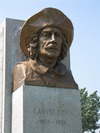
Champlain. At that period the Indians of the Laurentian coalition (Algonkins, Montagnais, Hurons) were at war with the Iroquois. The latter, making use of the Richelieu River route, were trying to
Champlain, and reached Quebec in mid-July.
Father Le Baillif was the friend and counsellor of Champlain, who had been asked by Henri
. A. G. Doughty (3v., Champlain Soc., VIII–X, 1914–16), I, notes by Placide Gaudet accompanying a map of Annapolis. Émile Lauvrière, La tragédie
Champlain brought four Recollets to New France; Father Le Caron was among them, as well as Father Jamet
faith (Shea); New relation of Gaspesia with the customs and religion of the Gaspesian Indians, tr. and ed. W. F. Ganong (Champlain Soc., V, 1910); Premier établissement de la
Nouvelle-France: le donné Robert Le Coq.” Champlain, Œeuvres (Laverdière), 1246–47. JR (Thwaites).
Espérance, whom Champlain was unable to obtain permission to take to France and whom Couillard adopted
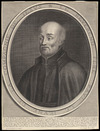
profoundly Christian spirit of the first two governors, Champlain and
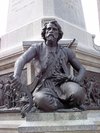
, Prouville de Tracy. On his return he escorted the army chaplain to Fort Sainte-Anne on Lake Champlain. In addition, in the summer of 1671, he took part, as an interpreter, in a new expedition to
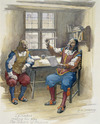
Champlain; and he had visited old fishing captains, who knew Newfoundland and the Acadian coasts. He therefore reported what he had himself seen or learned from those who had taken part in the

Champlain’s example, adopted three young indigenous individuals. In May 1637 he received, jointly with Jean
[Miristou], a Montagnais chief, informed Champlain of proposals made by the Dutch and the Mohicans at
Razilly from La Rochelle to revictual Champlain at Quebec. Razilly was ordered elsewhere, and
Thomas Kirke calling upon Champlain to surrender the fort and settlement to the English. After