

, Maurepas, for a commission as “surgeon-clerk for all legal reports,” a post not yet established in Canada. Lajus had feared that his 1709 commission would be invalidated by the death of the first surgeon to
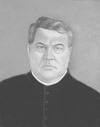
LANGEVIN, ANTOINE, Roman Catholic priest and vicar general; b. 7 Feb. 1802 in Beauport, Lower Canada, son of Antoine
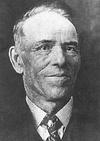
Malbaie, Lower Canada, son of François Lapointe, a farmer, and Adelphine Tremblay, dit Picoté; d. unmarried 12 Jan. 1924 in Saint-Joseph-d’Alma (Alma), Que., and was buried 16 January in
he wished to make it impossible for anyone to inquire about his real identity.
Little is known of Cadillac’s life before he came to Canada. It is
permanent capital of the Canadas early that year and a building boom was anticipated. To promote the capital and their own practice, Stent and Laver published a bird’s-eye view of the city. They also produced
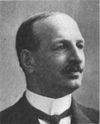
Aug. 1860 in Notre-Dame-de-Bon-Secours-de-L’Islet (L’Islet), Lower Canada, eldest son of Napoléon Lavoie, a physician, and Marie-Aurélie-Joséphine Casgrain; m. 17 Aug. 1880 Elmire Morin (d
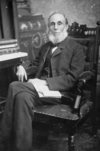
the age of 80. At the time of his death he was thought to be the oldest newspaper editor in Canada.
Alexander Lawson was well integrated into his
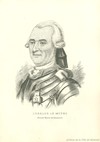
December 1705, serving as a midshipman. He returned to Canada and on 18 June 1712 he obtained the expectancy of an appointment as lieutenant. A year later the king granted him his commission
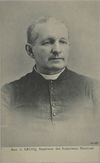
.
Lecoq was the last Sulpician from France to head Saint-Sulpice in Canada. Since his Canadian colleagues were demanding more administrative positions, he humbly accepted the decree of the general council
partner. In 1848 he went into partnership with the Irish architect Goodlatte Richardson Browne, but he left four years later to work for the government of the Province of Canada. This job took him to
. James probably came to Lower Canada in 1794 in company with George Leith, a Detroit merchant who was involved in 1798 in the formation of the New North West Company (sometimes called the XY Company). By 1
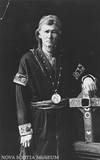
show in Maritime Canada, giving dramatizations of Captain John Smith and Pocahontas and similar “Indian” entertainments. He married his 17-year-old co-star, Elizabeth Paul, a young Maliseet who had
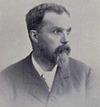
, Devon, England; m. 4 April 1866 Sarah Jane Edwards of Lobo Township, Upper Canada, and they had six sons and two daughters; d. 20 May 1907 in Winnipeg
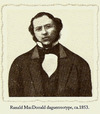
(Winnipeg) [see David Thomas Jones*]. Four years later he went to St Thomas, Upper Canada, to train in banking at a bank managed by
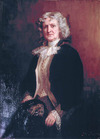
Canada. Isabel faced this heritage with ambiguity. She was fiercely proud of being Mackenzie’s daughter: it gave her life a prominence that it would not otherwise have had. She was to name her elder son
incorporator of the Bank of Canada in 1822 and later became a director. A member of the Scotch Presbyterian Church (later known as St Gabriel Street Church), he served on the congregation’s temporal
idea of an invasion from the United States, as a means of facilitating the move to make Lower Canada an independent republic.
After the failure of a
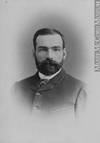
middle initial D.), lumberman, railwayman, and mining promoter; b. 23 March 1853 near Acton, Upper Canada, son of Hugh Mann and Helen (Ellen) Macdonell; m. 9 March
the new Trades and Labor Congress of Canada established a precedent which allowed for membership of local assemblies in city centrals and in the fall of 1883 a number of Toronto assemblies, including
family business, returning to Canada at the onset of King George’s War. He campaigned in Acadia and on the New York frontier. In 1746 he commanded the war party that destroyed Saratoga (Schuylerville
end of the community in Lower Canada must have been witnessed by Brother Louis. On 6 Sept. 1796 fire destroyed the Recollets’ church and convent. Philippe-Joseph
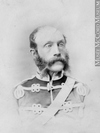
eastern Canada. He took command of companies at Fredericton, Saint-Jean (Saint-Jean-sur-Richelieu), Que., London, Ont., and Toronto, and with these scattered units had to create a regimental system, a
of John Urquhart Ross in Pictou, and in Halifax under future Supreme Court of Canada justice Edmund Leslie
Carpentras, Roanne, and Vesoul. He completed his theological studies at Dole, 1692–96, spent a final year at Salins, and came to Canada in 1698.
He was
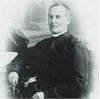
. 1 April 1822 in Kamouraska, Lower Canada, son of Joseph Michaud, a farmer, and Charlotte Michaud; d. 13 Dec. 1902 in Joliette, Que
in Canada, she organized celebrations which, according to the annals, were of an unprecedented splendour.
Marie-Anne de la Nativité also

returned from Rome in 1817, as head of the new apostolic vicariate of Nova Scotia, Mignault went back to Lower Canada.
He was immediately appointed parish
Charbonnel* concerning the need for clergy in his diocese, Moncoq expressed a desire to serve as a missionary to the Indians in Canada. Released for service there, he embarked in 1852 in the company of the
. 1669 in Paris; d. there 19 Dec. 1742.
François de Montigny came to Canada at the invitation of Bishop Saint-Vallier
, a gunmaker on Fleet Street, London; m. 21 Feb. 1812 Mary Barford; d. 15 June 1844 in Thornhill, Upper Canada.
George Mortimer’s
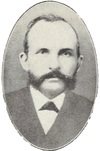
, immigrated to Upper Canada. Knowing his elder brother would inherit the family property in Saxe-Coburg-Gotha, Motz decided to join them. The 18-year-old arrived in Quebec City in June 1848 and
in Delaware Township, Upper Canada, the son of Moses Mount and Jane Burtch; m. c. 1820, he had one son and one daughter; d. 19 Jan. 1834 in York (Toronto
work in the Scottish missions until Bishop Alexander McDonell of Kingston, Upper Canada, invited him to his
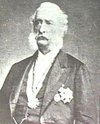
.
PANS, RG 1, 108–9; RG 2, sect. 2, 3–5. PRO, CO 217/234–37. UNBL, MG H 12a. F. E. O. [Cole] Monck, My Canadian leaves, an account of a visit to Canada in 1864–1865
. (Halifax), 29 (1950): 14–21. V. [J.] Strong-Boag, “Canada’s women doctors: feminism constrained,” in A not unreasonable claim: women and reform in Canada, 1880s–1920s, ed. Linda Kealey (Toronto
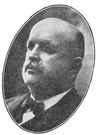
remained in family hands until 1960 and survives today as a division of Clow Canada. Historian Carman Miller describes McAvity as a “helpful fixer … a prominent Liberal businessman from Saint John.” It
hardware store doing piece-work to a highly specialized manufacturing operation supplying industrial enterprises across Canada. The firm, styled T. McAvity and Sons from 1873, consisted of Thomas as
only independent English-speaking congregation of religious in Canada. The noviciate was established at St Mary’s and postulants admitted. A convent was opened for which property was purchased in
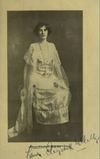
human beings, not simply as a reward for their maternity. She sympathized with the militant tactics used by some British suffragists, although she did not believe them necessary in Canada. The image of

family estate near Callendar, Perthshire, Scotland, son of John McDonald, army captain; d. 25 Jan. 1866 at Gray’s Creek near Cornwall, Canada West. He apparently had five children by his
arrived in 1773, established a large house, New Glenalladale, at Tracadie, and settled the “opprest people” on his estate. In September 1813 his widow sent her sons John and Roderick to Lower Canada where
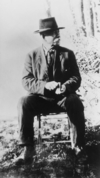
“adventure of the romantic days of Canada’s fur trade.”
Allyson Stevenson
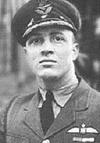
, the Queen’s Own Rifles of Canada. Part-time militia service, which left him essentially a civilian, permitted him to apply for direct entry into the RFC; service in the CEF would have taken him to the
, and was discontinued by the NWC in 1807. McKenzie was posted to the Monontagué department, near Lake Nipigon, Upper Canada, under John
Church in Canada Arch. (Toronto), St Gabriel Street Church (Montreal), reg. of baptisms, marriages, and burials (mfm. at AO). Les bourgeois de la Compagnie du Nord-Ouest (Masson), 1: 56
. After the dissolution of the Thomas firm, McKerrow worked with his eldest son, James Thomas, who established a fur business on Granville Street. On James’s emigration to central Canada about 1900, the
Watford, Upper Canada, son of Murdo McLeay, merchant, and Janet Glendenning; m. 18 Dec. 1898 Grace Warner; d. 6 July 1900 in London, England
Lower Canada.
Alexander Roderick McLeod joined the North West Company in 1802, and served on the Peace River (Alta/B.C.) and in the Athabasca country
in Scotland when on furlough in 1830–31. Upon his return he found himself relegated to the comparatively unimportant charge of the Saint-Maurice River district in Lower Canada, with headquarters at
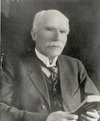
our relations with Great Britain.” After the defeat of the Canada Temperance Act in Charlottetown in 1891, McLeod maintained his support for a reasonable licensing law rather than prohibition