

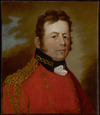
lieutenant-general. His appointment, like that of Governor Craig for Lower Canada the previous year, was made in
friend of Peugnet and the seigneur of Saint-Charles-sur-Richelieu, to come to work in Lower Canada as a correspondent for his new newspaper. In January 1833 Debartzch had founded L’Écho du pays
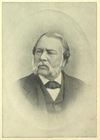
of John Urpeth Rastrick and Sarah —; m. 21 July 1857 Anna Mary Stephens in Hamilton, Upper Canada, and they had six sons and one daughter; d. there 12 Sept. 1897
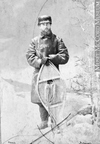
, and articles. The breadth of his interests can be seen in the wide range of scholarly societies with which he was affiliated. One of the original fellows of the Royal Society of Canada, established in
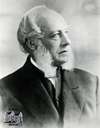
Rice accompanied Wood to Canada West, settling in a pastorate in Toronto where he was associated with Ephraim Evans*. He served in 1849 as the
.
James Robertson attended the parish school in Dull and then in 1855 immigrated with his family to Upper Canada, settling near Woodstock. In 1857, at age 18, he began to teach school. His period as a
Hope, Canada West.
It was in Quebec that Roger began writing works on Canadian history. His first and best known work was The rise of Canada
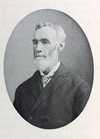
Canada, youngest son of Thomas Rosebrugh, a farmer, and Johanna —; m. 27 June 1865 Ellen Bielby Reeve, sister of William Albert
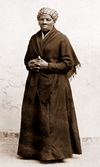
states could no longer offer freedom-seekers the same degree of protection, Tubman began to bring them across the border to Upper Canada at Niagara Falls. From there they travelled to nearby St
1834 and soon secured work inspecting the harbour. In September he was engaged as surveyor for Upper Canada’s first railway project, the Simcoe and Ontario. Although he surveyed most of the route from
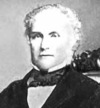
Rubidge and Eleanor —; m. 13 Feb. 1836 Jane Georgina Boswell of Cobourg, Upper Canada, and they had six daughters and two sons; d. 16 Aug. 1897 in Montreal
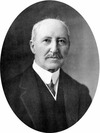
NORLANDE, engineer, militia officer, and office holder; b. 21 May 1848 in Cobourg, Upper Canada, son of Henry Jones Ruttan and Margaret Pringle; m. 19 Aug. 1871 Andrina
Canada, son of Jean-Baptiste Senécal, an innkeeper, and Marie Huet; m. 17 May 1853 Marguerite Labelle in Montreal, and they had several children; d. there 30
.
Raised in England, with an elementary education, Leonard Skill immigrated to Canada in 1890. An uncle, Henry Herbert Skill, had settled in Cobourg, Ont., in 1883 following his retirement from the British
year. He presumably joined the regiment in the Crimea, where it was then taking part in the siege of Sevastopol. The 39th was one of the five regiments moved to Canada directly from the Crimea in 1856

the first military artists to record Canada visually. Smythe’s sketch of the attack on Quebec, engraved and published at London about 1760, became a popular print at the time. He had supposedly made a
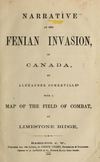
distress. In May 1858 he sailed with his family for Canada, “driven to America against my desire.”
After this melodramatic career in the United
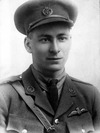
Marie, Sioux Lookout, and Sudbury. In 1927 he joined James Armstrong Richardson*’s Western Canada Airways. With the new company he

Taschereau; m. first 1 Sept. 1840 in Kamouraska, Lower Canada, Louise-Adèle Dionne, daughter of Amable Dionne*, and they had
letter to Lieutenant Governor Simcoe of Upper Canada requesting a grant of land “opposite Fort Detroit
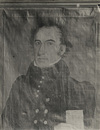
A physician and journalist, Daniel Tracey (d. 1832) opposed British colonial policy, first in Ireland and then in Lower Canada. In
.
William Andrew Tremayne, who would be called Billy by friends throughout his life, was born in the United States. His parents, former residents of Quebec City, returned to Lower Canada with their children
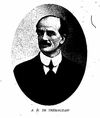
English.
In 1893 the family signed a contract with the Société Foncière du Canada, which had been set up in Paris that year to establish a French colony
for the purpose of bringing out a topographical map of Lower Canada, accompanied by a book. Their map, largely inspired by one made by Samuel
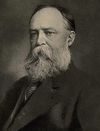
BYRON EDMUND, banker, philanthropist, and patron of the arts; b. 14 Oct. 1848 near Caledonia, Upper Canada, son of Alfred Edmund Walker and
creation of a metropolitan organization in 1911, Warburton was put in charge. That same year he supported the decision of Canada’s YMCAs to declare their independence from the association’s North American
subsequently held other council positions. He also worked diligently as an organizer for both the American Federation of Labor and the Trades and Labor Congress of Canada, establishing nearly 40 new unions, most
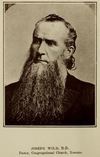
Summit, near Littleborough, Lancashire, England, son of Joseph Wild and Rachel Kershaw; m. 15 Aug. 1859 Mary Victoria Hixon, daughter of a wealthy landowner from Bronte (Oakville), Upper Canada
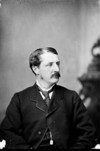
June 1837 at Port Hope, Upper Canada, eldest son of John Tucker Williams, mha for Durham and first mayor of Port Hope, and Sarah Ward, daughter of Thomas Ward, judge and
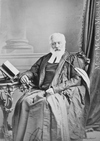
). From 1857 to 1863 he was also rural dean for much of the southeastern region of Canada East. In 1834 Wood had married Margaret Mary Hallowell, a cousin of
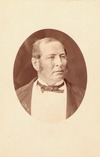
WRIGHT, ALONZO, lumberman, farmer, militia officer, and politician; b. 28 April 1821 in Hull, Lower Canada
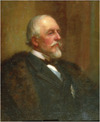
viceroyalty in 1872, a post for which he actually had insufficient stature and experience. The possibility did give a sharp edge to what he himself recognized as intense ambition. Instead, Canada, a great but
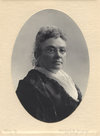
, Upper Canada, eldest child of Hannah Lossing Howard and Solomon Jennings, farmers; m. 22 Nov. 1856 John Stowe in Norwichville (Norwich), and they had one daughter
.
Beginning in the 1880s public taste in Britain, and in Canada, turned away markedly from the increasingly adulterated green teas of China and Japan toward the more robust black teas of India and Ceylon (Sri
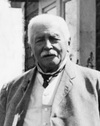
MAIR, CHARLES, businessman, author, and office holder; b. 21 Sept. 1838 in Lanark, Upper Canada, youngest child of James
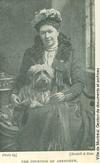
colonies, especially Canada. The same decade saw her assume the presidency of the Edinburgh Association for the University Education of Women, which was committed to preparing members of her sex for
and, following a brief stay in New York City, moved to York (Toronto), Upper Canada, in August 1833. The popular version of McMaster’s immigration holds that he arrived in York without friends or money
WRIGLEY, GEORGE WESTON, teacher, journalist, and social reformer; b. 24 June 1847 in Wrigley Corners, Upper Canada, son of
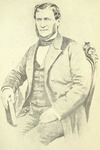
in Ireland, it carried on correspondence with Orangemen in Canada. Gowan was thus known to many Canadian Orangemen before he arrived in 1829
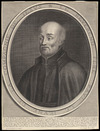
a factor in settlement and missionary zeal, and ultimately provided an important written source about the history of Canada.
LE JEUNE
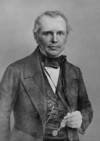
commission to practise as a notary anywhere in the province. Two of his ten children founded families in Canada and became co-seigneurs of Mingan. Étienne-Paschal was to belong to the elder branch, which was
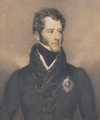
William Bagot, 1st Baron Bagot, and Elizabeth Louisa St John, eldest daughter of John St John, 2nd Viscount St John; d. 19 May 1843 in Kingston, Upper Canada

Globe and then as a journeyman printer for the Catholic Citizen. He later practised his trade briefly in New York and New Orleans, but returned to Canada at the beginning of the Civil War
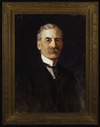
.
William Brymner was an influential art teacher and a distinguished Canadian figure and landscape painter. Born in Scotland, he moved with his family to Melbourne, Lower Canada, in 1857. He first attended St
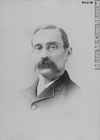
in Montreal and was buried 20 January in Toronto.
Thomas Joseph Workman Burgess attended Upper Canada College in Toronto from 1862 to 1866

Alexander, an engineer and bridge builder; d. 13 Nov. 1843 at Bytown (Ottawa), and was buried at Glencairn, his farm in March Township, Upper Canada
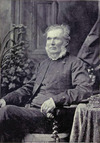
Lower Canada and later of the united Canadas, St Andrew’s was also the favoured congregation of the city’s Presbyterian business community. Cook, who acquired a reputation for business acumen and was
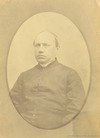
), Cleric of St Viator, priest, educator, and administrator; b. 29 March 1826 in Saint-Jean-Baptiste-de-Rouville, Lower Canada, son of Antoine Drogue, dit Lajoie, a day labourer
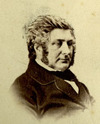
. 11 July 1857 at Quebec and was buried in Aylmer, Lower Canada.
Shortly after emigrating from Ireland in 1830, John Egan became the depot clerk
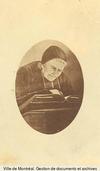
Canada, staying about seven years in all, from October 1849 to June 1850, from May 1854 to September 1855, and from November 1857 to June 1862. As assistant general of the society, he was