

from Dartmouth College, New Hampshire, where his brother, Edwin David, was professor of Latin language and literature. He later received the degrees of am (1845) and
public figure of national importance. He received his early education from the Brothers of the Christian Schools and spent the 1883–84 academic year at Queen’s College, Kingston. He then attended the
girls’ school to help finance the family. Blake was educated by tutors at home and then was sent to Upper Canada College, where he excelled as a public speaker
George’s rector, the Reverend William Turnbull Leach*, was also vice-principal of McGill College, so the greater part of the parochial
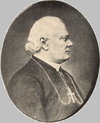
college, St Andrew’s, established in 1831. After MacEachern’s death in 1835, McIntyre entered the Séminaire de Saint-Hyacinthe in Lower Canada. From there he proceeded to the Collège de Chambly and in
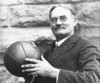
invention of basketball. After studying at McGill College and the Presbyterian College of Montreal, he decided to pursue lay ministry through sport and enrolled in the Young Men’s Christian Association
Canada.
The Montreal Diocesan Theological College (1895–96) clearly illustrates Taylor’s Gothic Revival roots. A dormitory, classrooms, a library, and a
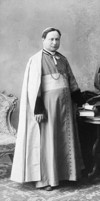
1848 at the newly established Collège Saint-Joseph (incorporated the next year as the College of Bytown and known as the College of Ottawa after 1861). He later studied under its principal, Joseph-Henri
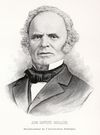
MEILLEUR, JEAN-BAPTISTE, doctor, educator, founder of the college of L’Assomption, mla
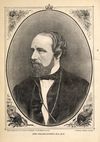
McCulloch*’s Pictou Academy, the principal function of which was to serve as a preparatory college for Presbyterian ministers. He graduated with a solid foundation in Latin and Greek and a working
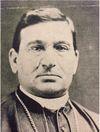
Nov. 1846. Carfagnini lectured on theology and philosophy in Raiano, Rome, and Penne and from 1854 at the Irish Franciscan college of St Isidore’s in Rome. There he met Bishop John Thomas
between the two men arose out of the university question. In 1849 the legislature passed a bill transforming the Anglican-oriented King’s College into the secular University of Toronto and transferring the
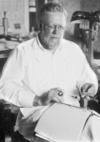
in having the annual celebration of imperial patriotism officially recognized.
Fessenden received his early education at DeVeaux College in
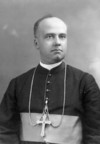
Fabre*. That year he left Montreal for Rome, where he took courses at the Apollinaris College (1894–95) and at the Roman College (1895–97), from which he received a doctorate in canon law
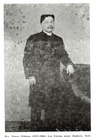
, Frederick Herbert DuVernet, for university matriculation. (He would later choose the rector’s daughter as his wife.) In 1876–77 he was enrolled at King’s College in Windsor, N.S., in a brief, intensive
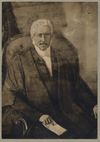
province of Canada between 1841 and 1853, and its first speaker until 1843. He sat on the council of King’s College (University of Toronto) from 1834 and was one of the first councillors of Trinity College
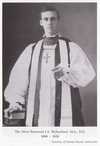
education at the town’s historic grammar school, John Andrew, at his father’s suggestion, emigrated to western Canada in 1888. He farmed in Manitoba before attending St John’s College, an Anglican
.
Ango Des Maizerets studied at the Jesuit colleges in La Flèche and Paris. In Paris he met François de Laval
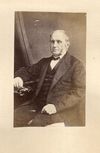
*, Francis Badgley*, and William Sutherland, who had gone to McGill College. Beaubien taught medical theory and practice in the school, and
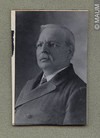
*, closed in 1862. It was replaced by the College of St Joseph, which Camille Lefebvre*, of the Holy Cross Fathers, established in 1864