

Dubreil* de Pontbriand, the family was reunited at Quebec in the spring of 1757, John’s education being undertaken at the Jesuit college. After the capture of Quebec in 1759, the family returned to Nova
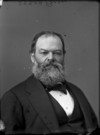
three years of English-language schooling at St Andrew’s College, an institution established and run by the Roman Catholic diocese of Charlottetown, where he mastered English. In 1843 he began
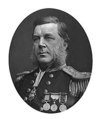
(London, 1860).
Baker Memorial Library, Dartmouth College (Hanover, N.H.), Stefansson coll., B. C. T. Pim, Notebook. Alexander Armstrong
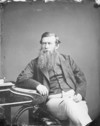
present a petition to the government asking for endowment of the Roman Catholic St Dunstan’s College. Pope then promised to approach the government and its friends, in order to canvass support for the
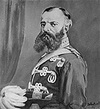
years at Port Dover, Upper Canada, and in 1856 he enrolled in the medical faculty of McGill College in Montreal. After graduating in 1860 he returned to Port Dover, where he commenced a medical practice
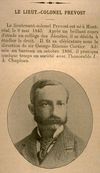
merchant who may, indeed, have been wealthy, Oscar Prévost received his classical education at the Jesuit Collège Sainte-Marie in Montreal and then began to study law. After being an articled clerk in the
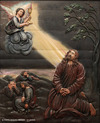
. His retable in the church of Verchères can still be viewed, as can a few pieces of church furniture in the Musée du Québec, the museum of the Collège Saint-Laurent, the Montreal Museum of Fine Arts, and
La Patrie the day after his death, he had been taught the motto Dieu et le Roi. The article added that the brilliant student at the Collège de Clermont-Ferrand “took top prizes in
and around the turn of the century moved with his family to La Prairie.He attended the Collège Saint-Raphaël in Montreal from 1798 to 1805, and some time before 1810 he became a partner in his father’s
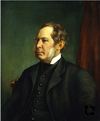
College in Toronto. There he mingled with the sons of the provincial élite. In 1840 he was admitted as a student by the Law Society of Upper Canada. He began his articles in the Brockville office of George
in Enderby, B.C.
Little is known of Joseph Reader’s early life in England. He attended the Church Missionary Society College in Islington
the classical program at the Séminaire de Nicolet, he studied law at the Université Laval for two years and then for one year at McGill College, where he obtained a bcl
in Annapolis Royal, and was later tutored at home rather than sent to college. In the mid 1820s he began studying law in Halifax with his uncle, James William
.
A member of the town’s two Zion Baptist churches, where he generously supported all programs, Robbins sat on the board of governors of Acadia College in Wolfville, to which he contributed liberally
.
Alexander Rocke Robertson’s grandfather, who served for 30 years with the East India Company in Bengal, and his father were both graduates of the Royal College of Surgeons of Edinburgh; probably in the
instructor in midwifery and diseases of women and children. In 1829 the institution became the medical faculty of McGill College, and Robertson was appointed professor of midwifery and diseases of women and
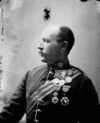
Young* not to hang Fenians summarily. However, the artillery schools he had set up, his proposals for the expansion of training that foreshadowed the opening of the Royal Military College of Canada in
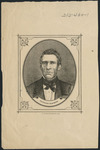
Congregational persuasion, and received his education at the college in Newfane. At the age of 18 he was working as a carder and manufacturer of “ready mades” in summer and as a schoolteacher in winter. On 30
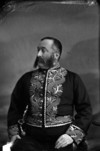
, at the Petit Séminaire de Sainte-Thérèse, located near Montreal, and at the Université Laval. He graduated in medicine from McGill College, Montreal, in May 1858. Meanwhile, in June 1857 he
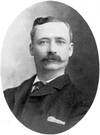
the Council of the College of Physicians and Surgeons of Manitoba from 1886 to 1901.
Roche’s involvement in politics began in 1892 when he ran