

by his wife and a retinue of black servants (all former slaves who had been manumitted by his father), he immigrated to Lower Canada, settling on the north bank of the Ottawa River near the mouth of
the Blair government); support for electric power development at Grand Falls; establishment of a teachers’ superannuation fund; and creation of a workers’ compensation board. In relations with Ottawa
incurred official disfavour in Ottawa. He was criticized for putting a stockade around the post at Battleford, a move that would prove its worth during the North-West uprising of 1885 [see
.
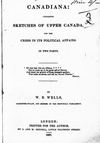
After returning to Canada Wells took no part in the planning or execution of the rebellion of 1837. When word of the Toronto rising on 5–7 December reached him he was in Bytown (Ottawa) on business

text with that of Cheadle’s Journal (published in Ottawa in 1931) leaves little doubt that the latter was the main author. The Journal also has much detail left out in The north
.]
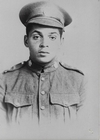
Commonwealth War Graves Commission (Maidenhead, Eng.), Cemetery reg., index no.Fr.715 (Bourlon Wood Cemetery, France) (copy at the Commonwealth War Graves Commission, Canadian Agency, Ottawa). NA, RG 31, C1
Drummond, a contractor on the Rideau Canal. That year White purchased land in Fitzroy Township by the Chats Falls rapids on the Ottawa River, apparently with the intention of building a steamer
(Ottawa), 9 (1956–57), no.4: 3–7 [an illustration and description of its operation, headed “Newfoundland cod trap in fishing order,” appears as an editorial note in response to this article in no.6: 6
of government to provide that there shall be no undue regard for the latter that limits or lessens the other.”
He had come to Ottawa feeling
Montreal, and the Montreal Northern Colonization Railway, from Montreal to Ottawa. Merging the two lines, it created the Quebec, Montreal, Ottawa and Occidental Railway that year. Consequently, when the
O’Brien* and others, won over Quebec and Ontario artists to the idea. In March 1880 the Canadian Academy of Arts – Royal would be added in August – was launched in Ottawa with as much fanfare
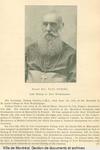
and vicar apostolic of British Columbia. His assistant was the young Bishop Augustin Dontenwill, born in Alsace but trained at the College of Ottawa, where he had taught languages. Durieu’s reports to
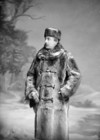
[Petty-Fitzmaurice*], the newly appointed governor general of Canada and a family friend, had offered to bring him to Ottawa as his military secretary. Melgund accepted the offer and he and Lady
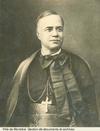
, son of Médard Emard and Mathilde Baudin; d. 28 March 1927 in Ottawa.
Joseph-Médard Emard grew up in a family that would contribute two
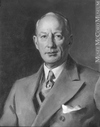
Galvin Daniels. In Ottawa, he and Flavelle formed the inner executive of the IMB with David Carnegie, head of the board’s technical department, and Frederick Perry, who supervised the board’s finances and
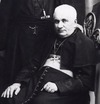
, written guarantees, and in 1883 and 1886 he went to Ottawa in an attempt to lobby government ministers and obtain something in writing. On 9 Dec. 1886 Grandin finally received a communication from
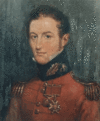
des miliciens de la bataille de la Châteauguay (Ottawa, 1983)).
Heriot left no instructions in his will about his papers and they
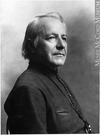
formulated in 1882, to provide Plains Indian children with vocational instruction under Catholic supervision. Likely in the winter of 1883–84, Grandin sent him to Ottawa to negotiate with the federal
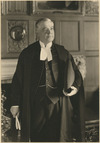
among his father’s acquaintances.
In 1882 Rodolphe began studying law at the College of Ottawa, the city to which the Lemieux family had just moved
.
Anxious for men, London immediately accepted his offer, but it was blocked in Ottawa, where private recruiting schemes were no longer in favour. The possibility of mobilizing a regiment through the
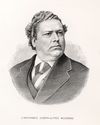
would accept a position on the bench as soon as Chapleau was ready to leave the Quebec government for Ottawa, where every 19th-century politician preferred to finish his career. But at Chapleau’s
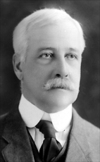
four daughters and one son; m. secondly 7 Jan. 1915 Grace Seely Henop (d. 1928), widow of Robert de Peyster Tytus, in New York, and they had one son; d. 15 Sept. 1939 in Ottawa
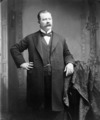
buoyed by visits from Ottawa of Sir Charles Tupper*, Sir John Sparrow David

to that end he spent much of his summers travelling and sketching. In 1873 he visited the Ottawa region, Owen Sound, and Lake Erie, apparently returning the following year to lakes Erie and Huron. In
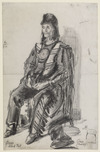
* reported to his superior in Ottawa there was “no doubt that O’Soup who is an able orator and shrewd councillor is the man to whom the Indians look for guidance.” On several other occasions throughout the

on the Ottawa River. He became a partner in the Montreal firm of LaRocque, Bernard et Compagnie, which was in business from 1832 to 1838. With three other Canadians, his father-in-law Jean Bouthillier

senate’s first bill introduced segregation in 1907. Facing increasing racial discrimination, some Black families, enticed by Ottawa’s promotion of its western provinces as the “Last Best West,” set their
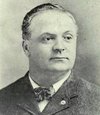
the “old political parties,” Verville soon realized that, as the only labour representative, he was isolated in Ottawa. Because the rigidity of the two-party political system left him little option but
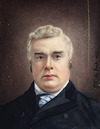
Ottawa. Both elections, Nova Scotia and dominion, were disasters for the Liberals. Mackenzie was badly defeated, and Hill’s government was swept out of office just as decisively. Thompson was elected in
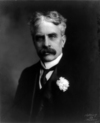
Eunice Jane Laird; m. 25 Sept. 1889 Laura Bond (d. 8 Sept. 1940) in Halifax; they had no children; d. 10 June 1937 in Ottawa
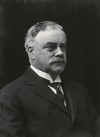
and County and joined Sir John A. Macdonald*’s Conservative government in Ottawa. At 30 years of age Hazen was
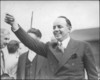
investigate alleged Conservative misdeeds in office. Hepburn still found time to attend a dominion–provincial conference in Ottawa in July and to participate vigorously in five federal by-elections held in
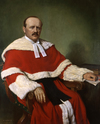
Anglin* and Ellen McTavish; m. 29 June 1892 Harriett Isabell Fraser in Toronto, and they had two sons and three daughters; d. 2 March 1933 in Ottawa
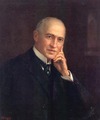
John Wright Sifton and Kate Watkins; m. 20 Sept. 1882 Mary Horsman Deering in Cobourg, Ont., and they had one daughter and one son; d. 21 Jan. 1921 in Ottawa
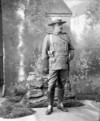
disposal. He increased his power by having Ottawa double the area of federal jurisdiction over the construction route, from 20 miles on each side of the track to 40. In the spring of 1885, at Beaver

up against the oppressors in Ottawa. Adopting a revolutionary pose, he signed his letters to Hertel “citoyen,” took part in street riots, and worked in a secret society, the LX, with his friends
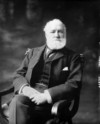
.
Three decades later an Ottawa observer was to describe Blair as “a democrat to the hilt,” but in this debate his arguments were thoroughly Burkean: “God forbid that a question like this should be bandied
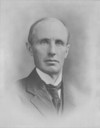
Ottawa, where he sat in the backbenches of the opposition led by Robert Laird Borden*. He made but two brief speeches in his first session
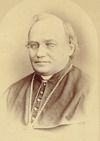
Machray*, informed the government of Canada. Taché, who was worried about the fate in store for the Métis, went to Ottawa on his way to Rome for the first Vatican Council in 1869. Sir George
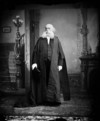
retrospect, 1835 was an opportune time for David to have joined Macpherson and Crane as a clerk and assistant in its Montreal office. The following year the firm formed a partnership with the Ottawa and Rideau
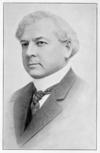
well-trodden course of asking the dominion for more financial assistance. By the time McBride went to the interprovincial conference at Ottawa in October 1906, he knew the call for better terms was
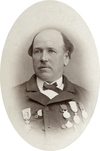
the selection of Ottawa as the seat of government and the call in May 1859 for designs for the proposed parliament buildings. A year earlier, he had anticipated this competition by preparing a set
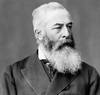
Ontario Pacific Railway Company, which was to build a line from Cornwall to Ottawa, and in 1882 he introduced a bill petitioning for incorporation of the railway company, to which royal assent was given on
Elliott*].
He was less successful in dealing with his Liberal government in Ottawa on his return. He had been warned before his departure not to view
of the Canadian Forestry Association. In addition, he helped establish the West Prince Board of Trade (1903). Such activism won him recognition. In 1904 his lecture in Ottawa on reforestation on the
leader. When dual representation was abolished in 1872, he stayed in the federal arena. Defeated in 1874, he was re-elected four years later.
In Ottawa
still prevailed in Ottawa, and federal finance ministers sought to stimulate industrial production by the judicious manipulation of the tariff on imported goods and the generous application of bounties
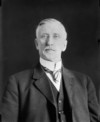
Sept. 1919 in Ottawa.
The details of Frank Cochrane’s first 40 years are obscure. A son of Methodist parents, he was educated in the separate
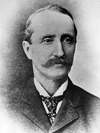
Ottawa would renegotiate the provincial subsidy to relieve Manitoba’s debt if significant reductions in expenditures were made through the introduction of measures of restraint and the abolition of the
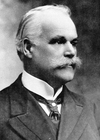
O’Neill*]. His military career was brief, however. On his return he found employment in 1872 with L’Écho de Lévis and the following year he was its Ottawa correspondent. When it ceased