

, was connected with influential families in Ireland. His father, created baronet in 1780, had been an mp. Waller was resident in Lower Canada in December 1817 when he
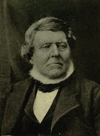
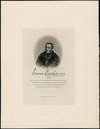
ANDERSON, THOMAS BROWN, merchant, banker, member of the Special Council for Lower Canada; b. June 1796 in Edinburgh
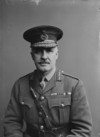
Montreal before going to the Royal Military College of Canada (RMC) in Kingston, Ont., in 1889. As cadet No.293, he graduated company sergeant-major in 1893. Three of his brothers would also study at the
Beardsley* and Gertrude Crannell; m. Mary Jenkins, and they had six sons and one daughter; d. 24 March 1855 in Oakville, Upper Canada
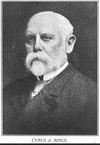
BIRGE, CYRUS ALBERT, merchant, accountant, and industrialist; b. 7 Nov. 1847 in Trafalgar Township, Upper Canada, son of
, on 1 April 1687, Jeanne Janier. Every year he sailed between Canada and La Rochelle, which was in control of trade with New France at that time. From there sailed the king’s ship and those of the
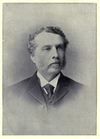
. Boyd achieved scholastic honours throughout his education in Toronto, at the Bay Street Academy (founded by his Scottish father), at Upper Canada College (from which he graduated in 1856), and at the
of them from Upper Canada. Because these merchants lacked capital, sales to them could be made only on 12 months’ credit. This use of credit alarmed the elder Guild, who feared his capital would be
.”
On 6 Oct. 1830 Bédard was elected to the House of Assembly of Lower Canada for the riding of Saguenay. Young and eager, he was notable in the assembly for his independence of mind. In voting
in 1699, the Iroquois were unwilling to include these tribes in any peace treaty. Cagenquarichten proposed to the Onondagas that they should go to Canada to ask the French to put a stop to the raids of
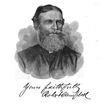
CAMPBELL, ROBERT, Presbyterian minister, botanist, educator, and author; b. 21 June 1835 near Perth, Upper Canada, seventh
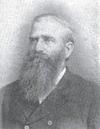
, to go north to Canada to find “British justice.” In the fall Card and two companions scouted British Columbia and the southern part of the Alberta district, eventually choosing southwestern Alberta as
.
In 1837 the Colonial Missionary Society of the Congregational Church in England assigned William Fletcher Clarke’s father to London, Upper Canada. He established a church in the village and also
. Macdonald* introduced the Canada Copyright Act, which allowed Canadian printers to reproduce foreign works without the authorization of the copyright holder. The act favoured printers [see John
was the daughter of Henry Joseph*, one of Canada’s earliest Jewish settlers. De Sola grew up in the city’s fashionable west end. At the High
emigrated to Upper Canada about 1833 and took employment in Niagara-on-the-Lake at the Niagara Harbour and Dock Company, which commenced operations in that year. Dick was sailing the schooner Fanny
eminent families in the country. His father, a lawyer in the Parlement of Paris, had emigrated to Canada in 1671; he had married the same year, had become king’s attorney at Montreal, and had distinguished
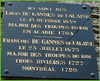
GANNES DE FALAISE (Falaize), LOUIS DE, officer in the colonial regular troops in Canada and Acadia, knight of the order of Saint-Louis
sailed from Rochefort for Canada on 20 May 1699. In his capacity as guardian of the convent of Quebec, on 26 October of that same year he signed the “Actes du Frère Didace Pelletier
projects. This background meant that when he emigrated to Canada at the age of 29 he had little difficulty in finding employment in a country just beginning its era of railway expansion
William Heath and Elizabeth Allen, originally from London, Eng.; d. 16 Nov. 1874 at L’Isle-Verte, Que.
John Heath arrived in Canada when he
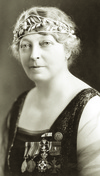
western Canada, she grew up in Durham, England, probably in comfortable circumstances. By 1871 her father, a prosperous carpet manufacturer, employed over 500 workers in the business he owned with his
County, Upper Canada. With three brothers, he founded the settlement of Hannahville. He played a major role in local affairs, establishing the area’s first school in 1828, chairing the first township
.
Robert Charles Horne was born in England around 1780; by the time he came to the Canadas several months before the outbreak of the War of 1812, he was a member of the Royal College of Surgeons of
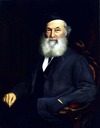
, William Ford, who married his older sister in 1825. Except for a brief period as resident engineer on the Cromford Canal in Derbyshire, Corby remained with Ford until his departure for Canada, latterly
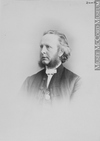
succeeded only in postponing a crisis. In 1852 the division of the British Wesleyan Methodists in Lower Canada into three circuits cost his church further support as many disgruntled members left to join the
Peuvret* Demesnu, chief clerk and secretary of the Conseil Souverain, and seigneur. By this marriage he had 17 children. Through him the name of the Juchereaus has been perpetuated in Canada
.
In the 18th century French naturalists, supported by the intendants of New France, were trying to discover the medicinal and practical properties of the flora of Canada. Every year the intendants
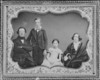
(Republic of Ireland), fourth son of Alexander Kirkpatrick and Marianne Sutton; m. in 1829, Helen, daughter of Alexander Fisher, a judge of the Midland District of Upper Canada, and they had five sons
commissioner for Canada; b. 1 Feb. 1673 at Rouen, 14th child of Pierre de La Place and Marie Le Couteux; d. 1737 at Versailles.
In 1691
Engineers on 1 May 1795. Two years later he was promoted first lieutenant, on 3 June, and was posted to the Canadas. Arriving in Halifax, probably in late October, he reached Quebec by 31
. [É.-M. Faillon], Vie de Mme d’Youville, fondatrice des Sœurs de la Charité de Villemarie dans l’Île Montréal en Canada (Ville-Marie [Montréal], 1852), Vie de
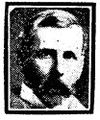
scholar in Canada in the late 19th and early 20th centuries. Beginning as soon as he returned from England in the 1870s, he wrote extensively about the theory of common law and about Roman law
, who were partners of the Biencourt family, and who sent him to Canada in 1613. He took part
MAHEUT, LOUIS, probably the first surgeon born in Canada, son of René Maheut, a bourgeois of Paris, and Marguerite Corrivault; b
Dec. 1717 and obtained a licence in utroque jure (civil and canon law). He arrived in Canada on 5 July 1722 and was put in charge of the parish of Saint-Laurent on Montreal Island, which
married Sarah Georgina Kertland, Molesworth in 1848 emigrated to Canada.
Molesworth’s first employment in Canada was teaching school at Trafalgar, near
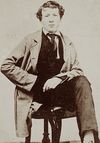
* from November 1864 to confederation. Morgan continued as a clerk in the federal Department of the Secretary of State; in October 1873 he became a first-class clerk and assumed charge of Canada’s state
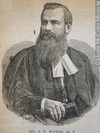
of the 12 children of John MacVicar, a farmer, and Janet MacTavish; m. 1 May 1860 Eleanor Goulding (for whom he adopted the name Harvey) of Downsview (North York), Upper Canada, and they had
.
James Richardson, who became a leading Methodist and a staunch Canadian, was born, appropriately, in the year of John Wesley’s death and of Upper Canada’s formation. He was educated in the Kingston
. 10 April 1848 in Saint-Pierre, Île d’Orléans, Lower Canada, son of Jacques Roberge, a farmer, and Scholastique Côté; d. 25 March 1924 in Montreal
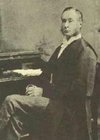
daughter; d. 31 Oct. 1905 in Toronto.
Born into Toronto’s élite, Christopher Robinson was educated at Upper Canada College, took a
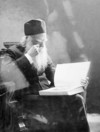
.
John Scadding, a farmer close to John Graves Simcoe*’s home in Devon, came to Upper Canada with Simcoe in 1792, was employed as a government
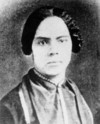
. 9 Oct. 1823 in Wilmington, Del., daughter of Abraham Doras Shadd and Harriet Parnell; m. 3 Jan. 1856 Thomas Fauntleroy Cary (d. 1860) in St Catharines, Upper Canada, and they
of Masaye in Auvergne; b. 1665 at Clermont; d. 1738 or 1739 at Boucherville.
He landed in Canada about 1685, no doubt as a soldier, for when on 8
articulate representative for his constituency, the District of Quebec, and Lower Canada.
Elizabeth Nish
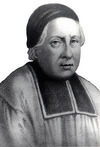
later, at the time of his coming to Canada, he was still a deacon. Bishop Saint-Vallier
to an artillery command in the abortive expedition against Canada.
C. P. Stacey
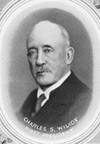
and Iron opened a modest-sized steel plant in 1900. During the first decade of its existence the company was the smallest of the four leading steel manufacturers in Canada, the others being Henry
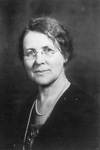
British consulate on 6 September and a religious ceremony two days later at the American Church in Paris, the couple returned to Canada. After a brief sojourn in Sault Ste Marie, Ont., in 1901