

.
On 16 Nov. 1940 Letondal paid tribute to Filion in the Montreal periodical Radiomonde: “From the earliest expressions of French dramatic art in Canada, Filion was seen to mingle with the
; b. 23 Oct. 1794 in Carlisle, England; m. Elinor Isabella Auchmuty before coming to Lower Canada, and they had one daughter; d. 10 Aug. 1849 on the Sarah Sands while
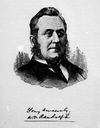
the mayoralty of the city.
A strong supporter of the Canada Temperance Act of 1878, Fitz Randolph attended temperance meetings and frequently was the
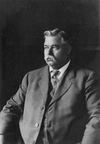
. Fleming, deemed one of Canada’s “greatest executives” at his death, started out in a Horatio Alger style. Born of poor Irish parents on St David Street in Toronto’s Cabbagetown district, he dropped out
Nouchet, assessor to the Conseil Supérieur whose father Joseph was director of the Domaine d’Occident in Canada.
Foucault also benefited during
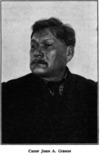
Tuscarora Township on the Six Nations Reserve, Upper Canada, son of Chief John Gibson and Hannah —; m. before 1871 Mary Skye, and they had at least three sons and a daughter; d. there 1
early 1812 he travelled through Lower Canada, New Brunswick, and Nova Scotia, where he was well received by many influential Scottish merchants such as John

O’Donoghue*, and journalist Thomas Phillips Thompson*, had initiated the Trades and Labor Congress of Canada. Glockling served on its
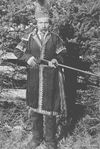
Prince Arthur*, later governor general of Canada, hunting in Nova Scotia in
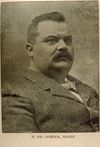
in Saint-Martin (Laval), Lower Canada, son of Benjamin Goyer, a farmer, and Célina Crevier; m. 2 April 1883 in the parish of Saint-Laurent, Que., Pomela Gosselin, daughter of Narcisse
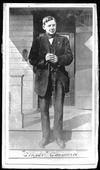
to the District 28 convention in 1913 and to the British Columbia Federation of Labour convention in 1914. Early in 1914 he was appointed an organizer for the Socialist Party of Canada. Unable to
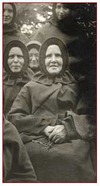
GREENE, MARY, member of the Sisters, Faithful Companions of Jesus, educator, and provincial for the order in Canada; b. 15
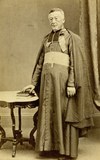
which he won the confidence of the French bishops, he was appointed “visitor,” or acting superior, in Canada, where the Oblates had been working since 1841. He arrived at Longueuil on 18 Aug. 1844

George and Anne Gurnett; d. 17 Nov. 1861 at Toronto, Canada West.
George Gurnett’s early life is obscure, but it is known that in the mid
. Louise’s marriage introduced her into one of the first families of Canada; her father-in-law Mathieu Damours* de Chauffours, was a
Literary and Historical Society of Quebec, presented papers at its meetings, and in 1885 spoke about its history before the Royal Society of Canada. A member of the St Andrew’s Society, he served as its
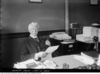
public-health reformer; b. 23 Aug. 1858 in Markham Township, Upper Canada, son of John Hastings and Maria Louisa Orr; m. 23 Oct. 1889 Allie Hatch (d. 19 May 1934) in Toronto
de Beaufort that merit some description because they throw light in several respects on the social history of Canada during the French régime. In 1737 Havard de Beaufort tried “by some craftiness and
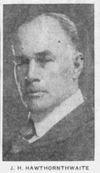
Socialist Party of British Columbia, founded in the summer of 1901, and later of the Vancouver-based Socialist Party of Canada. Hawthornthwaite and Kingsley were founding members of the SPC in 1904. James
* in 1793, Henry pleaded his status as a British subject and was allowed to return to Lower Canada with his family and possessions.
After being re
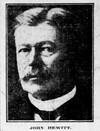
objected strongly to paying to bring workers to Canada who would compete with the existing labour force.
After 1873 the TTA exercised a considerable
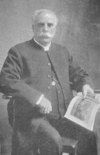
Bompas* altered the CMS’s plans for Hines. In England for his consecration as bishop of Athabasca, Bompas told the society about the devastating loss of the buffalo on the western plains of Canada
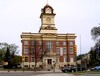
.
Victor William Horwood’s father was a stained-glass artist who immigrated to Canada and set up his business in Prescott, Ont., in 1876. Victor, his mother, and his brothers arrived later, probably in
.
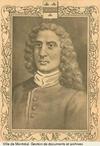
In 1635, while Champlain was still alive, Montmagny was appointed governor of Canada. His family ties with
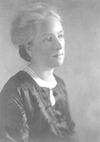
of Royal Victoria College, one of the rare posts in academe available to women in Canada at the time. She accepted and became the college’s second warden after Hilda Diana Oakeley, with whom she had
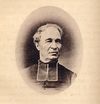
), Lower Canada, son of notary Jean-Baptiste Hébert and Judith Lemire; d. 17 Jan. 1888 at Kamouraska, Que.
Nicolas-Tolentin Hébert received a
. Shortly thereafter, he made Boston the rallying point for both his family and the other exiles he was tasked with bringing back to Canada. Having reunited the Héberts after some 15 years of wandering and
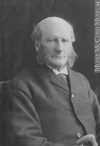
Canada early in the 19th century. Nothing is known about his childhood and youth, except that he did his classical studies at Quebec with the Reverend Francis James Lundy. He was called to the bar on
, Jack appeared as counsel in Canada’s first appellate case on the constitutionality of judicial review of legislation under the British North America Act, urging unsuccessfully that the federal-provincial
, Jersey” (1979). Can., Parks Canada, Hist. Research Division (Ottawa), André Lepage, “Histoire de la population et du peuplement de la péninsule de Forillon” (copie dactylographiée, Québec, 1978); Thérèse
JOHNSON, GEORGE, English separatist, who, with three companions, searched Canada for a site for a Pilgrim settlement
necessary for Saint-Denys to obtain leave from his duties as judge to represent the merchants in Paris in 1699. He returned the following year to help found the Compagnie du Canada for the export of furs, and
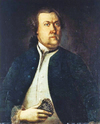
from the Royal Swedish Academy of Sciences, however, were to spend as much time as possible in Canada since its climate was thought to be similar to that of Sweden and Finland, and so he proceeded north
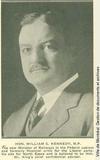
of the 99th Infantry Battalion. Although he was a popular threat to Kennedy as a military man who had served overseas, the biggest concern facing any Liberal candidate in English-speaking Canada was
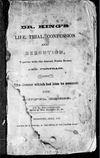
; b. November 1833 in Sophiasburg Township, Upper Canada, eldest son of George King and Henrietta —; m. 31 Jan. 1854 Sarah Ann Lawson of Brighton Township, Upper Canada
Alder*, who had succeeded in reuniting the conference in Upper Canada and the British Wesleyans, visited Sackville, N.B., to confer with the leading ministers of the maritime districts regarding union

River, Lower Canada, son of Timothée-Amable La Rocque and Marie-Angèle Paré; d. 18 Nov. 1887 at Saint-Hyacinthe, Que.
Joseph La
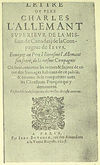
principal of the boarding-school at the Collège de Clermont.
He was made responsible for setting up a mission of the Society of Jesus in Canada, and in
du Castor which held the beaver trade monopoly in Canada. He was to inspect its Canadian operation, reduce costs, and make any necessary changes in personnel. In 1716, Jean-François
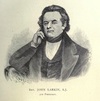
Montréal, the only French-speaking establishment for secondary education in Lower Canada founded and run by the Sulpicians, had 4 priests, 5 or 6 regents, and 130 to 150 pupils, two
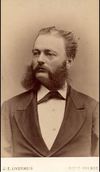
-Anselme, Lower Canada, son of Siméon Gautron*, dit Larochelle, and Sophie Pomerleau; m. there 12 Dec. 1876 Georgiana Plants; d
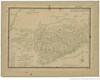
missions in Canada. On 29 Oct. 1711 he arrived at Quebec, where he spent four years as a teacher at the Jesuit college. In 1716 he was in charge of the library; this is the first mention of this
home secretary, Henry Dundas. Dundas gave him a letter of recommendation to the lieutenant governor of Lower Canada, Alured
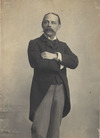
Quatuor Vocal de Québec and in the same year he was secretary of the organizing committee for the Saint-Jean-Baptiste celebrations in Quebec, during which “O Canada” was given its first performance
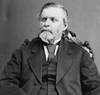
his family had returned to farming near Syracuse. In 1830 the family joined him at Normandale, Upper Canada, where he was employed at the ironworks and foundry of Joseph
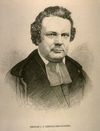
Isaac Désaulniers), priest, professor, and superior of the Séminaire de Saint-Hyacinthe; b. 27 Nov. 1811 at Sainte-Anne-d’Yamachiche, Lower Canada, son of François Lesieur
LEVASSEUR, RENÉ-NICOLAS, head of royal shipbuilding and inspector of woods and forests in Canada; probably born at
.
There is some evidence to suggest that William Lloyd and his family arrived at Niagara (near Youngstown, N.Y.) in 1788 but soon returned to the United States. They probably immigrated to Upper Canada at
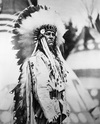
. Wounded twice, he was hospitalized in England on the second occasion and subsequently assigned to non-combat duties. Upon his return to Canada in 1919, he boarded a troop train heading west and took his
Lÿdius seems to have lived an unsettled life in upper New York province before his appearance in Montreal in 1725. The French authorities believed he had fled to Canada to escape his creditors. He